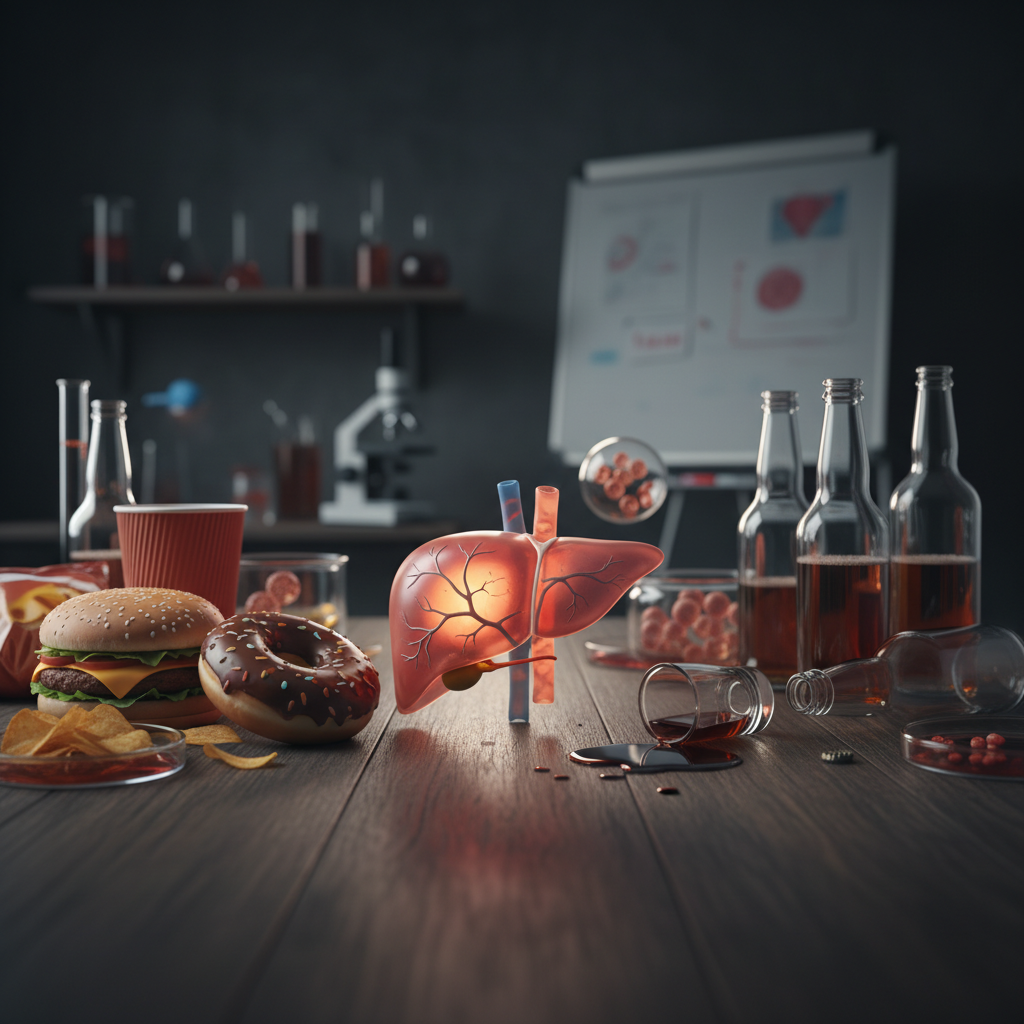
A Western diet and binge drinking may hit the liver as a double insult — and together they may be worse than either alone
A Western diet and binge drinking may hit the liver as a double insult — and together they may be worse than either alone
For a long time, liver disease was often discussed in fairly separate boxes. On one side was alcohol. On the other were poor diet, excess weight, and metabolic dysfunction. But that division is becoming harder to defend in real life. Human behaviour rarely falls into such neat categories, and the liver seems not to respect them either.
That is what makes the story about Western diet and binge drinking liver disease so important. The core idea is that a diet high in fat, sugar, and ultra-processed foods may not only damage the liver on its own, but may also worsen the impact of binge drinking. Alcohol, in turn, may push a liver already stressed by poor diet into a more severe pattern of injury.
The evidence provided supports that broader claim reasonably well as a biological and experimental hypothesis. The support is moderate, but it comes mainly from thematic reviews and mouse studies. So the safest interpretation is this: a Western-style diet and binge drinking likely interact in harmful ways for the liver and may produce more damage together than either would alone, but the strongest direct evidence remains preclinical.
The liver absorbs both hits at once
The liver is one of the organs most exposed to modern lifestyle because it sits at the centre of nutrient metabolism, fat handling, sugar regulation, toxin processing, and alcohol breakdown. When diet is rich in calories, saturated fat, sugar, and highly processed foods, the liver tends to accumulate fat and develop oxidative stress, inflammation, and metabolic disturbance.
When alcohol enters the picture — especially in binge patterns — another layer of injury is added. Alcohol increases oxidative stress, alters metabolic pathways, overloads detoxification systems, and promotes inflammatory damage.
Individually, either exposure can be harmful. Together, they appear to create a situation in which the liver is hit simultaneously from a metabolic and a toxic-inflammatory direction, with the potential for those insults to amplify one another.
What the review literature suggests
One of the supplied references directly reviews the interaction between Western-style diet and binge drinking. Its overall conclusion is straightforward: high-fat, high-sugar diets and binge alcohol exposure likely share and amplify liver-damaging pathways.
That matters because it gives the headline a coherent biological foundation. Instead of treating poor diet and alcohol as parallel but separate problems, the review suggests they converge on similar mechanisms — inflammation, oxidative stress, metabolic dysfunction, and progression of liver disease.
That convergence helps explain why the combined effect could be more serious than the simple addition of two independent risk factors.
What the mouse studies show
The experimental evidence in the package strengthens that idea. In mouse models, adding binge drinking to a Western diet produced a more progressive pattern of liver injury, with some findings suggesting especially severe effects in males.
Another mouse study combining Western diet, alcohol, and periodic binge exposure found that binge episodes could shift chronic steatohepatitis towards a more severe alcohol-associated-hepatitis-like phenotype in many animals.
Those findings are important because they suggest binge drinking is not merely a behavioural detail layered on top of an already stressed liver. It may act more like a biological accelerator, intensifying existing inflammation and altering the pattern of disease itself.
Why drinking pattern matters as much as quantity
One important implication of this story is that liver risk does not depend only on total alcohol intake over time. The pattern of drinking also matters.
Binge drinking is a particularly aggressive type of exposure because it delivers a large alcohol load over a short period. That can trigger more intense spikes in metabolic and inflammatory stress than other patterns of drinking, even when both are harmful.
When that pattern is layered onto a liver already burdened by fat, sugar, and metabolic inflammation, the outcome may be a qualitative shift in injury rather than merely a quantitative one.
The possible role of sex differences
Another interesting theme in the supplied evidence is the suggestion that sex may influence how severe the liver damage becomes in this combined-exposure setting. Some experimental data point to more severe injury in males under certain conditions.
That finding should be handled carefully. Sex differences in liver disease can depend on the model used, the type of diet, the duration of exposure, alcohol pattern, hormonal context, and specific inflammatory pathways. In other words, this is not a simple rule.
Still, it matters because it suggests the combination of diet and binge alcohol exposure may not affect all bodies in the same way. That reinforces the broader point that combined liver injury biology is complex and shaped by individual context.
What this story gets right
The headline gets it right in treating Western diet and binge drinking as a combined hit to the liver. The set of supplied references supports the idea well that the interaction between the two is biologically plausible and potentially more harmful than either exposure on its own.
It also gets it right in moving away from a rigid separation between “metabolic” liver disease and “alcohol-related” liver disease. In real life, many patients live in the overlap between diet, weight, metabolism, and alcohol.
That framing matters because it brings the science closer to how people actually live. Very few people are exposed to one perfectly isolated lifestyle risk at a time.
What still cannot be claimed too strongly
At the same time, it would go too far to say that it has already been directly proven in humans that combining a Western diet with binge drinking causes severe liver disease in a predictable way. The strongest evidence provided remains preclinical, much of it based on mouse models.
That means the biological plausibility is strong, but the human relevance still needs more direct confirmation, ideally through large clinical cohorts and studies that better reflect real-world patterns of diet and drinking.
It would also be too simplistic to suggest that every person who binge drinks while eating poorly will inevitably develop severe hepatitis or cirrhosis. Risk depends on frequency, intensity, genetics, body weight, diabetes status, dietary composition, sex, medications, and many other factors.
The boundary between metabolic and alcohol-related liver disease is blurring
One of the strengths of this line of research is that it suggests the liver may not “categorize” injury in the same way traditional medical labels do. Fat, sugar, and alcohol may converge on shared pathways of damage, even when clinical language still separates them for diagnostic convenience.
That matters because it may change how prevention is understood. Instead of asking only “do I drink too much?” or “do I eat too poorly?”, the more useful question may become: what lifestyle exposures are hitting my liver at the same time?
What this means in practice
In practical terms, the most useful message here is not alarmist but concrete. People living with both Western-style dietary habits and binge drinking patterns may not simply be adding risk — they may be combining exposures that biologically reinforce each other.
That is especially relevant in settings where ultra-processed food, excess calories, and episodic heavy drinking are woven into weekends, celebrations, or stress-related routines.
From a public-health perspective, the story suggests liver-disease prevention should not treat food and alcohol as separate chapters. In many cases, the most important damage may arise precisely from their interaction.
The most balanced reading
The safest interpretation is this: a Western-style diet and binge drinking likely interact to worsen liver injury more than either exposure alone, and there are signals that sex may influence the severity of that damage.
The supplied references support that reading well at the biological and experimental level. Reviews and mouse studies suggest that high-fat, high-sugar diet patterns and episodic heavy alcohol exposure share and amplify inflammatory and metabolic pathways linked to liver disease progression.
But a responsible reading also has to preserve the limits: the strongest evidence remains preclinical, broad human relevance still needs more direct confirmation, and the interaction is too complex to justify simple generalizations.
In short, the story reinforces an important point: the liver is harmed not only by isolated bad habits, but also by the way those habits combine. And in that respect, poor diet and binge drinking appear capable of forming a particularly damaging partnership.