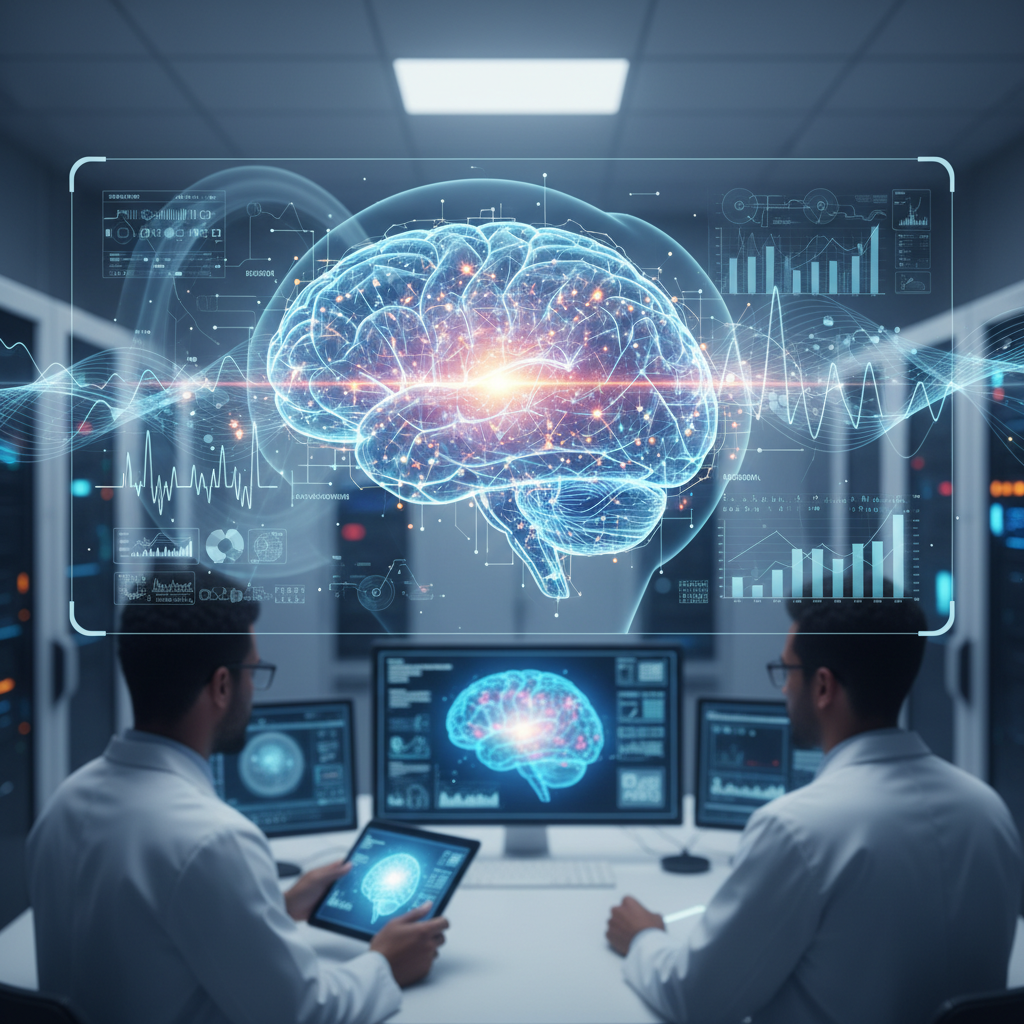
Brain-based clues could reshape mental health care — but for now they are still closer to the lab than the clinic
Brain-based clues could reshape mental health care — but for now they are still closer to the lab than the clinic
For much of its history, psychiatry has been defined by an uncomfortable reality: it has had to diagnose some of the most serious illnesses in medicine without the kind of biological tests other specialties take for granted. Depression, schizophrenia and related disorders are still identified mainly through symptom patterns, patient histories and observed behaviour rather than blood tests, imaging findings or tissue samples.
That clinical approach remains indispensable. But researchers are increasingly trying to add another layer to it — one built around measurable signals from the brain itself.
This is where brain-based biomarkers for mental health enter the picture. Neuroimaging, electroencephalography (EEG) and machine learning tools are being explored as ways to detect functional, circuit-level or molecular patterns associated with psychiatric and neuropsychiatric disorders. The long-term hope is not to replace clinical assessment, but to make it more biologically grounded, more precise and eventually more personalized.
The evidence supplied here supports that broader direction. It suggests mental health research is moving towards biologically informed indicators that may connect symptoms to underlying abnormalities in brain function. But it also makes clear that most of these tools remain much closer to research than to everyday clinical diagnosis.
Why psychiatry has been searching for biomarkers for so long
In many other fields of medicine, biomarkers help answer basic questions. Is the disease present? How severe is it? What is the patient’s risk? Is the treatment working?
Psychiatry has always wanted the same things, but mental disorders have proved much harder to pin down biologically. One reason is that psychiatric diagnoses are syndromic: they group patients based on clusters of symptoms, even when the biology beneath those symptoms may differ substantially from one person to another.
That creates a familiar problem in mental health care. Two people may both meet criteria for depression, yet have very different cognitive patterns, treatment responses and illness trajectories. The same is true in schizophrenia and other major psychiatric disorders. A diagnosis may be clinically useful while still being biologically broad.
Brain-based biomarkers are attractive precisely because they might help narrow that gap. Instead of relying only on what patients report or what clinicians observe, they offer the possibility of measuring something more directly tied to the brain systems involved.
Neuroimaging and schizophrenia: a map of mechanisms rather than just symptoms
One of the reviews provided, focused on schizophrenia, argues that neuroimaging may help capture disease mechanisms and could potentially contribute to risk assessment, diagnosis, target engagement and treatment response.
That matters because schizophrenia is one of the clearest examples of why psychiatry has struggled with biological precision. It is highly heterogeneous, deeply disabling and likely reflects multiple overlapping pathways rather than a single mechanism. Neuroimaging offers a way to look beyond the surface of symptoms and ask what is happening in the brain’s structure, connectivity and function.
That is important not because a brain scan can already diagnose schizophrenia in routine care — it cannot — but because imaging may help researchers better understand which circuits are altered, which abnormalities appear earlier in illness, and how treatments might be affecting relevant pathways.
In that sense, neuroimaging is less like a finished test and more like a biological map. It helps researchers move from descriptive psychiatry towards mechanism-based psychiatry.
EEG and depression: a more practical route to precision?
If neuroimaging often gets the most attention, EEG may be one of the more practical tools for future translation. Another review in the supplied material highlights EEG-based cognitive biomarkers and machine learning as promising approaches for improving diagnostic accuracy and supporting more personalized treatment in depression.
This line of work is especially interesting because depression is such a broad diagnostic category. One patient may be slowed, emotionally flat and cognitively impaired. Another may be anxious, agitated and unable to sleep. A third may appear clinically similar to both while responding very differently to medication.
EEG is appealing because it is comparatively accessible, non-invasive and less expensive than many imaging techniques. It also measures brain activity directly, which makes it potentially useful for capturing subtle differences in cognitive processing and neural dynamics.
When combined with machine learning, EEG may eventually help identify patterns that are too complex or too subtle for conventional interpretation. That does not mean EEG can already definitively diagnose depression. It means it may, in time, help identify clinically meaningful subtypes or predict which treatment a given patient is more likely to benefit from.
The deeper promise: linking symptoms to biology
The most important idea running through all of this research is not simply that the brain can be measured. It is that mental disorders may become easier to understand when symptoms are connected to the biological systems beneath them.
That is what makes brain-based biomarkers so compelling. They promise a shift from classifying people mainly by symptom checklists to organizing illness, at least in part, by circuits, functions and perhaps eventually molecular pathways.
In practical terms, that could matter in several ways. It could improve early risk assessment. It could help distinguish subtypes within the same diagnostic label. It could help researchers confirm whether a treatment is actually affecting the intended brain target. And it might one day make treatment selection less dependent on trial and error.
This is the core of the precision psychiatry idea: not abandoning clinical diagnosis, but enriching it with biologically meaningful information.
Why the field is still far from a routine diagnostic test
For all the excitement, the limitations supplied with this topic are crucial.
Most of the evidence here is review-based rather than validation of a single new biomarker ready for clinical use. The literature is also heterogeneous and includes Alzheimer’s disease, which is not usually considered a primary psychiatric disorder in the standard mental health sense. More importantly, no brain-based biomarker is currently established as a routine standalone diagnostic tool for most psychiatric conditions.
That is not just a matter of more time being needed. It reflects a deeper scientific challenge.
Many candidate biomarkers look promising at the group level but perform less well when applied to individuals. Psychiatric populations are highly heterogeneous. Medication use, illness duration, sleep quality, trauma exposure, substance use, medical comorbidities and social stress can all influence brain measures. That makes it difficult to find a signal that is stable, specific and clinically useful across real-world settings.
In other words, finding a statistical difference between groups is not the same as creating a reliable test for an individual patient.
Why reproducibility keeps getting in the way
One of the recurring problems in this field is reproducibility. A biomarker may look impressive in one study but become less convincing when researchers try to repeat the finding in new populations or under different conditions.
That happens for several reasons. Sample sizes can be small. Imaging and EEG methods vary from lab to lab. Psychiatric diagnoses themselves are broad and overlapping. And candidate biomarkers may capture something real but still not be specific enough to distinguish one disorder cleanly from another.
This is one reason caution matters so much. It is entirely fair to say brain-based clues are emerging. It is not fair to suggest brain scans or EEG can already definitively diagnose most mental health conditions.
What has already changed, even without a clinical test
Even without a ready-to-use diagnostic tool, this research is already changing the field in meaningful ways.
First, it is reshaping how scientists think about mental illness. It is reinforcing the idea that psychiatric disorders are not merely collections of reported experiences, but conditions that involve measurable differences in brain function and cognition.
Second, it is creating a more biologically informed research framework. Instead of asking only whether a patient meets criteria for depression or schizophrenia, researchers can ask what circuit abnormalities, cognitive disruptions or functional signatures may be involved.
Third, it may gradually change how treatment development works. If biomarkers can show whether a therapy is actually engaging the intended brain system, that could help explain why some psychiatric drugs fail and why others work only in subgroups.
That kind of progress may not look dramatic from the outside, but it is often how major medical change begins.
What the future probably looks like
The most realistic future is probably not a single brain scan that “diagnoses depression” or an EEG that “proves schizophrenia”. The more plausible path is a layered model in which clinical assessment is combined with multiple kinds of biological and cognitive data.
That might include symptom profiles, cognitive testing, EEG signatures, neuroimaging findings and perhaps genetic or molecular data. Together, these could improve risk stratification, subtype identification and treatment matching.
That future is less cinematic than the idea of a definitive psychiatric scan, but much more believable. In complex medicine, the most useful tools are often the ones that complement judgement rather than replace it.
The most balanced reading
The supplied evidence supports the broader idea that brain-based biomarkers are being actively explored across psychiatric and neuropsychiatric disorders. It also supports the claim that neuroimaging and EEG are providing increasingly biologically grounded clues that may help connect symptoms to underlying dysfunction.
But these remain mostly research tools rather than ready-to-use clinical diagnostics. Current candidates still face major challenges around reproducibility, heterogeneity and real-world utility.
So the most accurate conclusion is a measured one: mental health research is clearly moving towards biologically informed brain-based indicators, and that shift may eventually transform psychiatry. For now, though, these tools are more valuable for understanding mental disorders than for definitively diagnosing them in routine clinical care.