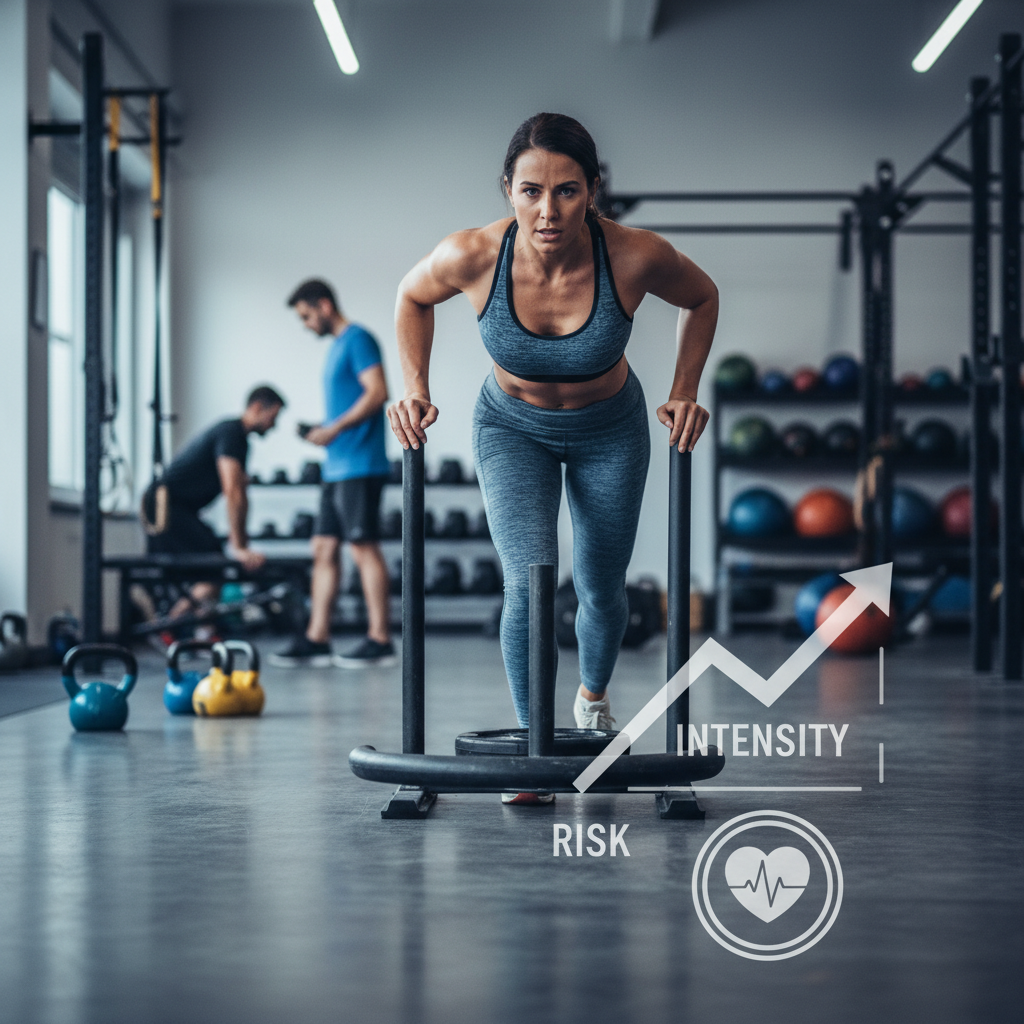
Exercising harder may offer extra health benefits in some cases — but the biggest win is still not being inactive
Exercising harder may offer extra health benefits in some cases — but the biggest win is still not being inactive
Some health headlines sound as though they have solved a complicated debate with one neat phrase. “Exercise harder — not just longer — to reduce risk of disease and death” is one of them. It is appealing because it answers a common question in a simple way: what matters more, how long you move or how hard you push?
The most careful reading of the evidence provided suggests a more measured answer. The studies strongly support the broad conclusion that physical activity lowers the risk of chronic disease and premature death. They also leave room for the idea that higher intensity may offer added benefits in some situations. What they do not do is directly prove that exercising harder is generally better than exercising longer for everyone.
The strongest part of the science is still the most basic one
If there is one point that stands out clearly in the supplied material, it is that physical inactivity carries a major health cost. A major review concludes that inactivity is a significant cause of many chronic diseases and that regular physical activity can prevent or delay a wide range of adverse outcomes.
That matters because it puts the conversation in the right order. Before debating intensity versus duration, the first public health priority is still getting more people to move at all. For a large share of the population, the main problem is not that workouts are too easy. It is that activity is not happening regularly enough in the first place.
That is where the “harder” framing can become misleading. It risks sending the wrong message to people who are sedentary, older, living with chronic illness, carrying excess weight, managing pain or simply trying to get started.
Physical activity protects health on multiple fronts at once
Another reason not to reduce the issue to a simple contest between intensity and duration is that exercise works through many pathways at the same time. It helps lower blood pressure, improves cardiorespiratory fitness, supports metabolic health, helps with weight regulation, preserves muscle function and influences sleep, mood and inflammation.
One of the references provided supports this link by showing that exercise lowers blood pressure and contributes to lower cardiovascular mortality risk. Another systematic review, focused on cancer prevention and survival, found that higher physical activity levels are associated with lower risk of several cancers and better survival in some cancer populations.
Taken together, these findings reinforce a central point: being active is clearly linked to lower disease burden. The body appears to respond favourably to movement through several mechanisms at once, which helps explain why the benefits show up across so many different outcomes.
Where intensity enters the picture
The idea that intensity may matter is not unreasonable. There is a physiologic basis for it. More vigorous exercise can lead to faster cardiorespiratory adaptations, improve aerobic fitness more strongly in less time and produce meaningful metabolic gains in some people.
That helps explain why high-intensity interval training and similar approaches have received so much attention. For people who already have some fitness, tolerate harder effort and can recover well, vigorous exercise may be an efficient way to build benefit.
But recognizing that potential is not the same as proving that intensity is the main determinant of lower disease and mortality risk. The supplied references do not make that case directly.
The problem with treating “harder” as a general rule
This is the key editorial limitation.
The articles provided strongly support physical activity in general, but they do not directly compare exercise intensity versus duration as the deciding factor in reducing disease and mortality. In other words, the evidence here is robust for saying exercise is good for health. It is not robust for saying that pushing harder beats spending longer as a universal rule.
That distinction matters because health advice that sounds efficient can easily become too blunt. A younger, healthier and already active person may benefit from adding more vigorous training. But someone with hypertension, joint pain, obesity, low fitness, cardiovascular disease or older age may benefit far more from achievable, regular moderate activity than from occasional attempts at very intense exercise.
In many real-world cases, the best exercise is not the hardest one. It is the one a person can keep doing.
Duration still matters — a lot
There is also a cultural issue in overemphasizing intensity. It can make moderate, sustainable activity sound second-rate, even though that is often the form of exercise most people can actually maintain.
Brisk walking, cycling, swimming, dancing, climbing stairs, resistance training adapted to ability and active transportation may not sound as dramatic as a hard interval session. But these are exactly the kinds of movement many people can build into everyday life. At the population level, that matters enormously.
Physical activity works not only through the intensity of a single session, but through total volume, frequency, consistency and whether it fits into real life. A highly intense plan that lasts two weeks is worth less, from a public health standpoint, than a moderate plan maintained for years.
The better question may be different
Rather than asking whether intensity is better than duration, a more useful question may be this: what combination of intensity, time and consistency produces the greatest benefit for a particular person?
That version is less catchy, but much more honest. The effect of exercise depends heavily on starting point. Age, health status, fitness level, medications, disease risk, mobility, body weight and personal goals all affect what kind of exercise dose is realistic and safe.
That is why the idea that everyone should simply “exercise harder” risks importing a performance mindset into public health advice. That may work well for people who are already active, but it is not always the most helpful message for the broader population.
Can higher intensity add extra benefit? Probably yes, in some settings
None of this means intensity is unimportant. It probably can add benefit in some contexts. For people who are already active, raising intensity may improve cardiorespiratory fitness further, and fitness itself is strongly linked to lower mortality risk.
It is also plausible that higher intensity offers time efficiency: more adaptation in fewer minutes. That can be useful for people with limited time and good exercise tolerance.
But the key word remains “may”. Based on the supplied references, added benefit from intensity is a defensible possibility. It is not something that can be presented as clearly superior to duration for all people.
The danger of turning a nuance into a commandment
One of the most common problems in health communication is taking a real nuance and turning it into a universal rule. Here, the nuance is that higher intensity may provide added benefit in some circumstances. The overreach is turning that into “exercise harder, not longer”.
That leap creates two problems. First, it sets up a false opposition between intensity and duration, when both often matter. Second, it ignores adherence. A theoretically ideal exercise plan is not much use if it is too demanding for someone to maintain.
For many people, the most effective path is still to build more total movement, create a consistent routine and then, if appropriate, layer in some higher-intensity effort gradually.
What this means for the average reader
The most practical message is less glamorous but more useful. If you are already active and tolerate exercise well, adding higher-intensity sessions may offer extra cardiovascular or fitness benefits. But if you are inactive, the biggest health gain is not from suffering more. It is from starting and sticking with movement.
That is especially true for people with chronic disease, long periods of inactivity, excess weight or physical limitations. In those settings, safe, repeatable moderate activity — walking regularly, cycling, swimming, strength work, or even shorter bouts of movement spread across the day — may produce a major reduction in disease burden and mortality risk.
The most balanced takeaway
The supplied evidence strongly supports the idea that physical activity lowers the risk of chronic disease, cancer, hypertension and premature death. It also leaves open the possibility that higher intensity may add extra benefit in some contexts, especially for people who already have the capacity to tolerate it.
But it would overstate the science to claim, based on this material, that exercising harder is categorically better than exercising longer. The strongest support here is for the value of being active in general, not for a clear victory of intensity over duration as a universal principle.
The most honest conclusion is this: movement comes first. After that, intensity may be a useful tool, but not a single answer for everyone. If the goal is to live longer and lower disease risk, the best exercise is still the kind that combines physiologic benefit with something a person can realistically sustain.