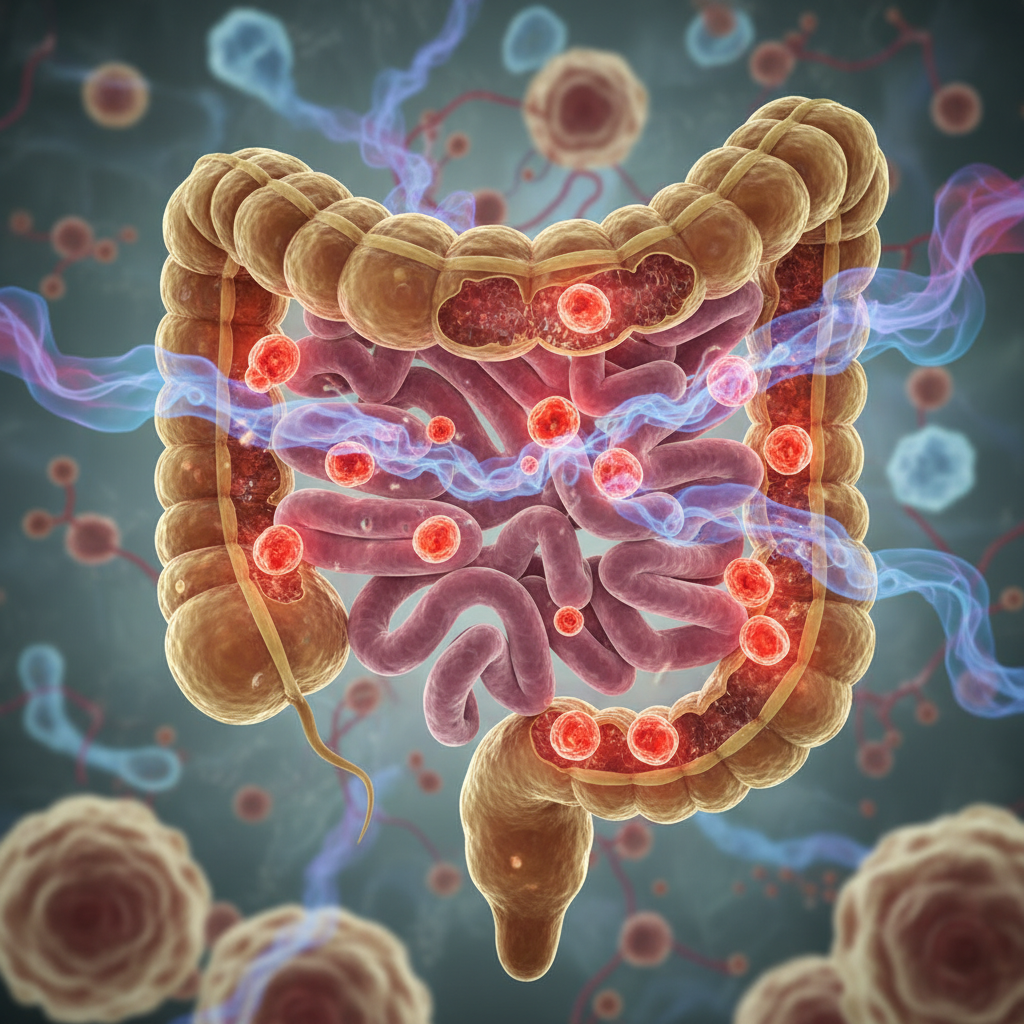
How an aging gut may help fuel chronic inflammation and raise disease risk
How an aging gut may help fuel chronic inflammation and raise disease risk
For a long time, aging was treated as a vague, almost passive process — something that simply wore the body down with time. But modern biology has been steadily replacing that view with a more precise one. Aging is not just the passing of years. It is also a collection of measurable biological changes, and one of the most important themes linking those changes is chronic inflammation.
That is where the gut comes in.
The strongest safe reading of the supplied evidence is that age-related changes in the gut microbiome and in the gut barrier may help drive chronic low-grade inflammation, increasing vulnerability to frailty and age-associated disease. What the evidence does not directly establish is that one newly identified class of “gut particles” has already been validated as the main culprit. The broader mechanism is stronger than the specific headline framing.
Why the gut has become central to aging research
The gut is no longer seen as just a digestive tube. It is home to a large microbial ecosystem, deeply involved in immune regulation, metabolism and signalling between the outside world and the inside of the body.
When that ecosystem is relatively stable, it can support nutrient handling, immune balance and resilience. When it shifts in harmful ways, the gut may become a source of persistent inflammatory signalling.
This is what makes gut aging inflammation such an important idea. It suggests the aging gut is not simply a bystander reflecting decline elsewhere. It may be an active participant in the biological processes that make older bodies more vulnerable to disease.
What changes in the gut with age
The supplied reviews describe a fairly consistent picture of gut-related changes associated with aging. These include shifts in microbiome composition, altered microbial diversity in some settings, loss of balance between protective and potentially harmful organisms, and weakening of the gut barrier itself.
These changes are often grouped under the idea of age-related dysbiosis. Importantly, the literature does not treat dysbiosis as merely a passive marker of aging. It is described as an active player in both immunosenescence — the aging of the immune system — and inflammaging, the chronic low-grade inflammatory state associated with many disorders of later life.
That framing matters because it moves the gut closer to the centre of the aging story. If the gut helps regulate immunity, then age-related disruption in the gut could have effects far beyond digestion.
The gut barrier may be one of the most important pieces
One of the clearest themes in the supplied evidence is the importance of the gut barrier.
Under healthy conditions, the barrier helps keep the contents of the gut where they belong. It allows useful absorption while limiting the passage of microbial material and inflammatory triggers into the rest of the body.
With age, that barrier may become less effective. Reviews focused on the gut barrier suggest that aging-related disruption can allow microbial components and other gut-derived signals to move beyond the intestine and into circulation.
When that happens, the immune system may respond as though it is being persistently nudged by threat. The result is usually not a dramatic acute inflammatory illness, but a quieter and more chronic form of immune activation. That kind of low-grade inflammation is exactly what many researchers think contributes to the slow erosion of resilience that often comes with aging.
Why low-grade inflammation matters so much
Chronic low-grade inflammation is now one of the defining concepts in aging biology. It has been linked to frailty, poorer recovery from physical stress, reduced metabolic resilience and increased risk for multiple chronic diseases.
The supplied literature supports the view that the gastrointestinal microbiome, barrier disruption and persistent immune activation are part of that broader picture. That does not mean the gut is the only source of age-related inflammation. But it does mean the gut may be one of the more important contributors.
This helps explain why gut-related processes may matter to conditions that do not initially seem “digestive” at all, including:
- frailty and reduced physical reserve;
- chronic inflammatory illness;
- metabolic dysfunction;
- lower resilience to stress and illness;
- and broader age-associated decline.
What the headline gets right — and where it goes too far
The headline is directionally right in pointing to a biologically plausible link between aging, gut-derived signals, inflammation and disease risk. The evidence supports that general story well.
It is also reasonable to suggest that microbial material or gut-derived signals may influence the rest of the body when barrier integrity weakens. That fits the current understanding of how systemic low-grade inflammation may develop.
Where the framing becomes too strong is in the suggestion that one specific category of “gut particles” has already been directly identified and validated as the driver of the process. The supplied PubMed literature does not do that.
What it supports more clearly is a broader mechanism involving:
- age-related dysbiosis;
- weakening of the gut barrier;
- translocation of microbial signals or components;
- and ongoing inflammatory signalling.
So the stronger story is not that science has found the single gut particle behind age-related disease. It is that aging of the gut ecosystem and barrier appears to be one plausible route by which chronic inflammation is sustained.
Why this changes how aging is understood
This line of research matters because it pushes aging away from a fatalistic story and towards a mechanistic one. Instead of simply saying the body becomes inflamed because it gets older, researchers are asking a more useful question: which biological systems are feeding that inflammation?
The gut is a compelling answer because it sits at the intersection of microbial life, immune regulation, metabolism and barrier function. Few organs are so strategically placed to influence whole-body inflammatory balance.
That may also help explain why people of the same age can age so differently. Some of that variation may reflect not only genetics or lifestyle in a general sense, but also the state of the gut ecosystem and the integrity of the gut barrier.
What the evidence still does not prove
Even with a persuasive biologic rationale, the limits of the evidence matter.
Most of the supplied literature is review-based. That makes it useful for identifying patterns and mechanisms, but it is not the same as direct proof that one class of gut-derived signals causes specific human diseases.
The papers also emphasize association and mechanistic plausibility more than definitive causal confirmation. In other words, the evidence is stronger for the idea that gut-derived inflammatory signalling is involved than for the claim that it has already been pinned down as a singular, proven driver.
It is also important to remember that aging-related inflammation is multifactorial. Gut-derived mechanisms are likely one important contributor, not the only one. Other forces include:
- aging of the immune system itself;
- accumulated cellular damage;
- metabolic dysfunction;
- oxidative stress;
- co-existing chronic illness;
- and lifestyle factors such as diet, sleep, inactivity and medication use.
That is why it would be an overstatement to say one gut-derived particle has now been established as the main cause of age-related disease.
Even so, the overall direction is persuasive
Despite those caveats, the broader message is increasingly hard to ignore. The aging gut looks less and less like a passive mirror of decline and more like an active participant in the process.
That matters for both research and medicine. If part of chronic age-related inflammation is being fed by changes in the microbiome and the gut barrier, then understanding those processes more clearly may help identify who is at greater risk and, eventually, open the door to more targeted prevention strategies.
The most balanced reading
The most responsible interpretation of the supplied evidence is that age-related changes in the gut microbiome and gut barrier may help promote chronic low-grade inflammation and increase the risk of age-associated disease.
The literature supports that broader mechanism well: age-related dysbiosis, barrier weakening and persistent immune activation emerge as biologically plausible contributors to inflammaging, frailty and reduced resilience.
But it is equally important to say what has not yet been shown: the supplied studies do not directly validate one specific class of “gut particles” as the main driver of the process, nor do they prove that gut-derived signals alone explain disease risk in aging.
Still, the core idea is powerful. Aging may not simply be a story of time passing. It may also be a story of biological boundaries becoming less stable — and few boundaries may matter more than the one separating the gut from the rest of the body.