Less invasive transcatheter heart valve treatments are showing promising early results for older and high-risk patients — but long-term proof still matters
Less invasive transcatheter heart valve treatments are showing promising early results for older and high-risk patients — but long-term proof still matters
For decades, treating a badly diseased heart valve usually meant opening the chest, using cardiopulmonary bypass, and accepting a long recovery. For many patients, that still remains the best option. But for others — especially people who are older, frail, or at high surgical risk — conventional surgery can be less a clear solution than a serious limitation.
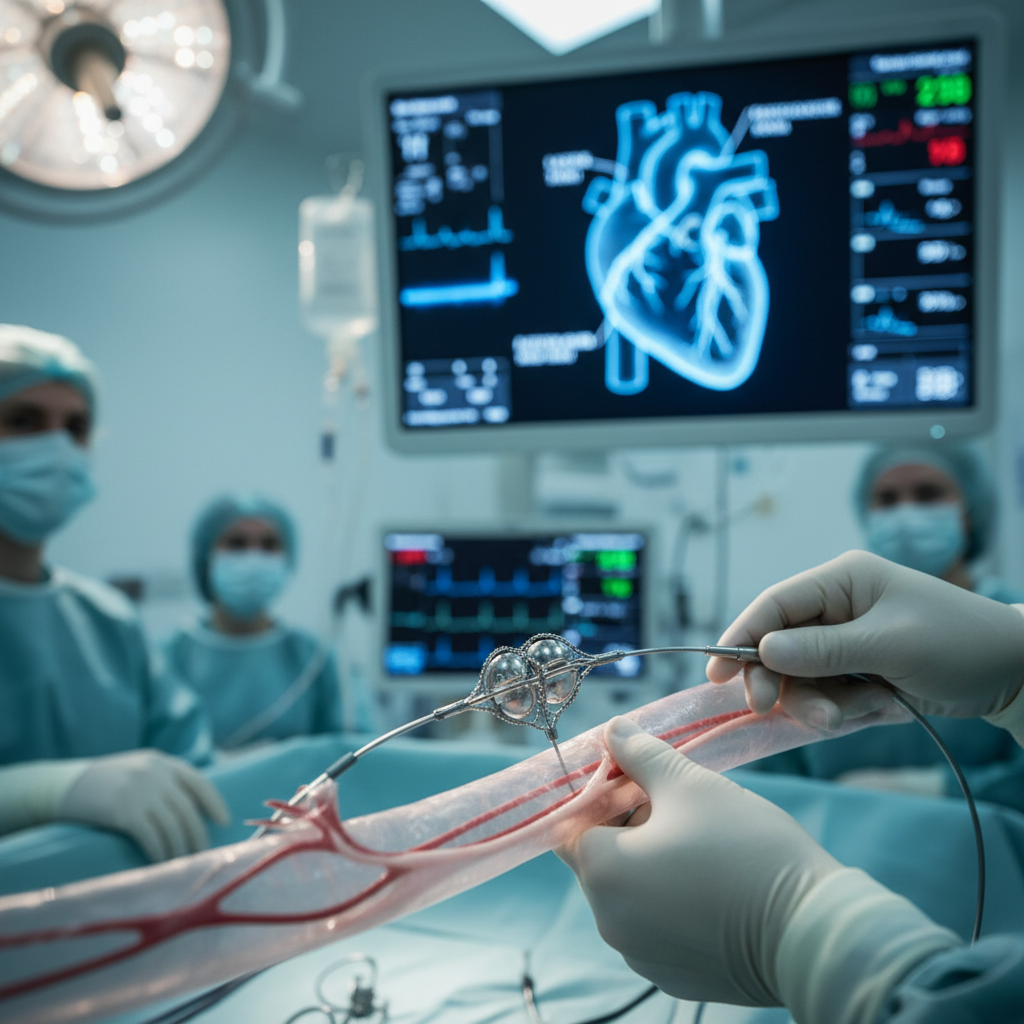
That is exactly where transcatheter valve treatments have begun to reshape the field. Instead of open surgery, these approaches aim to repair or replace heart valves through catheter-based procedures that are much less physically invasive. The appeal is obvious: offer treatment to patients who may not tolerate standard surgery well.
The new headline about a less invasive heart valve fix with strong early results in older high-risk patients fits that broader shift. The supplied literature supports the general claim that transcatheter approaches can produce encouraging early results in difficult-to-treat populations. But the most responsible interpretation has to keep two things in view at once: the studies involve different valves and different devices, and most of the evidence is still early-stage, with limited follow-up and little direct comparison against surgery or standard care.
Why this kind of innovation matters so much
Severe valve disease can be especially difficult in older patients. Not just because the valve itself is damaged, but because the rest of the body may already be under strain: kidney impairment, frailty, lung disease, atrial fibrillation, repeated hospitalizations, reduced mobility, and lower physiological reserve.
In that context, the major advantage of a less invasive approach is not simply technical. It is clinical. It may mean:
- less procedural trauma;
- a potentially faster recovery;
- fewer days in hospital;
- the chance to treat people once considered too high-risk for surgery;
- and meaningful improvement in day-to-day function, even when the goal is not perfection but better symptoms and better quality of life.
That is the background that makes these early findings so important.
What the supplied studies actually show
Taken together, the supplied papers support a moderately strong conclusion: transcatheter valve approaches can show strong early procedural and functional results in high-risk patients, especially in terms of technical success, reduction in regurgitation, symptom improvement, and better functional status.
One of the most important studies is a multicentre report on transcatheter tricuspid valve replacement, which found sustained reduction in severe tricuspid regurgitation, improved functional class, and better walking distance at one year. That matters because severe tricuspid disease is often associated with fatigue, swelling, exercise limitation, and poor overall outlook, especially in patients with multiple comorbidities.
Another study presented early trial results for a novel transcatheter valve for severe native aortic regurgitation, showing high procedural success, low short-term mortality, and meaningful improvements in symptoms and cardiac function at 30 days. This is especially notable because native aortic regurgitation has historically been a more difficult target for transcatheter treatment than calcific aortic stenosis.
The evidence set also includes first-in-human experience with a transcatheter mitral valve replacement system, suggesting short-term feasibility and safety in high-risk patients with severe mitral regurgitation.
Taken together, those studies support a meaningful broader point: when surgery is risky, unrealistic, or poorly tolerated, transcatheter valve treatment may open a viable new therapeutic path.
What is most encouraging about the early results
The most promising part is not only that the devices can be implanted successfully. It is that patients seem to improve in ways that matter clinically soon after treatment. In severe valve disease, especially in frailer patients, outcomes like these are highly relevant:
- less severe regurgitation or valve dysfunction;
- reduced breathlessness and fatigue;
- improved functional class;
- better exercise tolerance;
- and, in some contexts, better cardiac function.
Those gains matter because many of these patients are not only trying to live longer. They are trying to walk more easily, stay out of hospital, breathe better, and regain some daily independence.
That is why quality of life and functional status are especially important endpoints in structural heart disease, particularly in higher-risk populations.
What “strong early results” do not mean
This is where caution matters. Early procedural success does not automatically mean that these technologies have already proved:
- long-term durability;
- better survival over time;
- lower need for repeat intervention;
- superiority over surgery;
- or benefit across all valve diseases.
That warning is essential because the supplied evidence is heterogeneous. It is not about one single valve procedure, but about different valves — tricuspid, aortic, and mitral — using different devices in different clinical settings.
On top of that, much of the evidence still comes from early-phase, single-arm, feasibility-oriented, or first-in-human studies, rather than robust randomized comparisons against surgery or best standard treatment.
The strength and the weakness of the current evidence
The strength of the evidence is that different lines of investigation point in the same direction: it is increasingly possible to treat difficult valve disease through less invasive catheter-based approaches in complex, high-risk patients, with good early safety and meaningful clinical benefit.
The weakness is that we still do not know with the same level of confidence:
- how durable these valve systems will be over years;
- how they will perform at 3, 5, or 10 years;
- which patients benefit most compared with surgery;
- and how reproducible the results will be outside highly specialized centres.
In other words, structural cardiology is showing that these procedures can be done and can help in the short term. The next question is: for whom, for how long, and with what real advantage over existing options?
Why patient selection remains central
Another crucial point is that these procedures are not for everyone. The success of transcatheter valve treatment depends heavily on careful patient selection.
That includes assessing:
- valve anatomy;
- disease severity and pattern;
- frailty and comorbidity burden;
- true surgical risk;
- life expectancy;
- and what the realistic goals of treatment are.
For some patients, conventional surgery may still provide the best balance of durability and disease control. For others, the surgical risk may make a transcatheter option far more reasonable. And in some situations, the main goal may be symptom relief with the lowest possible procedural burden, even if all the long-term answers are not yet available.
That is a more individualized kind of medicine, built around context rather than one-size-fits-all decisions.
What the story gets right
The story gets something important right by showing that the future of valve treatment is no longer simply a choice between open surgery and doing nothing. There is now a growing therapeutic space for less invasive intervention in patients once considered too fragile or too high-risk for standard surgery.
It also correctly highlights outcomes that matter in this group: fewer symptoms, better walking ability, less residual valve dysfunction, and a feasible procedure with good short-term safety.
In practice, this reflects a real shift in cardiology. Technological progress is not just producing new devices. It is changing who can be treated and how.
What should not be overstated
At the same time, it would be premature to frame these technologies as already proven replacements for surgery across all valve conditions. The supplied evidence does not support that.
There are several reasons for restraint:
- the studies involve different valve diseases;
- the devices are different from one another;
- follow-up remains relatively short;
- much of the evidence is still early-phase;
- and short-term success does not guarantee lasting benefit.
It would also be a mistake to assume that “less invasive” always means “better”. In valve disease, the best treatment is still the one that offers the most appropriate balance of risk, functional benefit, durability, and disease control for the individual patient.
The most balanced reading
The supplied evidence supports a moderately strong conclusion: newer minimally invasive transcatheter valve approaches are showing encouraging early safety and functional results in older or high-surgical-risk patients, including good procedural success, symptom improvement, and better functional status. The studies on tricuspid replacement, native aortic regurgitation, and transcatheter mitral replacement all support that general direction.
But the responsible interpretation must also recognize that the evidence remains heterogeneous and still largely early-stage. These promising early outcomes do not yet prove long-term durability, superiority over surgery, or broad replacement of conventional strategies.
So the safest conclusion is this: transcatheter valve treatment is becoming an increasingly promising option for selected high-risk patients, especially those who may not be good candidates for open surgery. But the real test of these innovations will be whether they can deliver early safety, meaningful functional improvement, and durable long-term benefit over the years ahead.