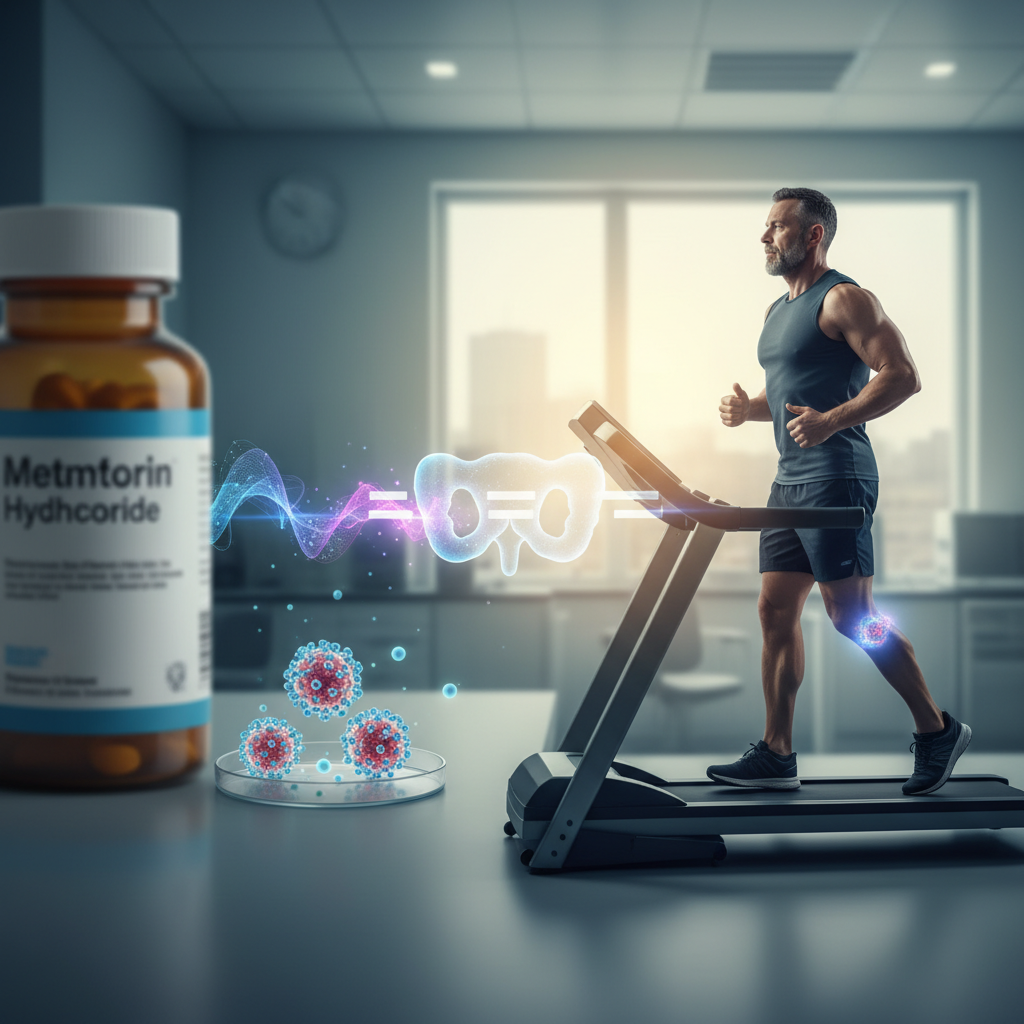
Metformin may mimic some exercise-related effects in prostate cancer care — but the idea is still far from proven
Metformin may mimic some exercise-related effects in prostate cancer care — but the idea is still far from proven
In cancer care, some of the most interesting questions are no longer only about how to attack tumours directly, but how to change the biological environment in which they grow. That is part of what makes a new headline about metformin and exercise in prostate cancer so compelling. Metformin, a drug used for decades in type 2 diabetes, is being discussed as a possible way to reproduce some of the metabolic effects associated with exercise.
It is an attractive idea. Exercise is one of the most consistently supported tools in supportive cancer care. It can help with physical function, body composition, insulin sensitivity, fatigue, inflammation, and overall quality of life. If an established medication could mimic even part of that metabolic profile, it would be an intriguing avenue of research — especially for patients who are older, frailer, or limited by treatment side effects.
But this is exactly where caution matters most. No PubMed articles were supplied to independently verify the claim behind the headline. That means it is impossible to tell, from the evidence provided, whether the finding relates to tumour biology in a lab, biomarker shifts in blood tests, side-effect management during therapy, exercise tolerance, survival outcomes, or some much narrower mechanistic observation. The concept is biologically plausible. The proof is not in hand.
Why the comparison sounds scientifically reasonable
Metformin has long attracted interest beyond diabetes because of its effects on metabolism. Broadly speaking, it can affect insulin signalling, glucose handling, cellular energy balance, and inflammatory pathways. Those are all processes that may matter in cancer biology and in how patients cope with treatment.
Exercise also acts on many of those same systems, though in a much broader way. Regular physical activity changes how the body uses glucose, can improve insulin sensitivity, helps preserve muscle mass, influences inflammatory signalling, and supports overall metabolic health.
That overlap is what gives the headline its scientific appeal. Metformin and exercise may influence some of the same metabolic pathways, even if they do so through different mechanisms and to different degrees. In prostate cancer, that matters because metabolism, hormonal environment, inflammation, and body composition can all shape both disease experience and treatment tolerance.
Why prostate cancer is a logical place to ask this question
This research theme is especially interesting in prostate cancer because many patients, particularly those receiving androgen-deprivation therapy, face very real metabolic and physical consequences. Treatment can contribute to:
- increased fat mass;
- loss of muscle mass;
- reduced physical function;
- worsening insulin resistance;
- fatigue;
- and broader cardiometabolic strain.
Exercise is often recommended because it can help counter several of these changes at once. That is why the notion of a medication echoing some exercise-related effects is so appealing in supportive care. If a drug could influence similar metabolic pathways, perhaps it could one day complement care for patients who struggle to stay active.
But “perhaps” is doing a lot of work here. Without the underlying studies, it is impossible to know whether the comparison is about meaningful patient outcomes or only about partial laboratory similarities.
The biggest problem: the claim is too vague to evaluate properly
The phrase “echo the benefits of exercise” sounds strong, but it is also frustratingly imprecise.
It could refer to very different kinds of findings, such as:
- shifts in metabolic biomarkers;
- changes in tumour growth in preclinical models;
- effects on treatment-related side effects;
- improved insulin response;
- better body composition;
- or broad supportive-care outcomes such as fatigue or physical performance.
Those are not equivalent claims.
A mechanistic overlap in a lab experiment would be scientifically interesting, but very far from showing clinical benefit for patients. A small biomarker study would not mean the drug reproduces the full value of exercise. Even a promising early clinical result would need careful interpretation around study size, patient population, duration, endpoints, and real-world relevance.
Without those details, the headline is best treated as a hypothesis-generating story rather than a practice-changing one.
Exercise is more than a metabolic signal
Another reason for caution is that the comparison itself can mislead if taken too literally.
Exercise is not a single intervention with one pathway. It is a whole-body behavioural stimulus that affects:
- cardiovascular fitness;
- muscle strength;
- insulin sensitivity;
- mood;
- sleep;
- bone health;
- inflammation;
- balance;
- and day-to-day function.
In cancer care, those benefits matter enormously. Even if metformin were shown to reproduce part of an exercise-related metabolic effect, that would not make it equivalent to exercise as a supportive-care strategy.
This distinction matters for patients. A headline like this could easily be misread as suggesting that a pill might substitute for physical activity. But nothing in the supplied evidence supports that interpretation. At most, the safest reading is that metformin may be under investigation as a way to influence some overlapping metabolic pathways.
A supportive-care story, not a treatment breakthrough
The most responsible editorial frame here is not “diabetes drug offers exercise in a pill” and not “new prostate cancer therapy confirmed.” It is a more modest story about metabolism, supportive care, and scientific exploration.
That is still worth attention. Supportive care in prostate cancer is not a side issue. How patients tolerate treatment, maintain function, manage metabolic health, and preserve quality of life matters greatly. If metformin can contribute to that discussion, the research could be meaningful.
But meaningful research is not the same thing as established benefit. Before anyone could make a stronger claim, several basic questions would need answers:
- Was the work done in people, animals, or cells?
- Was the focus tumour biology, side-effect management, or general metabolic health?
- Were the effects clinically noticeable or only measurable in biomarkers?
- Was metformin being studied alongside exercise, instead of exercise, or merely in comparison with exercise-related pathways?
- Did anything improve that patients would actually feel or that would change their outcomes?
At present, the supplied material does not answer any of that.
What patients should take from this now
For readers and patients, the most useful takeaway is a balanced one.
The idea behind the headline is not absurd. It is scientifically plausible that metformin and exercise could overlap in some pathways relevant to prostate cancer care, especially around metabolism and insulin signalling. That makes this a reasonable topic for further study.
But the leap from “plausible” to “proven” is a large one. Without the underlying PubMed evidence, there is no way to conclude that metformin truly delivers exercise-like benefits in men with prostate cancer, or that it improves care in a meaningful clinical sense.
For now, the stronger and more defensible message remains that exercise continues to matter in supportive cancer care when it is safe and feasible, while metformin should be seen here as a possible research tool or adjunct under investigation — not as a replacement.
The most balanced reading
The headline about metformin and exercise in prostate cancer points to a biologically interesting idea: both exercise and metformin can affect metabolism, insulin signalling, inflammation, and energy balance, all of which may matter in prostate cancer care. That overlap makes the comparison scientifically appealing, particularly in supportive-care or treatment-tolerance contexts.
But the limitations are substantial. No PubMed studies were provided, so the claim cannot be independently verified from the scientific evidence supplied. That means it is not possible to judge whether the reported finding is mechanistic, preclinical, or clinical, nor whether it relates to tumour control, side effects, physical function, biomarkers, or survival.
The safest conclusion, then, is a narrow one: metformin may be under exploration as a way to mimic some exercise-related metabolic effects in prostate cancer care, but there is no basis here to say that it replaces exercise or that it has already been proven beneficial for patients. For now, it is an interesting research signal — and little more than that.