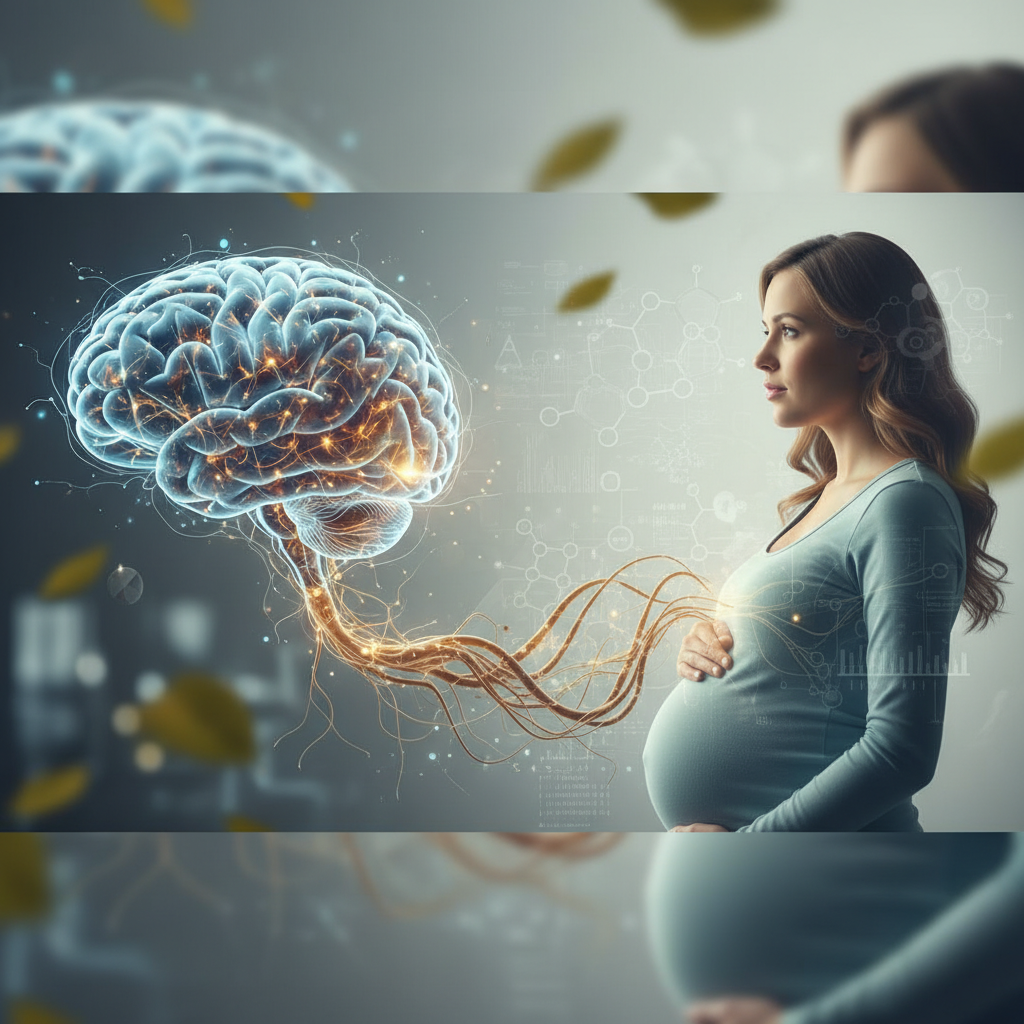
Pregnancy Really Does Change the Brain — and Science Is Starting to See Why
Pregnancy Really Does Change the Brain — and Science Is Starting to See Why
For a long time, the idea that pregnancy changes the brain lived in an awkward space between cliché and condescension. It showed up in jokes about forgetfulness, in eye-rolls about mood swings, and in the catch-all label of “pregnancy brain.” But the science now emerging suggests that this old stereotype missed the real story.
Pregnancy does appear to change the brain. Not in a vague, metaphorical sense, but through sweeping hormonal and neurobiological shifts that can affect mood, behaviour, cognition, and stress response. And perhaps most importantly, these changes do not automatically point to impairment. Many may be adaptive — part of the brain’s way of helping the body and mind navigate one of the most intense transitions in human biology.
That shift in perspective matters. It moves the conversation away from deficit and towards adaptation.
The brain in pregnancy may be reorganizing, not declining
Pregnancy is often framed in visible terms: a growing belly, nausea, fatigue, changing appetite, disrupted sleep. But underneath those outward changes is a dramatic internal transformation driven by hormones including estradiol, progesterone, cortisol, prolactin, placental lactogen, and oxytocin.
These hormones do far more than support fetal development. They also affect the brain.
A review on neurophysiological and cognitive changes during pregnancy describes wide-ranging effects on homeostasis, behaviour, mood, and cognition. In other words, pregnancy is not simply a reproductive event. It is also a neurological event.
That idea helps explain why so many pregnant people report shifts in attention, memory, emotional intensity, or sensitivity to stress. Those experiences may be real, but they do not necessarily mean the brain is functioning worse. It may mean the brain is reallocating resources, recalibrating priorities, and adapting to a new biological environment.
From an evolutionary perspective, that makes sense. Pregnancy is a period of heightened demand. The body is supporting fetal development while preparing for childbirth, lactation, caregiving, and a major social and psychological transition. It would be stranger if the brain did not adapt.
Hormones are not a footnote — they are the engine
The phrase “it’s just hormones” has often been used to dismiss what pregnant people feel. The science suggests the opposite: hormones are central, and they are powerful.
Progesterone, for example, is not only essential for maintaining pregnancy. Broader endocrine research suggests it also plays a role in mood, emotional processing, stress response, and cognition in females. Estradiol has similarly broad effects on the brain, influencing emotional regulation, neural signalling, and cognitive function.
Then there is cortisol, often shorthand for stress. During pregnancy, cortisol is part of a far more complex biological picture than everyday stress alone. Prolactin and oxytocin add yet another layer, helping prepare the brain and body for caregiving, bonding, and behavioural change.
Taken together, these shifts suggest that the pregnant brain is not simply being disrupted. It is being re-tuned.
That distinction is important because it changes how symptoms and experiences are interpreted. A change in emotional sensitivity, for example, may not be a malfunction. In some contexts, it may be a feature of adaptation.
The problem with the “pregnancy brain” stereotype
The phrase “pregnancy brain” has stuck around because it captures something many people recognize: moments of forgetfulness, mental fog, distraction, or feeling unlike oneself. But as an explanation, it is crude.
For one thing, cognition is not a single skill. Memory, attention, emotional processing, risk perception, mental flexibility, and social sensitivity are not all the same thing. Pregnancy may influence some of these areas more than others, and not always in a way that looks like straightforward loss.
For another, pregnancy rarely happens in a vacuum. Sleep disruption, anxiety, physical discomfort, body changes, work stress, and the emotional weight of impending parenthood all affect how a person thinks and feels. It can be difficult to separate what is driven directly by hormones from what is shaped by fatigue, context, or expectation.
So while the stereotype may have started with a grain of lived experience, it flattened a complex process into an insultingly simple one. Research is now suggesting a more nuanced view: pregnancy may alter mental performance in some ways while also enhancing or prioritizing other kinds of processing.
Mood changes are part of the brain story too
One of the most important implications of this research is that pregnancy-related brain changes are not just about memory slips or concentration. They are also about emotional regulation.
Pregnancy is a neurobiologically sensitive period. The same hormonal systems that help sustain gestation also influence mood, stress physiology, and emotional responsiveness. That does not mean pregnancy is inherently destabilizing, or that emotional changes are automatically signs of pathology. But it does help explain why this period can feel psychologically intense even in wanted, healthy pregnancies.
Research on prenatal stress also underscores how consequential this phase is for neurobiology. Although some of that literature focuses more on brain-related outcomes in offspring than on maternal brain changes themselves, it reinforces a larger point: pregnancy is a period when biological and psychological states matter deeply.
This has real-world implications for care. Mental health in pregnancy should not be treated as secondary to the “physical” side of prenatal care. If the brain is undergoing major adaptation, emotional well-being deserves to be taken seriously as part of routine maternal health.
Many of these changes may be useful
Perhaps the most interesting part of the emerging science is the possibility that some brain changes in pregnancy are not costs, but benefits.
Researchers increasingly suspect that pregnancy may tune the brain towards functions that matter during this stage of life: sensitivity to social cues, vigilance, emotional salience, stress adaptation, bonding, and preparation for caregiving. That does not mean every change feels good, or that every person experiences pregnancy in the same way. But it does open the door to a more respectful and scientifically grounded interpretation.
Instead of seeing the pregnant brain as diminished, we may need to see it as specialized.
That shift also has cultural importance. Many pregnant people are expected to continue performing at work, at home, and socially as if nothing profound is happening internally. But a brain in transition may not prioritize the same things it did before. That is not failure. It may be biology doing exactly what biology is supposed to do.
What science still does not know
For all the excitement around this area, important gaps remain.
The supplied research strongly supports the broad claim that pregnancy is associated with major neurophysiological and cognitive changes. But it does not fully explain the precise functional meaning of those changes in humans. There is still limited direct longitudinal imaging evidence following the same people before, during, and after pregnancy.
Some of the mechanistic thinking also relies partly on animal research or mixed human-animal interpretation. That is common in neuroscience, but it means caution is needed when translating biological ideas into simple takeaways.
It is also likely that pregnancy brain changes are highly individual. Factors such as prior mental health, stress, sleep, social support, medical complications, trauma, and socioeconomic strain may all shape how these adaptations show up. What feels like increased sensitivity for one person may feel like overwhelm for another.
So the right message is not that pregnancy affects every brain in the same way, or that every change is adaptive and harmless. It is that the old deficit model is too small for what the science is now revealing.
Why this matters beyond the lab
Understanding pregnancy as a brain adaptation story could change more than the way headlines are written. It could influence how prenatal care is delivered, how workplaces support pregnant employees, and how society talks about maternal mental health.
If pregnancy involves real shifts in mood, cognition, and behaviour, then those changes deserve attention without ridicule and care without overpathologizing. A person who feels mentally different during pregnancy does not need to be dismissed — and does not automatically need to be told something is wrong. Often, what is needed is context, support, and a more informed understanding of what this life stage does to the mind as well as the body.
The bottom line
The most compelling message from this research is not that pregnancy “hurts” the brain. It is that pregnancy appears to reshape it.
Major hormonal shifts seem to alter brain function, mood, and behaviour in ways that may help support the transition into parenthood. Many of the details are still being worked out, and the science is far from complete. But one idea already looks outdated: that “pregnancy brain” is just a joke or a sign of decline.
It may be something far more profound — a brain in adaptation, not in retreat.