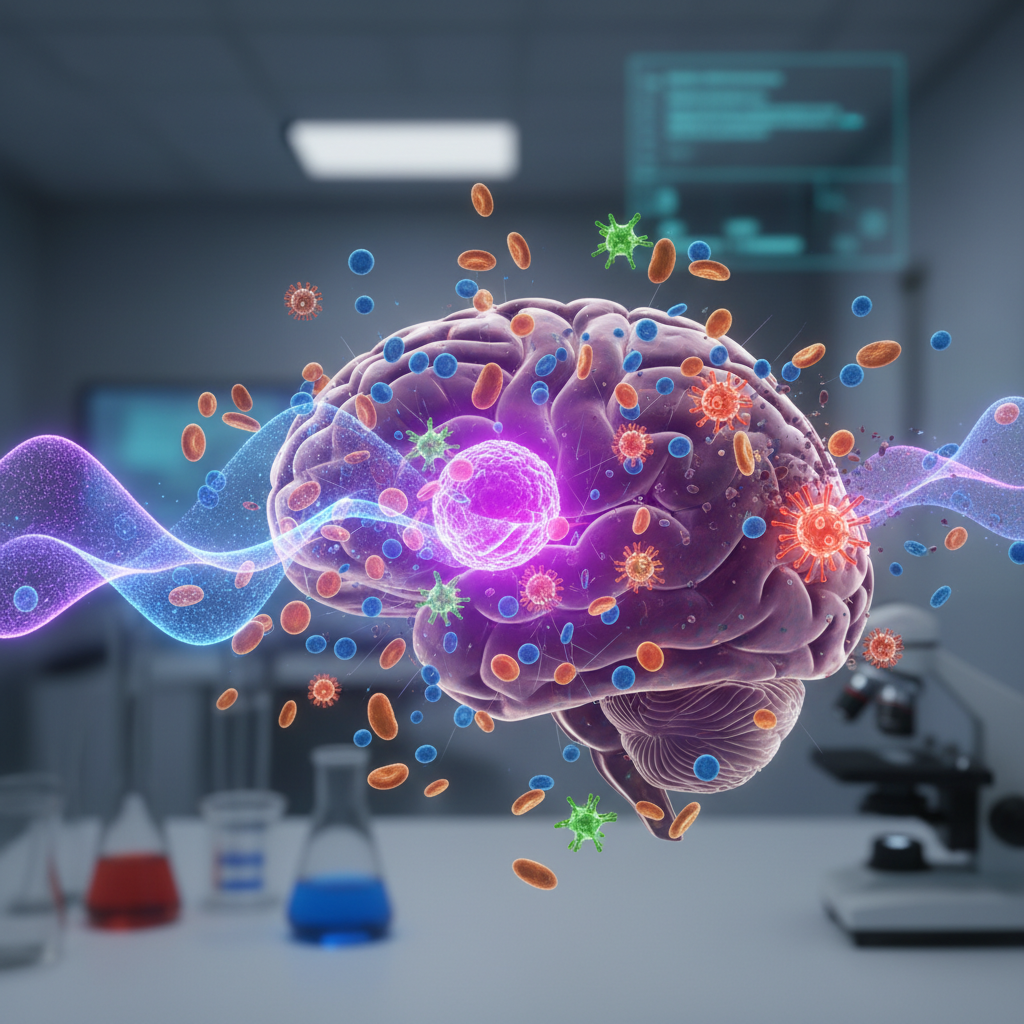
Reprogramming the immune system may open a new front against brain cancer — but the promise is still more conceptual than proven
Reprogramming the immune system may open a new front against brain cancer — but the promise is still more conceptual than proven
Few areas of oncology are as frustrating as aggressive brain tumours. Even with advances in surgery, radiation, chemotherapy, and molecular medicine, diseases such as glioblastoma still carry a poor prognosis and limited treatment options. Part of that difficulty is not explained only by tumour location or the blood-brain barrier. It also reflects the way these cancers reshape the environment around them.
That is the central idea behind this story about immune reprogramming for brain cancer. Instead of focusing only on the tumour cell itself, the strategy is to change the behaviour of immune cells that live within or around the tumour, turning an environment that currently protects cancer into one that becomes less hospitable to it.
The supplied evidence supports that general direction well. What it shows most clearly is that the immunosuppressive tumour microenvironment is one of the main barriers to treating brain tumours, and that reprogramming immune cells in that setting is a biologically plausible and actively investigated strategy. What it does not directly show is that the specific drug candidate named in the headline has already proven effective in patients.
The real problem is not only the tumour, but the environment it builds
For a long time, cancer was understood mainly as a mass of malignant cells growing out of control. That remains important, but in brain tumours it is not enough. Gliomas and brain metastases do not grow in isolation. They build a neighbourhood that supports their own survival.
That neighbourhood includes resident brain immune cells such as microglia, along with infiltrating macrophages, T cells, and other immune components. In theory, some of those cells should help contain the tumour. In practice, they are often diverted, weakened, or reprogrammed by the cancer itself to sustain dysfunctional inflammation, suppress immune attack, and support disease progression.
That is where immune reprogramming becomes attractive. Rather than trying to “boost immunity” in a vague or generalized way, the aim is to change the functional state of immune cells inside the tumour microenvironment, so they stop helping the cancer and start making its survival harder.
What glioma immunotherapy reviews make clear
The review literature provided on glioma immunotherapy reinforces this point consistently. These papers describe the tumour microenvironment as one of the biggest obstacles to treatment success. The challenge is not simply getting the immune system into the brain. It is confronting a context in which the tumour has already shaped signals, cell populations, and communication pathways to weaken antitumour responses.
That helps explain why so many immunotherapy approaches that have worked more convincingly in other cancers have shown more limited results in brain tumours. The problem is not a lack of therapeutic ambition. It is the combination of several barriers at once: tumour heterogeneity, T-cell exclusion or exhaustion, the presence of immunosuppressive myeloid populations, and the difficulty of getting therapies to reach and persist in the central nervous system.
In other words, immunotherapy in the brain is not just facing a difficult target. It is facing territory already set up to resist it.
Glioblastoma stem cells add another layer to immune escape
Another important strand in the supplied literature involves glioblastoma stem cells. This field supports the view that the tumour is not only aggressive because of its growth, but also because of its ability to evade immune surveillance.
So-called tumour stem cells help sustain heterogeneity, treatment resistance, and recurrence. At the same time, they interact with the surrounding microenvironment in ways that reinforce immunosuppressive pathways. That matters because it suggests improving treatment may require more than shrinking visible tumour mass. It may require breaking the communication circuits between tumour cells and immune cells that help sustain the disease over time.
That perspective makes immune reprogramming even more compelling. If part of treatment resistance comes from the tumour’s ability to educate the immune system in its favour, then undoing that education may be just as important as directly attacking the cancer.
Brain metastasis research points in the same direction
More recent work on the immune landscape of brain metastases broadens the same argument. The metastatic brain is not a simple immune desert. It contains complex interactions among macrophages, microglia, T cells, and other components, all influenced by tumour type, location, and disease stage.
That reinforces an important message: different brain cancers may require different strategies, but they share one major theme. The immune microenvironment matters deeply. And if it matters, then manipulating it intelligently becomes one of the most promising routes for new therapies.
It is no coincidence that so much current research is trying to modulate tumour-associated macrophages, reactivate T cells, interfere with immunosuppressive signalling, or make the tumour-bearing brain more permissive to effective immune responses.
What the headline gets right
The headline is right to frame immune-system reprogramming as a promising direction in brain cancer treatment. That framing is consistent with the current state of the literature. It is also right to suggest that the relevant target is not only the tumour cell in isolation, but the microenvironment that supports it.
That point is especially important in neuro-oncology because, for years, public discussion of progress in this field was too centred on the idea of “new drugs against the tumour”, as if success depended only on finding a more powerful molecule. More recent research points to a more complicated picture: treating brain tumours may require changing the entire ecosystem in which they survive.
Where the headline needs more caution
At the same time, it would be a mistake to read this story as if the new candidate had already shown clear effectiveness in patients. The main limitation of the supplied evidence is exactly that: the PubMed papers do not directly identify or test the specific new drug candidate named in the headline.
Most of the evidence is review-based and conceptual rather than a robust body of positive trial data for one agent. That does not weaken the importance of the idea, but it does change what can safely be claimed.
The strongest evidence-based statement here is not “this new drug works”. It is “there is a solid biological rationale for trying to reprogram the immune microenvironment in brain tumours, and this is one of the most active and relevant strategies in current research”.
Why the promise has not yet become broad clinical reality
The gap between biological plausibility and proven clinical benefit remains large in brain tumours. There are several reasons for that.
First, the brain is still a difficult pharmacologic environment. The blood-brain barrier can limit drug delivery, and even when a therapy reaches the tumour, distribution may be uneven.
Second, tumours such as glioblastoma are extremely heterogeneous. Two areas of the same tumour can behave differently, respond differently, and organize their own local microenvironments.
Third, reprogramming immune cells is delicate work. The immune system is not a simple on-off switch. Overactivation can produce toxicity, inappropriate inflammation, or limited benefit if other escape pathways remain active.
That is why even very promising lab-based strategies often need a long path before they demonstrate durable survival gains in real patients.
The central role of macrophages, microglia, and T cells
One of the most useful contributions of the supplied literature is how clearly it identifies the cell populations at the centre of this debate. Macrophages, microglia, and T cells appear again and again as key players.
Macrophages and microglia can either support or hinder antitumour defence depending on their functional state. In many brain tumours, they are pushed toward profiles that favour tumour growth, tissue remodelling, and immune suppression.
T cells, meanwhile, remain one of the greatest hopes in immunotherapy when they can reach the tumour and maintain meaningful activity. The problem is that they often encounter a hostile environment full of signals that promote exhaustion, exclusion, or inactivation.
Reprogramming this system means trying to change those local rules of engagement.
What may come next
The most likely future for this kind of strategy is probably not a single miracle drug, but smarter combinations. Immune reprogramming may work best alongside other approaches: surgery, radiation, targeted therapy, vaccines, checkpoint blockade, or better drug-delivery platforms to the brain.
That makes sense. The tumour microenvironment is layered, adaptable, and redundant. Rarely does one mechanism explain all resistance. For the same reason, one intervention may not be enough.
Even so, changing the microenvironment remains a valuable goal. If brain tumours survive partly because they can neutralize the immune response around them, then reversing that neutralization is one of the most rational ways to try to improve treatment.
The most balanced reading
The safest interpretation is this: reprogramming immune cells inside the tumour microenvironment is a promising and biologically well-supported strategy for treating brain cancers, especially because these tumours often create a deeply immunosuppressive environment.
The supplied evidence supports that picture well. Reviews of glioma immunotherapy highlight the microenvironment as a central barrier; the glioblastoma stem-cell literature reinforces the importance of immune escape; and recent analyses of brain metastasis immune landscapes show the major role of macrophages, microglia, and T cells.
But the limitations matter: the evidence presented is more conceptual than specific to the new candidate named in the headline; most of the data are review-based rather than direct clinical proof for one agent; and durable survival gains in brain tumours remain difficult to achieve.
In short, this story points to a serious and important scientific direction. The strongest advance here is not proof that one new drug has already changed brain cancer treatment, but a growing recognition that beating these tumours may require not only attacking the cancer itself, but also re-educating the immune system the tumour has learned to control.