Why some cancer drugs stop working even when they hit the right target
Why some cancer drugs stop working even when they hit the right target
One of the most frustrating patterns in modern oncology is watching a treatment work well at first, only to lose control of the disease later on. At face value, that can seem contradictory. If the tumour had the right molecular target, if the drug was designed to hit it, and if the patient initially responded, why does the cancer come back or keep growing?
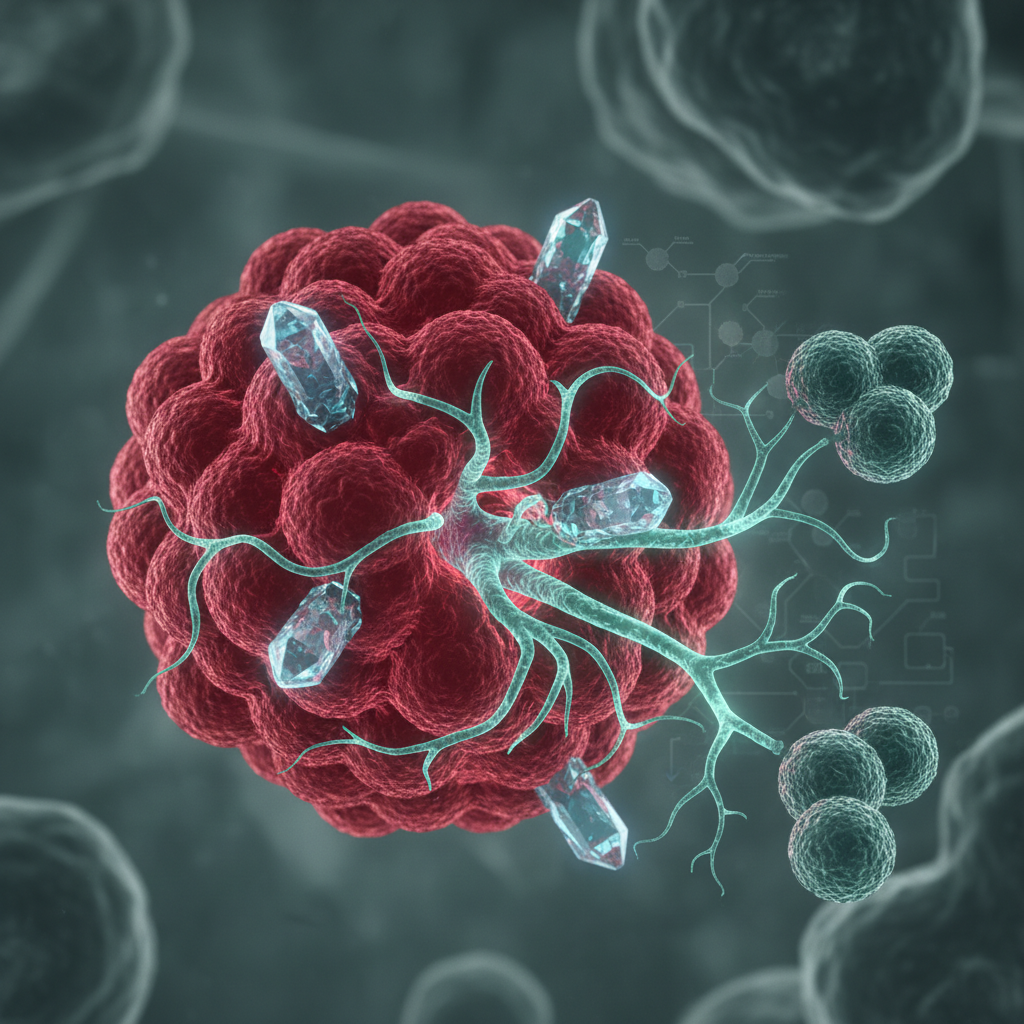
The answer increasingly seems to lie in a basic feature of cancer biology: tumours do not rely on only one route to stay alive. When one critical pathway is blocked by treatment, some cancer cells can switch on backup survival programs. They do not always keep growing in the same way. Sometimes they slow down, enter a dormant or senescence-like state, or rewire their internal circuitry just enough to survive the assault.
That is the most useful way to understand the new story about a tumour “backup survival pathway.” The point is not that all cancers use one universal escape route. The more important message is that many tumours are biologically flexible enough to improvise when their main dependency is attacked.
Resistance is not always about losing the target
For years, drug resistance was often framed mainly as a mutation problem. The target changed, the drug no longer fit, and the tumour escaped. That still happens, and it remains an important part of cancer care. But it is no longer enough to explain the whole picture.
In some cancers, the original target may still be present, and yet the disease persists. The issue is not necessarily that the treatment failed to hit its mark. The issue is that some cancer cells manage to stay alive after being hit.
That distinction matters. It shifts the question from “Did the drug work on the target?” to “What did the cell do to avoid dying once the target was blocked?”
In practical terms, that helps explain why some early responses can be dramatic without being durable. The treatment may shrink much of the tumour, but still leave behind a small population of adaptable residual cells.
A closer look at lung cancer under targeted therapy pressure
The clearest mechanistic example in the supplied evidence comes from EGFR-mutant lung cancer. In that study, researchers found that targeted therapy pressure could push some tumour cells into a dormant, senescence-like state supported by YAP/TEAD-dependent transcriptional reprogramming.
In plain language, some cancer cells were not simply continuing to grow through treatment. They were changing their biological state in a way that helped them tolerate it. This program appeared to limit apoptosis — the programmed cell death that treatment is often meant to trigger.
That is an important insight because it highlights a less obvious form of resistance. The tumour is not necessarily becoming more aggressive in the classic sense right away. Instead, part of it becomes harder to eliminate. The cells hunker down, survive, and preserve the possibility of future relapse or progression.
The same study also showed that inhibiting the compensatory YAP/TEAD pathway enhanced drug-induced apoptosis. That gives real weight to the idea that backup survival pathways are not just descriptive biology. They may also be actionable therapeutic targets.
Cancer can change state to stay alive
This fits into a broader shift in oncology: resistance is often a problem of tumour plasticity.
Rather than acting like a uniform mass of identical cells, tumours can shift between different cellular states. Some cells keep proliferating. Others move into a stress-tolerant state. Some activate inflammatory signalling. Others adopt features linked to epithelial-mesenchymal transition, or EMT, which is associated with greater mobility, invasiveness and treatment resistance.
That means therapy failure is often not caused by one simple new mutation. It can emerge from a broader adaptive biology in which the tumour reorganizes itself to survive under pressure.
Evidence from other cancers points in the same direction
The broader literature provided here supports that overall concept across other tumour types. In breast and gastric cancer, studies have linked acquired drug resistance to inflammatory signalling, EMT and changes in pathways such as PTEN/Akt.
The most important point is not that all cancers use the same genes or the same escape route. It is that the pattern repeats. Under treatment pressure, cancer cells often activate compensatory programs that help them persist.
Those pathways are likely to differ depending on cancer type, therapy and tumour microenvironment. But the underlying logic is similar. Cancer does not always need to overpower a drug directly. Sometimes it only needs to survive long enough, shift into a different state, and wait.
Dormancy may be one of the most important parts of the story
One of the more clinically important implications is the idea of tumour dormancy. In cancer care, the worst problem is not always the cell that keeps dividing quickly. Sometimes it is the cell that appears quiet but stays alive.
These residual cells may escape the initial kill because they are no longer in the same biological state the treatment was designed to eliminate. They may divide less, activate stress-response programs and retain the ability to reawaken later.
That helps explain why some patients can have an encouraging early response and still relapse after an apparent period of control. The visible tumour burden may fall, but the biologically persistent core remains.
What this could mean for treatment strategy
If resistance often comes from backup pathways and cell-state changes, the future of cancer therapy may depend increasingly on smarter combinations.
Instead of relying on a single drug to attack the tumour’s main weakness, treatment may need to do two things at once: hit the primary driver and block the survival route the cells use to escape.
The lung cancer study points directly in that direction. If targeted therapy suppresses the main oncogenic pathway but YAP/TEAD supports residual cell survival, then combining those approaches could produce deeper and more durable tumour cell killing.
This is one of the most compelling ideas in current oncology. It is not enough to shrink the main tumour mass. The more difficult job may be preventing the cells that remain from finding an exit strategy.
What the current evidence does not show
It is important not to oversell the idea.
The supplied studies support the general concept that tumours can activate compensatory survival pathways under treatment pressure. But they do not prove that there is one single backup pathway responsible for all cancer treatment failure.
The studies span different tumour types and therapeutic contexts. That strengthens the broader theory of adaptive resistance, but not the idea of a universal mechanism.
Much of the evidence is also preclinical or mechanistic. It helps explain how resistance can arise, but it does not yet prove that blocking these pathways will improve survival across patients in routine care.
Why this line of research still matters
Even with those limits, the significance is substantial. This work changes how therapy failure is understood. Instead of viewing resistance simply as “the drug stopped working,” it frames resistance as an active biology of residual survival.
That matters because the future of treatment is often determined not by how much of the tumour disappears at first, but by whether small resistant populations are left behind. If researchers can identify how those cells survive, they may be able to design treatments that are harder for tumours to outmanoeuvre.
In that sense, the value of this research is not just in naming another pathway. It is in shifting attention to the cells that stay alive after an apparently successful strike.
The most balanced takeaway
The evidence provided supports the idea that some tumours evade treatment by activating compensatory survival programs. Rather than dying when the primary target is blocked, certain cancer cells can enter dormant or senescence-like states, alter their signalling, and become more tolerant of therapeutic stress.
The clearest example here comes from EGFR-mutant lung cancer, where a YAP/TEAD-dependent program appears to help residual cells survive targeted therapy and may offer a promising avenue for combination treatment.
The broader lesson, though, is bigger than any one pathway. Cancer therapy does not always fail because the drug missed the target. Sometimes it fails because the tumour finds a backup plan. And in the next phase of oncology, shutting down that backup plan may prove just as important as hitting the original target in the first place.