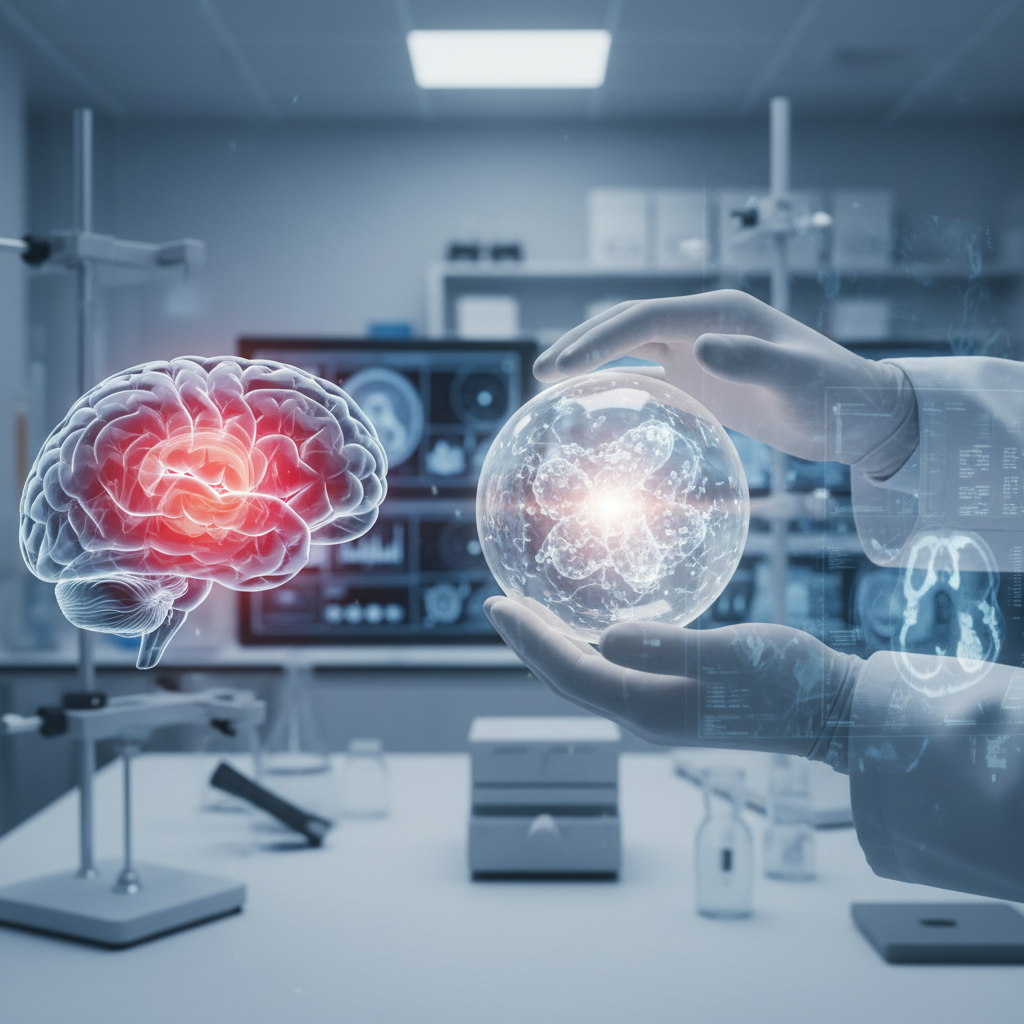
Brain inflammation still cannot be ruled out in long COVID — and the evidence remains unsettled
Brain inflammation still cannot be ruled out in long COVID — and the evidence remains unsettled
More than four years after the start of the pandemic, one of the hardest questions in medicine still has no simple answer: what is actually driving the persistent symptoms of long COVID, especially when they involve mental fatigue, trouble concentrating, mood changes, and the experience many patients describe as brain fog?
It is an important question because without a clearer understanding of mechanism, it becomes harder to diagnose, treat, and even fully validate the experience of people who remain unwell long after the acute infection has passed.
The headline in question suggests a strong conclusion: that brain inflammation is unlikely to explain persistent symptoms. But a careful reading of the supplied evidence does not support that claim. In fact, the research set points in a more cautious and more complicated direction: the brain biology of long COVID remains unsettled, and neuroinflammation still cannot be confidently ruled out.
What the studies do support
The strongest point supported by the supplied evidence is that persistent long COVID symptoms can be associated with measurable brain-related changes.
That matters on its own. For a long time, public discussion of long COVID often swung between two caricatures: either the condition was assumed to involve a clear, singular brain injury, or the symptoms were treated as too vague to have detectable biological correlates. The research package helps reject that false choice.
It suggests that in at least some patient groups, there are observable neurobiological signals. The problem is that those signals still do not amount to one stable, universal explanation for all long COVID cases.
The most directly relevant study points in the opposite direction of the headline
Among the supplied references, the study most directly tied to the inflammation question is a case-control PET study using TSPO, a marker often interpreted as a sign of gliosis or inflammatory change.
In that study, people with persistent symptoms after COVID — especially depressive and cognitive symptoms — showed higher TSPO signal. The authors interpreted this as being consistent with gliosis or inflammation in the brain.
This matters because it points in the opposite direction from the headline. It does not prove that inflammation is the central explanation for long COVID in general, but it certainly does not support the conclusion that brain inflammation is unlikely to be involved.
At most, it supports a more modest statement: that neuroinflammation remains a plausible explanation in at least some subgroups of patients.
Brain-related findings exist, but they do not tell the whole story
Another supplied study, a randomized trial of hyperbaric oxygen therapy, also supports the idea that persistent symptoms may have detectable brain correlates. Participants who improved showed changes in brain perfusion and microstructural MRI measures.
These findings are not direct proof of inflammation. But they do support something important: persistent long COVID symptoms do not have to be treated as vague or biologically empty complaints. They may be accompanied by measurable brain changes.
At the same time, this trial also highlights how complicated the biology may be. Changes in perfusion, microstructure, and symptoms do not automatically point to one inflammatory explanation. The brain may be responding to several overlapping processes at once, including vascular dysfunction, altered immune signalling, metabolic stress, secondary injury, or adaptive recovery.
The review literature keeps immune mechanisms in play
The broader review literature included in the evidence package also discusses chronic inflammation and abnormal immune responses as plausible contributors to long COVID-related neurological problems.
That is relevant because it shows the inflammatory hypothesis is not just a one-study idea. It sits within a wider research framework in which scientists are trying to understand how persistent inflammation, immune dysregulation, vascular abnormalities, and other mechanisms may interact.
But a review is not a verdict. It organizes hypotheses and trends; it does not settle them.
What a higher TSPO signal actually means
One important caution in this discussion is not to overstate what a TSPO PET signal really shows.
Higher TSPO signal is often interpreted as evidence of gliosis or inflammatory change, but it does not answer all the key questions. It does not tell us, for example:
- whether inflammation is the primary driver of symptoms;
- whether it is a secondary consequence of another process;
- whether it appears in all patients or only in certain subgroups;
- or at what stage of illness it matters most.
In other words, even findings that are compatible with neuroinflammation do not yet settle the relationship between biological marker and lived symptom burden.
Long COVID is probably not one brain disorder
This may be the most important point for interpreting the debate. Long COVID is an umbrella label covering very different clinical presentations. Some people mainly experience fatigue. Others show autonomic dysfunction. Others have cognitive symptoms, depression, anxiety, insomnia, pain, exercise intolerance, or complicated mixtures of several of these.
That is why looking for a single yes-or-no answer — “it is inflammation” or “it is not inflammation” — may be too simple for the real biological picture.
The supplied evidence suggests something more heterogeneous. In some patients, neuroinflammation may matter. In others, vascular changes, peripheral immune dysfunction, microcirculatory problems, sleep disruption, systemic stress, or still-unclear mechanisms may matter more.
That makes the headline’s confidence look even less justified.
What the headline gets right — and what it cannot support
The headline gets one indirect point right: there is still no definitive proof that brain inflammation explains all persistent symptoms in long COVID. That caution is justified.
But it then goes further and suggests that inflammation is unlikely to be involved. The supplied evidence does not support that step. If anything, the most directly relevant study lends support to the possibility of inflammatory or glial change in people with persistent symptoms.
So the research package supports a more restrained formulation: brain inflammation remains plausible, but not proven as a universal or exclusive explanation.
What this means for patients and clinicians
For patients, this discussion can be frustrating. And in some ways, it should be. There is still no single mechanistic answer, no definitive imaging signature, and no one biomarker that explains long COVID as a whole.
But there is also an important and useful message here: persistent symptoms are not biologically empty. Studies are already detecting measurable changes in some groups, which reinforces that the condition deserves serious investigation and individualized care.
For clinicians and researchers, the challenge is to move beyond the search for one tidy explanation and toward models that identify biological subgroups within long COVID.
The future of the field may not lie in answering “Does long COVID involve brain inflammation or not?” but rather “Which patients show which mechanisms, at what stage, and with what treatment implications?”
The balanced takeaway
The most responsible interpretation of the supplied evidence is that the brain biology of long COVID remains uncertain, and the available studies do not support a confident conclusion that brain inflammation is unlikely to explain persistent symptoms.
The data do support the idea that persistent symptoms may be associated with measurable brain-related changes. One PET study found elevated TSPO signal, compatible with gliosis or inflammatory change, in people with persistent cognitive and depressive symptoms. A randomized hyperbaric oxygen trial also found clinical improvement alongside changes in brain perfusion and microstructure. And the broader review literature continues to treat chronic inflammation and abnormal immune responses as plausible mechanisms.
But the limits matter just as much: the evidence base is still small, heterogeneous, and not strong enough either to prove neuroinflammation as the central mechanism of all long COVID or to rule it out with confidence.
For now, the most honest conclusion is not that brain inflammation has been dismissed. It is that the story remains open. And at this stage, long COVID’s brain symptoms look less like a closed case than a biological puzzle still being worked out.