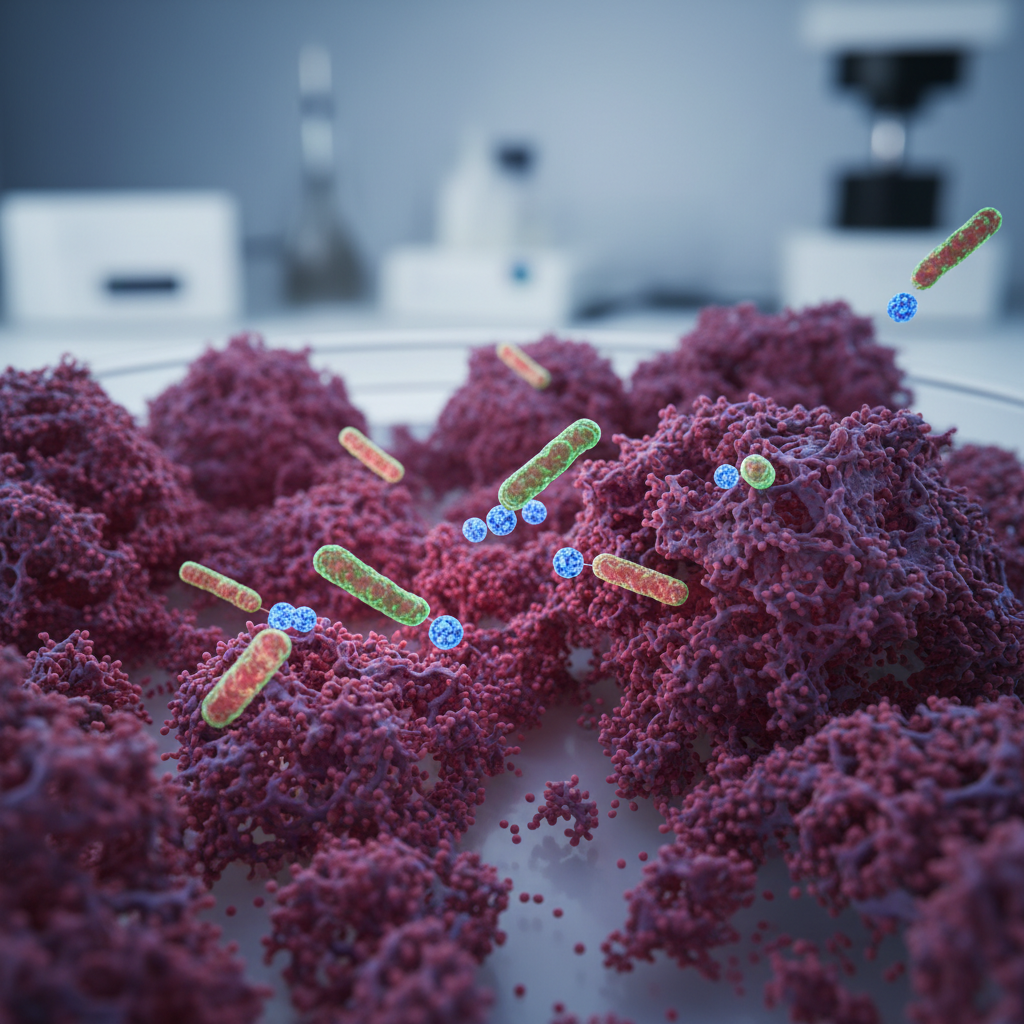
Engineered Bacteria Are Emerging as a New Delivery System in Colorectal Cancer
Engineered Bacteria Are Emerging as a New Delivery System in Colorectal Cancer
At first glance, the idea sounds almost absurd: take bacteria — the same kind of organisms people often associate with infection or food poisoning — and turn them into tools for cancer treatment.
But that is exactly what a growing area of bioengineering is trying to do.
In colorectal cancer, researchers are investigating whether bacteria can be redesigned to act as living delivery systems: homing in on tumours, releasing therapeutic molecules where they are needed most, and even helping reshape the immune environment around cancer cells. It is an eye-catching concept, and one that fits with a broader shift in oncology towards more targeted, programmable treatments.
Still, it is important to keep the science in proportion. This is not a near-term breakthrough for patients. The evidence so far is largely preclinical, built around mouse models and proof-of-concept systems rather than human clinical trials. What the research shows is not that bacterial therapies are ready for routine care, but that the underlying idea is becoming scientifically credible.
That alone is a notable development.
Why bacteria make sense in colorectal cancer
Colorectal cancer develops in one of the most densely colonized environments in the human body. The gut is already home to trillions of microbes, and those microbes are deeply entangled with the intestinal lining, immune signalling, inflammation, and metabolism.
That makes the bowel a particularly logical place to explore bacterial therapies. Unlike many conventional drugs, bacteria are living systems. They can sense their environment, survive in biological niches, produce molecules locally, and in some cases be engineered to respond to external cues.
In theory, that opens up a powerful possibility: instead of delivering anti-cancer treatment broadly through the body and hoping enough of it reaches the tumour, living bacteria might be used to bring therapy directly to the tumour site.
That prospect is especially attractive in colorectal cancer, where the tumour exists within a microbial ecosystem already known to influence disease progression, inflammation, and response to treatment.
What researchers have shown so far
The studies supplied support the broader idea that bacteria can serve as therapeutic tools in colorectal cancer through three main routes: tumour targeting, immune modulation, and payload delivery.
One recent study showed that programmable bacterial systems can be used to induce anti-cancer therapeutics under external control, including activity in colon cancer and colorectal cancer models. That matters because one of the biggest challenges in live bacterial therapy is control. A useful therapeutic bacterium has to do more than reach the right place — it has to act at the right time, in the right way, and ideally only where intended.
Another study found that a bacterial acetyltransferase derived from Akkermansia muciniphila could reprogram the tumour microenvironment and enhance cytotoxic T-cell-related anti-tumour responses in mouse models of colorectal cancer. In plain terms, a bacterial component appeared to help make the tumour environment less hospitable to cancer and more supportive of immune attack.
A broader review on gut microbiota and cancer immunotherapy also supports the direction of travel. It points to engineered bacteria as an emerging intervention class for gastrointestinal tumours, including colorectal cancer.
Taken together, these findings do not amount to a treatment ready for patients. But they do support a real shift in thinking: bacteria are no longer being viewed only as bystanders or hazards in cancer biology. Increasingly, they are being explored as active therapeutic platforms.
Why this approach is so appealing
Modern cancer treatment is always chasing the same goal: attack the tumour more precisely while sparing as much healthy tissue as possible.
Standard chemotherapy often spreads through the whole body, which is one reason side effects can be so widespread. Even more advanced treatments, such as targeted therapies and immunotherapies, still face challenges around drug delivery, resistance, and toxicity.
Engineered bacteria offer a different model. In principle, they could function almost like biological couriers — travelling to tumour-associated environments, releasing a therapeutic payload locally, and interacting with the surrounding immune system in ways that conventional drugs cannot.
There is also the question of flexibility. A bacterium is not just a passive package. It can, at least in theory, be programmed to produce proteins, respond to environmental signals, activate a drug only under certain conditions, or work alongside other cancer therapies.
That programmability is a major reason this field attracts so much attention. It turns bacteria from simple microbes into customizable therapeutic systems.
But the gap between concept and care is still large
For all its promise, this remains an experimental story.
The available evidence is mainly preclinical. That means lab studies, engineered systems, and animal models — not convincing evidence from human trials. And that distinction matters enormously. Many anti-cancer approaches that look impressive in mice fail when tested in people.
Sometimes the treatment is less effective than expected. Sometimes the tumour biology proves more complex. Sometimes the safety problems become impossible to ignore.
Live bacterial therapies come with an extra layer of difficulty because bacteria are not inert compounds. They are living organisms, and that makes them both versatile and unpredictable.
Before this kind of treatment could become clinically realistic, researchers would need to show far more than tumour inhibition in a model system. They would need to demonstrate reliable control over dosing, activity, persistence, and safety. They would also need to prove that the bacteria do not trigger harmful infections, off-target immune effects, or unexpected biological behaviour.
That is a tall order.
Safety is not a side issue here
If there is one reason this field moves more slowly than the headlines sometimes suggest, it is safety.
A live bacterial therapy raises obvious concerns. Could the organism spread beyond the tumour? Could it cause infection, especially in people whose immune systems are already weakened? Could it trigger inflammation in the wrong place? Could its behaviour vary from one patient to another? And how do you standardize a therapy built around living microbes so that it behaves consistently in manufacturing and in practice?
These are not minor technical questions. They are central to whether this whole strategy will ever work outside the lab.
There is also an important caveat in the way the story is framed. Not all of the supplied studies directly involve the kind of “common food-borne bacteria” suggested by the headline. The broader concept of engineered bacteria in colorectal cancer is supported, but the fit with that specific wording is not exact.
That does not undercut the research. It simply means the science is broader and a little less tidy than the headline implies.
What this could mean for patients one day
If bacterial platforms can eventually be made safe and controllable, they could offer something oncology badly wants: more localized, more adaptive, and potentially more intelligent ways to treat tumours.
In colorectal cancer, they might one day be used to deliver anti-cancer agents directly to the tumour site, alter the tumour microenvironment to make immunotherapy work better, or provide a new option in cases where current treatments are less effective.
That would not necessarily replace surgery, chemotherapy, radiation, or immunotherapy. More likely, it would add another layer to treatment — one designed to work in concert with existing approaches.
But that is the future-facing version of the story. Right now, the value of this research is mainly conceptual. It shows that bacterial systems can be engineered in ways that are relevant to colorectal cancer biology, and that those systems can produce measurable anti-tumour effects in models.
That is important. It just is not the same thing as a new treatment standard.
Why this story matters now
Colorectal cancer remains one of the most important cancers in public health, including in Canada. At the same time, interest in the gut microbiome’s role in disease has grown enormously, especially in cancer and immunotherapy.
This research sits at the intersection of those two trends. It reflects a broader reimagining of what medicine can look like when biology is not just studied, but designed.
There is something larger happening here too. Oncology is gradually moving beyond blunt-force treatment models and towards therapies that are more programmable, local, and biologically responsive. Engineered bacteria fit squarely into that shift.
Whether they ultimately succeed in patients remains to be seen. But the fact that they are now part of serious colorectal cancer research tells you something about where the field is heading.
The bottom line
Engineered bacteria for colorectal cancer should be understood as an experimental bioengineering story, not as a medical breakthrough on the verge of changing care.
The evidence so far supports the broader concept that bacterial platforms can target tumours, modify the immune environment, and deliver therapeutic payloads in colorectal cancer models. That makes them a credible research direction.
But credibility is not the same as readiness. Human safety, dose control, infection risk, immune effects, and manufacturing consistency all remain major hurdles.
For now, the most accurate way to read this development is as proof that a once far-fetched idea is starting to hold up in the lab. Whether it can survive the long trip from concept to clinic is the question researchers still have to answer.