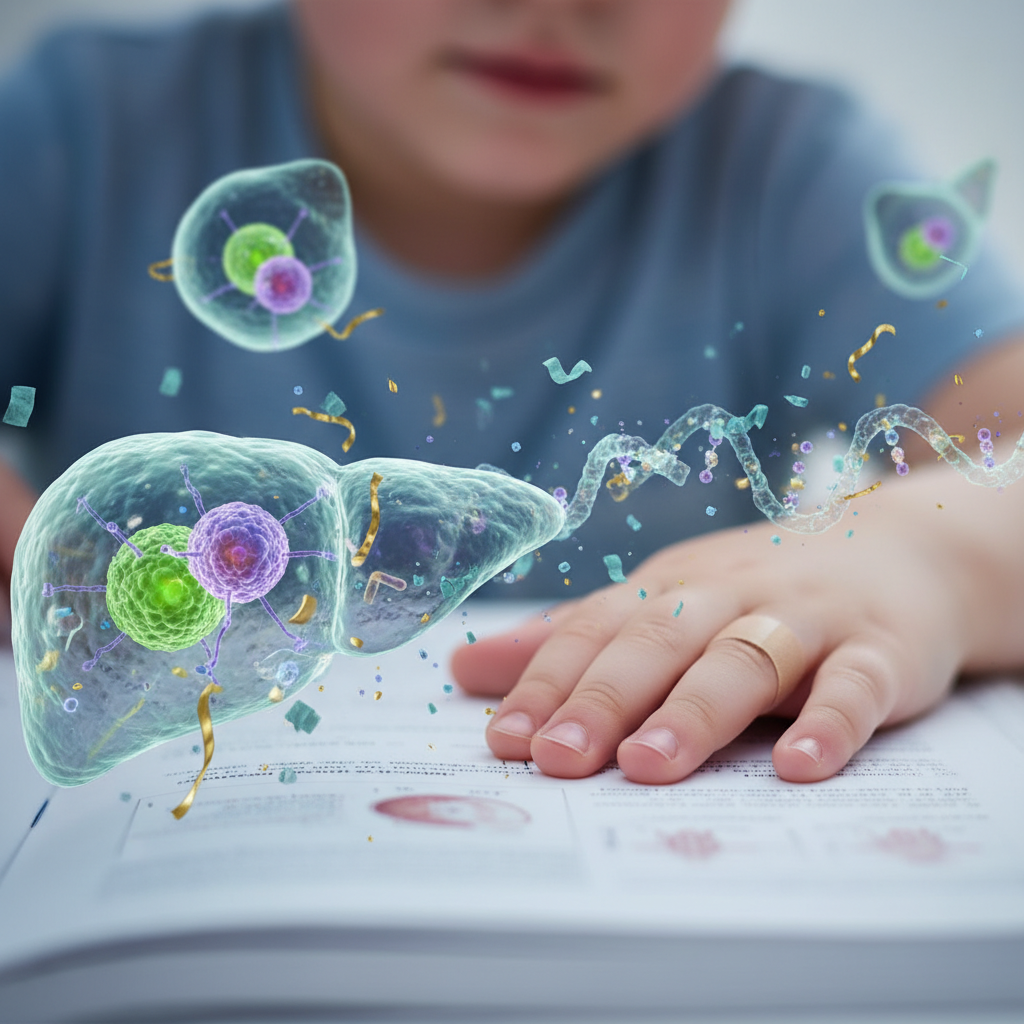
Hepatoblastoma Remains One of Childhood Cancer’s Toughest Mysteries
Hepatoblastoma Remains One of Childhood Cancer’s Toughest Mysteries
Some childhood cancers are frightening not only because they are serious, but because they remain biologically elusive. Hepatoblastoma — the most common liver tumour in children — sits squarely in that category.
It is rare, highly specialized, and difficult to study. Clinicians have become much better at diagnosing and treating it, but one of the most important questions still has no simple answer: how does this cancer actually begin?
That is what makes headlines about how a rare pediatric liver cancer “emerges” so compelling. If researchers can explain the earliest steps of tumour development, the hope is that this could eventually improve diagnosis, refine risk prediction, and perhaps point to more precise therapies. But in this case, the evidence supplied does not fully support such a definitive claim.
What the research does support is narrower, but still important: hepatoblastoma remains the key rare pediatric liver cancer of interest, its biology is still incompletely understood, and understanding its origins remains an active area of need rather than a solved scientific problem.
What hepatoblastoma is — and why it matters
Hepatoblastoma is the most common malignant liver tumour in children, particularly in very young children. That does not make it common in an absolute sense. It is still a rare cancer. But within pediatric liver oncology, it is the major disease around which much of the field is organized.
That distinction matters because rarity changes everything. Rare diseases are harder to study, harder to trial, and often slower to yield clear biological answers. Fewer patients means fewer opportunities to build large datasets, test hypotheses quickly, or run robust clinical studies across multiple subtypes.
And yet, hepatoblastoma has still seen meaningful progress. The most directly relevant article provided notes that diagnosis and treatment have advanced substantially. That is no small point. It means clinicians are no longer facing this disease with only limited tools and broad uncertainty.
At the same time, the same review makes clear that understanding the tumour’s etiology remains an open and important challenge.
That tension — better treatment, incomplete biological understanding — is at the heart of the current story.
The science has moved faster on treatment than on origin
One of the more striking realities in cancer medicine is that clinical care can improve before biology is fully understood. Hepatoblastoma appears to be one of those cases.
Today, management typically relies on multimodal care: imaging, alpha-fetoprotein measurement, chemotherapy, surgery, and in some situations liver transplantation. That reflects a field that has matured considerably. There are clearer pathways for diagnosis, clearer frameworks for staging, and better-defined strategies for treatment than there once were.
But while treatment has become more sophisticated, the exact biological sequence that gives rise to hepatoblastoma is still not clearly laid out in the supplied evidence.
That is important to say plainly, because “how a cancer emerges” suggests a mechanistic explanation — some direct account of tumour initiation, developmental error, or molecular trigger. The evidence provided here does not deliver that in a strong or specific way.
What the evidence actually supports
The most relevant review supports several points with reasonable confidence.
First, hepatoblastoma is the central pediatric liver tumour of concern in this context. Second, major gains have been made in diagnosis and treatment. Third, metastatic and recurrent disease remain especially difficult to manage. And fourth, understanding the tumour’s origins and biology is still an active research need.
That last point is probably the closest match to the headline. The literature supports the idea that researchers are still trying to understand where hepatoblastoma comes from and why it develops. It does not, however, provide a direct explanation of how it emerges at a molecular or developmental level.
This is where caution matters. A story about a cancer’s origins is not the same as a story about why those origins remain unclear.
With the references supplied here, the safer interpretation is that hepatoblastoma is a legitimate focus of pediatric cancer biology research precisely because its emergence is not yet fully explained.
Why understanding origin still matters so much
At first glance, that may sound frustratingly incomplete. After all, if clinicians already have treatment pathways, why does it matter so much that the tumour’s origin remains partly unresolved?
It matters because origin and behaviour are often connected.
Cancers that appear early in life frequently raise deep questions about tissue development, immature cell populations, and the biological pathways that go wrong during growth. In practical terms, understanding how hepatoblastoma begins could eventually help researchers identify the molecular features that distinguish less dangerous cases from more aggressive ones.
That could improve more than theory. It could sharpen diagnosis, refine risk stratification, and perhaps help guide future therapy.
This becomes especially relevant in the hardest cases. The supplied review highlights that metastatic and recurrent hepatoblastoma remain difficult to treat. That is exactly where better biological understanding becomes more than an academic exercise. If standard treatment is less effective in these children, then understanding the disease at a deeper level becomes essential for the next wave of progress.
The problem with the evidence set
One reason caution is necessary here is that the supplied references do not line up cleanly with the headline.
Only one of the PubMed articles is directly relevant to pediatric liver cancer. The others move into different territory — including burden-of-disease research in China and a paper about non-alcoholic fatty liver disease, the gut microbiome, and hepatocellular carcinoma, which is a very different disease context from pediatric hepatoblastoma.
That mismatch matters. When the references do not directly address the central claim, it becomes much harder to support a strong mechanistic story without overreaching.
In this case, the honest move is to acknowledge that the headline raises a scientifically important question, but the supplied evidence does not directly answer it.
What it does do is reinforce that hepatoblastoma remains biologically important, clinically challenging, and still incompletely understood.
What this means for children and families
For families, the practical message is not that science has suddenly unlocked the full origin story of hepatoblastoma. It has not.
The more meaningful takeaway is that this cancer is better understood clinically than it once was, and that treatment has advanced significantly through coordinated, multimodal care. Imaging, tumour markers, chemotherapy, surgery, and transplant strategies now give many children options that were far more limited in the past.
At the same time, the most difficult cases — particularly recurrent or metastatic ones — remain a reminder that the field still needs deeper biological answers.
That is why research into the tumour’s origin matters. Not because it produces instant breakthroughs, but because understanding how a rare cancer begins is often what makes it possible to treat it more intelligently later on.
Why this story matters now
Pediatric oncology is increasingly moving towards biology-driven questions. It is no longer enough to classify a tumour by organ and microscope appearance alone. Researchers now want to know what developmental pathways were disrupted, what cell types were involved, and what biological signals set the disease in motion.
Hepatoblastoma fits squarely into that shift.
It is the kind of cancer where clinical care has improved, but where the next major leap may depend on a better understanding of origin and tumour behaviour. In that sense, the story is not that researchers have solved the mystery. It is that the mystery remains central enough to guide the next stage of the field.
That may sound less dramatic than a headline about how a cancer emerges. But it is probably more useful.
Why rare pediatric cancers demand precision
Another reason this topic deserves careful handling is that pediatric cancers are often flattened in public discussion. “Liver cancer” can sound like one category, but it is not.
Hepatoblastoma is not the same disease as adult hepatocellular carcinoma. Its biology, age of onset, treatment context, and clinical questions are different. That is why using unrelated liver disease research to fill in gaps around pediatric tumour biology can be misleading.
Rare childhood cancers need more, not less, precision in how they are described. Otherwise, important differences get blurred, and readers come away with the illusion of clarity where there is still uncertainty.
The bottom line
Hepatoblastoma remains the most important rare pediatric liver cancer in clinical and research terms. The evidence supplied supports that clearly. It also supports the fact that diagnosis and treatment have advanced substantially and that recurrent and metastatic disease remain especially difficult.
What the evidence does not do is directly explain how this cancer emerges.
So the most accurate reading of the current science is not that hepatoblastoma’s origin has now been pinned down. It is that researchers still see understanding its origins as one of the field’s major unfinished tasks.
That may sound less dramatic than a clean breakthrough. But in childhood cancer, that kind of honesty matters. Sometimes the real story is not that science has solved the puzzle — it is that it has finally learned which puzzle matters most.