How Glioblastoma Uses Sugar to Hide From the Immune System
How Glioblastoma Uses Sugar to Hide From the Immune System
Cancer is often described as a disease of uncontrolled growth. But in many cases, it is also a disease of concealment. For a tumour to survive, it does not just need to multiply — it also needs to avoid being destroyed by the immune system. In glioblastoma, one of the most aggressive and difficult-to-treat brain cancers, that escape appears to involve a remarkably sophisticated strategy: using sugar metabolism to turn the tumour’s surroundings into hostile territory for immune cells.
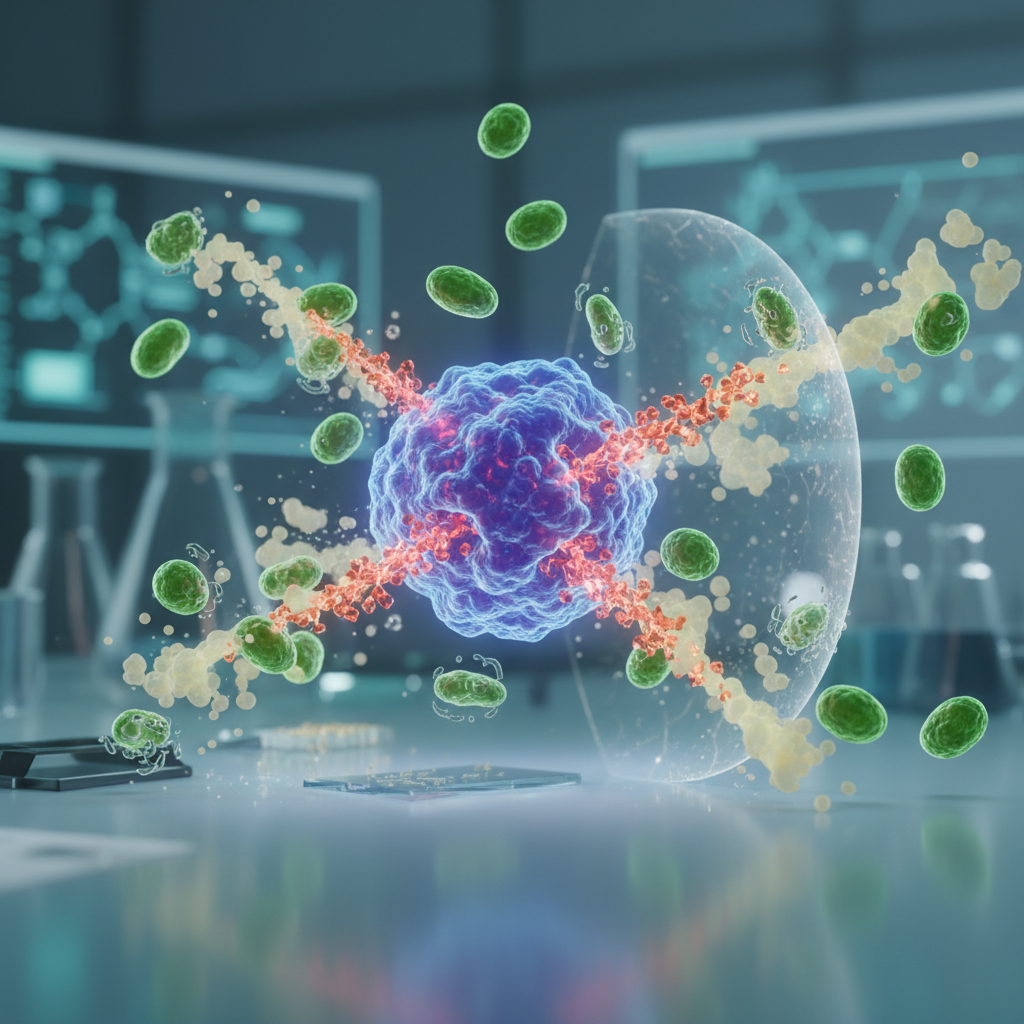
That is the central message emerging from a series of recent studies on glioblastoma and cancer immunology. Rather than viewing tumour metabolism simply as an engine for growth, researchers are showing that it also functions as an immune weapon. By reshaping how glucose is used and by generating large amounts of lactate, glioblastoma appears able to reprogramme immune cells, weaken T-cell activity, and block other anti-tumour responses.
It is a highly mechanistic story, but one with real-world importance. If glioblastoma uses sugar metabolism to protect itself, then breaking that metabolic shield could eventually become one way to make immunotherapy more effective.
Glioblastoma does not win by growing fast alone
Glioblastoma remains one of the toughest challenges in oncology. Even with surgery, radiation, and chemotherapy, outcomes are often poor. Part of the reason is that the tumour is highly invasive and biologically diverse. Another is that it is extremely good at reshaping its local environment.
That environment — known as the tumour microenvironment — is not just a passive backdrop. It includes immune cells, blood vessels, structural cells, and signalling molecules, all of which can either support or resist tumour growth. In glioblastoma, the balance often shifts strongly in the tumour’s favour.
Instead of allowing immune cells to attack, the tumour microenvironment becomes immunosuppressive. It actively blunts the body’s anti-cancer defences.
The new research suggests that glucose metabolism is one of the key tools used to create that immunosuppressive state. The tumour is not just feeding itself. It is using metabolic pathways to influence the behaviour of the immune system around it.
Sugar is doing more than fuelling the tumour
For years, altered metabolism in cancer was mostly understood as a way for tumour cells to support rapid growth. Cancer cells often consume large amounts of glucose and rely heavily on glycolysis. That basic idea still holds. But the newer work on glioblastoma shows that the story is far richer.
Glucose is not simply fuel. It can also become a signal.
One of the supplied studies found that glucose-driven histone lactylation in monocyte-derived macrophages increased IL-10 production and T-cell suppression in glioblastoma. In plain terms, products of tumour metabolism were able to alter gene regulation in nearby immune cells, pushing those cells towards a more suppressive state.
That matters because macrophages are not supposed to help tumours survive. Yet within glioblastoma, the metabolic environment appears able to convert them into cells that dampen immune attack instead.
This is a powerful example of how tumour metabolism and immune escape are intertwined. The tumour is not just outgrowing the immune system. It is metabolically teaching immune cells to stand down.
High glucose also helps activate a classic immune checkpoint
Another study adds a second layer to this story. Researchers found that high glucose promotes PD-L1 upregulation in glioblastoma cells through hexokinase 2-mediated signalling.
That finding is particularly important because PD-L1 is one of the best-known immune checkpoint molecules in cancer biology. When tumour cells express more PD-L1, they can suppress CD8 T cells — some of the immune system’s most important cancer-killing cells.
In other words, glucose metabolism may not just help glioblastoma survive. It may also help the tumour switch on one of the body’s most powerful molecular brakes against immune attack.
This helps explain why metabolism should not be treated as a side note in tumour biology. It is directly connected to the very mechanisms that allow cancer to hide in plain sight.
Lactate has become a major player
Lactate was once viewed mainly as a metabolic by-product — the waste left behind by fast-growing cells. That view has changed dramatically.
In the tumour microenvironment, lactate now looks more like an active messenger. In glioblastoma, it may be one of the central architects of immune suppression.
A third study found that lactate produced by glioblastoma stem cells and myeloid cells drives histone lactylation and CD47 upregulation. That detail is especially striking because CD47 acts as a “don’t eat me” signal, reducing phagocytosis by immune cells that would otherwise engulf and destroy tumour cells.
This means glioblastoma is not only weakening T cells. It is also interfering with the ability of other immune cells to physically clear the cancer.
At the same time, lactate promoted broader immunosuppressive transcriptional programmes, reinforcing the idea that the tumour microenvironment is being actively remodelled to favour cancer survival.
The tumour microenvironment starts to look like a sabotage zone
When these findings are placed side by side, a clear picture emerges. Glioblastoma appears to use glucose, glycolysis, and lactate to turn its surroundings into a zone of immune sabotage.
Macrophages become more suppressive. T cells become less effective. PD-L1 and CD47 rise. Phagocytosis is blocked. The tumour is not relying only on rapid growth or the difficulty of operating in the brain. It is building a biochemical shield.
This may help explain why immunotherapy, which has transformed treatment in some other cancers, has delivered far more limited results in glioblastoma so far. The challenge may not simply be getting the immune system activated. It may also be undoing the metabolic conditions that keep that immune system suppressed.
Why this could matter for future treatment
This is the most exciting part of the story — with an important caveat.
Across the supplied studies, blocking glycolysis or lactate-related pathways improved immune activity and enhanced responses to immunotherapy in preclinical models. That suggests targeting tumour metabolism could help release some of the immune suppression that makes glioblastoma so hard to treat.
The implication is not that a new therapy is ready for patients. It is that researchers may have identified a strategically important vulnerability.
That distinction matters. These studies are mechanistic and largely preclinical. They show what can happen in experimental systems, not what will necessarily work in routine care. Targeting metabolism in people is difficult because glucose and lactate are fundamental to normal tissues too. Any future therapy would need to be selective enough to disrupt the tumour without causing unacceptable harm elsewhere.
There is also the broader issue that immune evasion in glioblastoma is not driven by sugar metabolism alone. Tumours use many overlapping pathways, and any successful treatment approach will likely need to reflect that complexity.
What this means for patients right now
For patients and families dealing with glioblastoma, these findings do not change current treatment tomorrow. Surgery, radiation, and chemotherapy remain the backbone of care.
But they do change something important: the understanding of why this cancer is so difficult to control.
That matters because progress in oncology often begins with a better map of the enemy. If researchers can understand how glioblastoma neutralizes immune attack, they can start building treatments designed not just to kill tumour cells directly, but to strip away the tumour’s protective environment.
In Canada, where access to advanced cancer care and clinical trials remains uneven across regions, that broader scientific progress is especially important. Glioblastoma patients need more than incremental tweaks to existing care. They need a deeper understanding of what makes this disease so resistant in the first place.
The clearest takeaway
The emerging message from this research is striking: in glioblastoma, sugar is not just food. It is part of the tumour’s defence system.
Glucose and lactate appear to help create an immunosuppressive microenvironment that weakens T cells, blocks phagocytosis, and activates molecular signals that let the tumour escape immune attack. That makes metabolism a central part of the immune-evasion story, not a side detail.
There is no new standard treatment here yet. But there is a meaningful shift in understanding. If glioblastoma uses metabolism as camouflage, then learning how to break that camouflage may become one of the most promising ways to make immunotherapy work better in the future.