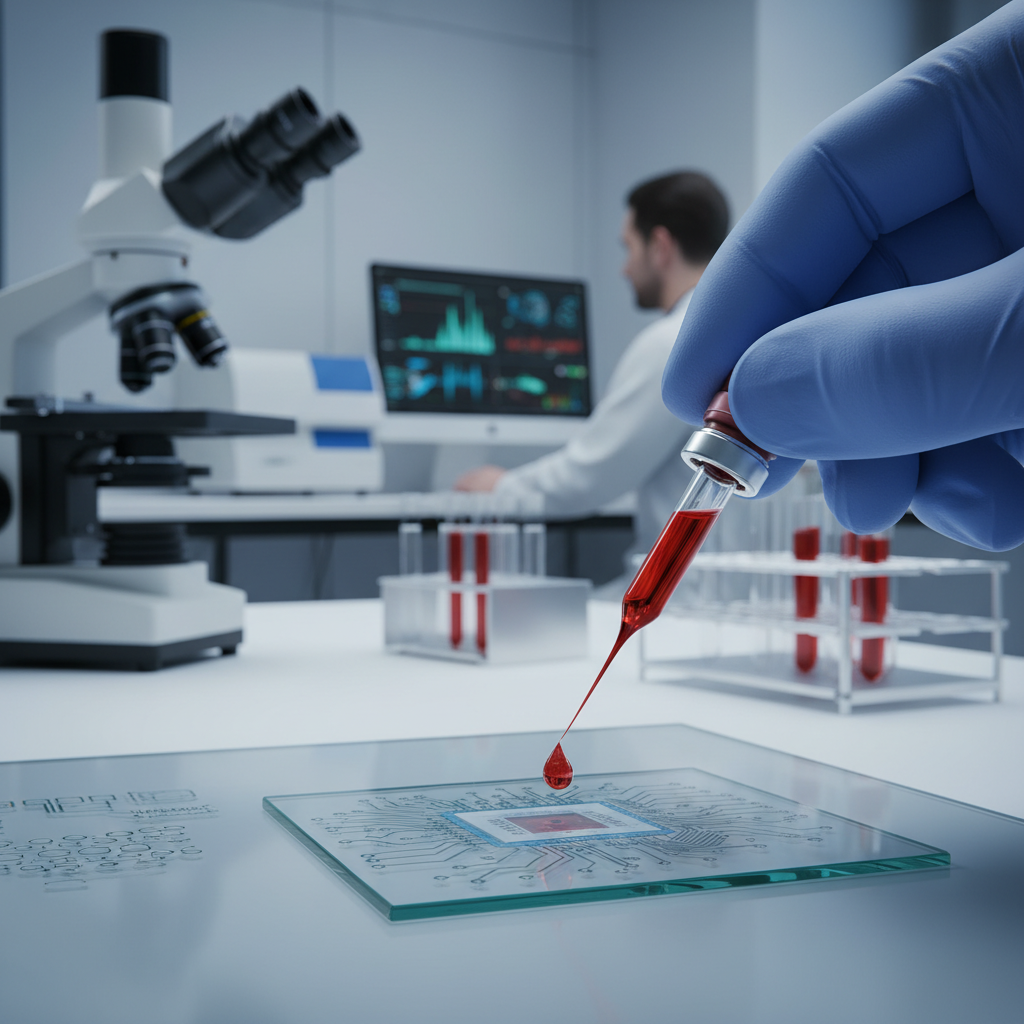
Liquid Biopsy Is Moving Closer to Disease Detection from a Tiny Blood Sample
Liquid Biopsy Is Moving Closer to Disease Detection from a Tiny Blood Sample
Few medical ideas sound as immediately appealing as this one: diagnose disease from a tiny amount of blood.
No surgical biopsy. No difficult tissue sampling. No need to reach deep into the body to find out what is happening. Just a small blood test that can pick up disease signals early, track what is changing, and potentially guide treatment in real time.
That is the promise behind liquid biopsy, one of the fastest-moving areas in diagnostic medicine. And unlike some futuristic medical concepts, this one is no longer purely speculative. The field has matured enough that blood-based tests are now being studied seriously for cancer detection, molecular profiling, treatment monitoring, and the identification of resistance.
Still, the most accurate version of the story is more careful than the headline. The evidence supports liquid biopsy as a promising, increasingly sensitive technology — especially in oncology. It does not support the idea that a single tiny blood sample can already detect a broad range of diseases in routine care.
The real advance is not that medicine has arrived at a universal disease detector. It is that liquid biopsy is becoming good enough in specific contexts to change how clinicians think about early detection and disease monitoring.
What a liquid biopsy actually is
Traditional biopsies require tissue. A doctor needs to remove a piece of a tumour or suspicious lesion and examine it directly. That remains a cornerstone of diagnosis in many fields, particularly cancer care.
Liquid biopsy takes a different approach. Instead of sampling the disease site itself, it looks for biological traces of disease circulating in the blood. These may include cell-free DNA, circulating tumour DNA, circulating tumour cells, microRNAs, exosomes, and other molecular fragments shed into the bloodstream.
A broad review among the supplied references describes this rapidly expanding toolbox. Blood-based liquid biopsy platforms can analyse multiple analytes using increasingly sophisticated assay methods, with potential applications that range from early detection to monitoring treatment response and emerging drug resistance.
In effect, blood becomes a kind of molecular snapshot — not of the entire disease, but of some of the information the disease leaves behind.
Why the field is moving so quickly
The attraction is obvious.
Liquid biopsy is less invasive than tissue biopsy, easier to repeat, and potentially more practical for tracking disease over time. In cancer, where tumours can evolve under treatment and where repeated tissue sampling is often difficult or risky, that matters enormously.
There is also the appeal of timing. By the time some cancers become clinically obvious, they may already be advanced. A blood-based test that can detect biologic signals earlier could, in theory, shift diagnosis closer to the point where treatment is more effective.
That combination — earlier information, less invasive access, and repeated monitoring — is what makes liquid biopsy such a compelling diagnostic idea.
And the technology is no longer theoretical. It is already proving useful in some research and clinical settings, particularly in oncology.
What the strongest evidence here actually supports
The evidence provided is especially strong when the story is kept within cancer.
One of the most concrete examples comes from pancreatic cancer research. In that study, a serum nanosensor assay using small blood volumes was able to identify pancreatic ductal adenocarcinoma with high specificity and moderate sensitivity.
That matters for a few reasons. First, it shows that a compact blood-based platform can detect disease-related signals from a relatively small sample. Second, it offers a proof of concept that these technologies may be practical in early-stage detection, at least in certain cancers.
But the same study also points towards a more realistic future for liquid biopsy: combination testing. When the nanosensor assay was paired with CA 19-9, a more established pancreatic cancer biomarker, stage I detection improved.
That is a key insight. It suggests liquid biopsy may work best not as a lone “miracle test,” but as part of a multi-marker strategy that combines different sources of information to improve performance.
Another review of pancreatic cancer screening reinforces this direction, highlighting growing interest in analytes such as circulating tumour DNA, circulating tumour cells, microRNAs, and exosomes for earlier diagnosis.
Taken together, these studies support a strong and credible story about innovation in blood-based cancer detection. They do not support a universal claim that a drop of blood can broadly diagnose disease in general.
Why the headline overreaches
This is where the distinction between promising technology and clinical reality matters most.
The supplied evidence is concentrated in oncology, particularly pancreatic cancer. It does not show that a single liquid biopsy platform can reliably detect many unrelated diseases from a tiny blood sample. It also does not establish widespread routine use across diverse patient populations.
That is not a small caveat. It changes the meaning of the story.
A blood test that helps detect pancreatic cancer in a research or emerging clinical context is a serious advance. But it is not the same as a general-purpose diagnostic tool that can identify “disease” in the broad way the headline implies.
There is also a biological reason for caution. In very early disease, the molecular signal may be faint. That means sensitivity can be limited exactly where early detection matters most. Liquid biopsy can also be confounded by phenomena such as clonal hematopoiesis, in which age-related blood-cell mutations create signals that may be mistaken for something more ominous.
So while the field is moving fast, it is still dealing with very real technical and biological limits.
Why oncology is the natural testing ground
Cancer is where liquid biopsy has found its clearest purpose so far.
That is partly because cancer sheds biologic material into the bloodstream in ways that can sometimes be measured and interpreted. It is also because oncology increasingly depends on molecular information. Doctors do not just need to know whether a tumour is present. They often need to know what molecular features it carries, how it is changing, and whether it is becoming resistant to therapy.
Liquid biopsy fits neatly into that reality. It offers a way to gather biologic information repeatedly without having to rely entirely on tissue samples.
For patients, that could eventually mean fewer invasive procedures, more flexible monitoring, and faster adjustment of treatment plans when a tumour changes behaviour.
That is a meaningful prospect — even if it is not the same as a universal disease test.
What this could change for patients
If liquid biopsy continues to improve, the biggest near-term benefits are likely to be practical rather than dramatic.
For people with cancer, it may make monitoring less burdensome. Instead of requiring repeated invasive procedures, doctors may be able to use blood tests more often to check how treatment is working, whether minimal residual disease may be present, or whether new resistance patterns are emerging.
For some cancers, it may also help with earlier detection in selected high-risk groups, especially if used alongside other biomarkers or imaging rather than as a stand-alone tool.
That is a very different, and more believable, future than the one implied by broad headlines. It is not one blood test replacing everything else. It is blood-based testing becoming one more important layer in a more precise diagnostic system.
Why validation remains the real bottleneck
The biggest challenge now is not imagination. It is validation.
Each application of liquid biopsy needs to be tested carefully in the specific disease it is meant to detect or monitor. A platform that performs well in pancreatic cancer cannot simply be assumed to work in breast cancer, lung cancer, or non-cancer disease. Different diseases shed different signals, at different levels, at different stages.
That means the road to adoption is likely to be gradual. Disease by disease. Marker by marker. Population by population.
This is especially important in Canada, where health systems will need evidence not only of scientific validity but also of clinical utility, equity, and cost-effectiveness before a technology like this becomes routine. A promising test is not enough. It has to work well enough, often enough, and meaningfully enough to justify widespread use.
The bottom line
Liquid biopsy is one of the most promising diagnostic technologies in modern medicine. The supplied evidence strongly supports its growing value in cancer detection, molecular profiling, and treatment monitoring. It also shows that even small blood samples can carry meaningful disease-related signals.
But the broader headline — that a drop of blood can detect disease — overstates what the current evidence really shows.
What the science best supports right now is a future in which liquid biopsy becomes more useful, more sensitive, and more clinically important in specific disease settings, especially cancer. It is not yet a universal diagnostic shortcut for many diseases at once.
That may be a less dramatic story than the headline suggests. But it is still a big one. Because making diagnosis less invasive, more repeatable, and potentially earlier could reshape how some diseases are found and followed — even if it happens one condition at a time.