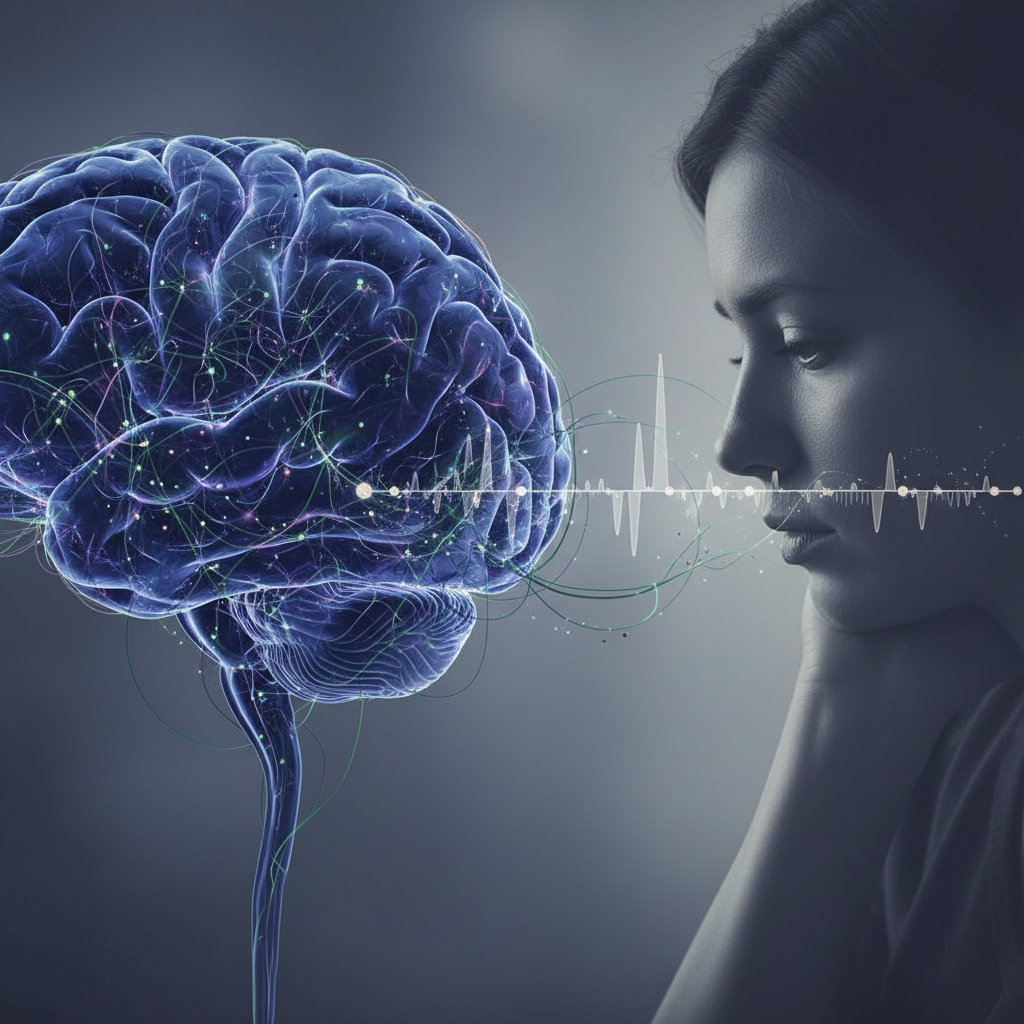
Longer-lasting or harder-to-treat depression may be linked to more pronounced brain changes
Longer-lasting or harder-to-treat depression may be linked to more pronounced brain changes
The idea that depression may alter the brain tends to trigger two unhelpful reactions at once. One is reductionism: the notion that emotional suffering can be explained by a single brain image. The other is alarmism: the idea that each depressive episode inevitably leaves behind a steadily worsening trail of irreversible damage.
The supplied evidence points to something more nuanced.
The strongest safe interpretation of the available material is that more chronic, severe or treatment-resistant forms of depression may be associated with more pronounced abnormalities in brain networks, especially in circuits such as the default mode network. That fits with a neuroprogression-style view: the possibility that longer-lasting or harder-to-treat illness may come with more substantial neurobiological change. But the supplied research does not establish a simple rule in which duration alone translates neatly into “more time equals more damage”.
What the literature actually supports
The most relevant support in the references comes from a systematic review of neuroimaging in treatment-resistant depression. That review identified altered connectivity and hyperactivity in the default mode network, a group of brain regions strongly involved in internally directed thought, self-referential processing and rumination.
That matters because it helps connect clinical depression to measurable brain differences. People with harder-to-treat forms of illness may not simply be suffering more subjectively. They may also show more pronounced abnormalities in certain neural circuits.
This does not reduce depression to an imaging problem. But it does support the broader idea that more persistent or treatment-resistant illness may come with stronger neurobiological signatures.
What “duration” may mean in this context
The headline suggests that the duration of depression may influence how severely the illness alters the brain. The supplied evidence makes that possibility plausible, but indirectly rather than directly.
That is because the most relevant review emphasizes that chronicity, severity and treatment resistance all matter when interpreting neuroimaging findings. In other words, the more altered brain patterns seen in studies may reflect not only time spent depressed, but also greater symptom severity, repeated episodes, poorer treatment response and heavier illness burden overall.
So “duration” should not be read here as a simple stopwatch variable. It is more likely part of a broader package of accumulated illness burden.
The brain network most discussed also makes clinical sense
The focus on the default mode network is not just a technical detail. This network is commonly linked to:
- rumination;
- excessive self-focus;
- persistent inward attention;
- and difficulty disengaging from repetitive thought.
Clinically, that fits depression quite well, especially in more persistent cases. In people who spend long periods caught in loops of self-criticism, hopelessness, repetitive thinking and withdrawal, it is not surprising that brain circuits tied to internal processing show up repeatedly in imaging studies.
That does not mean the network explains the whole illness. But it does help explain why more chronic or treatment-resistant forms of depression may also look different at a neurobiological level.
Treatment-resistant depression is especially important to this story
Treatment-resistant depression is a particularly useful lens for thinking about neuroprogression because it represents illness that not only lasts, but lasts despite attempts to treat it.
When neuroimaging studies find more consistent alterations in this group, that suggests there may be something qualitatively different about harder-to-treat cases. That “something” may involve:
- greater episode burden;
- more chronic illness;
- more severe symptoms;
- more recurrence;
- and perhaps more entrenched disruption in certain brain networks.
Even so, this should not be turned into a fatalistic message. Treatment resistance does not mean the brain is permanently ruined. At most, it suggests that some cases may involve more complicated neurobiology and may require more sophisticated care.
The main challenge is separating time from severity
This is where the headline needs the most caution.
The supplied evidence does not directly test depression duration as the main driver of brain-change severity. That matters because illness duration is almost always tangled up with other factors, including:
- number of episodes;
- symptom intensity;
- medication history;
- co-occurring conditions;
- quality of care received;
- and overall long-term functioning.
So when studies report more substantial abnormalities in more chronic cases, several explanations may be operating at once. Duration may matter, but so may accumulated severity, prolonged stress, treatment resistance and other clinical variables.
The danger of treating neuroimaging as destiny
One of the most damaging ways to misread this story is to assume depression inevitably progresses into steadily worsening, irreversible brain injury.
The supplied evidence does not support that conclusion.
It supports a broader association between more difficult or persistent depression and more pronounced network-level abnormalities. But it does not establish a simple linear progression, and it does not prove irreversibility. It also does not show that every person who remains depressed for longer will follow the same neurobiological path.
That distinction is essential. If framed carelessly, a meaningful scientific finding can easily turn into unnecessary hopelessness.
What this changes in how depression is understood
If the more careful model is that longer-lasting or treatment-resistant depression may be associated with stronger brain-network abnormalities, then one practical implication becomes clear: early recognition and effective treatment likely matter a great deal.
Not because there is proof that every month of depression “damages” the brain, but because prolonged illness appears to be associated with greater clinical and neurobiological complexity.
That reinforces the importance of:
- identifying symptoms early;
- reducing delays in treatment access;
- not normalizing long-lasting depression;
- and monitoring recurrent or poorly responsive cases more closely.
The useful message here is not fear. It is clinical urgency.
What the evidence still does not resolve
The limitations in the supplied set are real. One of the references is largely about a treatment trial, and another concerns chronic traumatic encephalopathy, not depression. That means the strongest relevant support really does come from the neuroimaging review of treatment-resistant depression.
Even that literature emphasizes major confounding by severity, chronicity and medication history. So we are still far from a simple formula that can say how much of the observed brain abnormality is due specifically to duration itself.
The balanced takeaway
The most responsible interpretation of the supplied evidence is that longer-lasting, more severe or treatment-resistant depression may be associated with more pronounced abnormalities in brain networks, especially in circuits involved in internal thought and self-referential processing, such as the default mode network.
The systematic review in treatment-resistant depression provides strong support for altered connectivity and hyperactivity in that network, while also emphasizing that chronicity and severity are key to understanding the findings. That makes it reasonable to think that more persistent illness may be linked to more substantial brain-level change.
But the limit matters just as much. The supplied evidence does not establish a simple, linear and inevitable relationship between time spent depressed and progressive brain damage, nor does it justify the idea that worsening brain change is automatic or irreversible.
So the safest message is this: more chronic or treatment-resistant depression may indeed be associated with more significant brain abnormalities, and that is one more reason to take depression seriously and treat it early. But that is very different from saying that every depressed brain is on a fixed path of unavoidable deterioration.