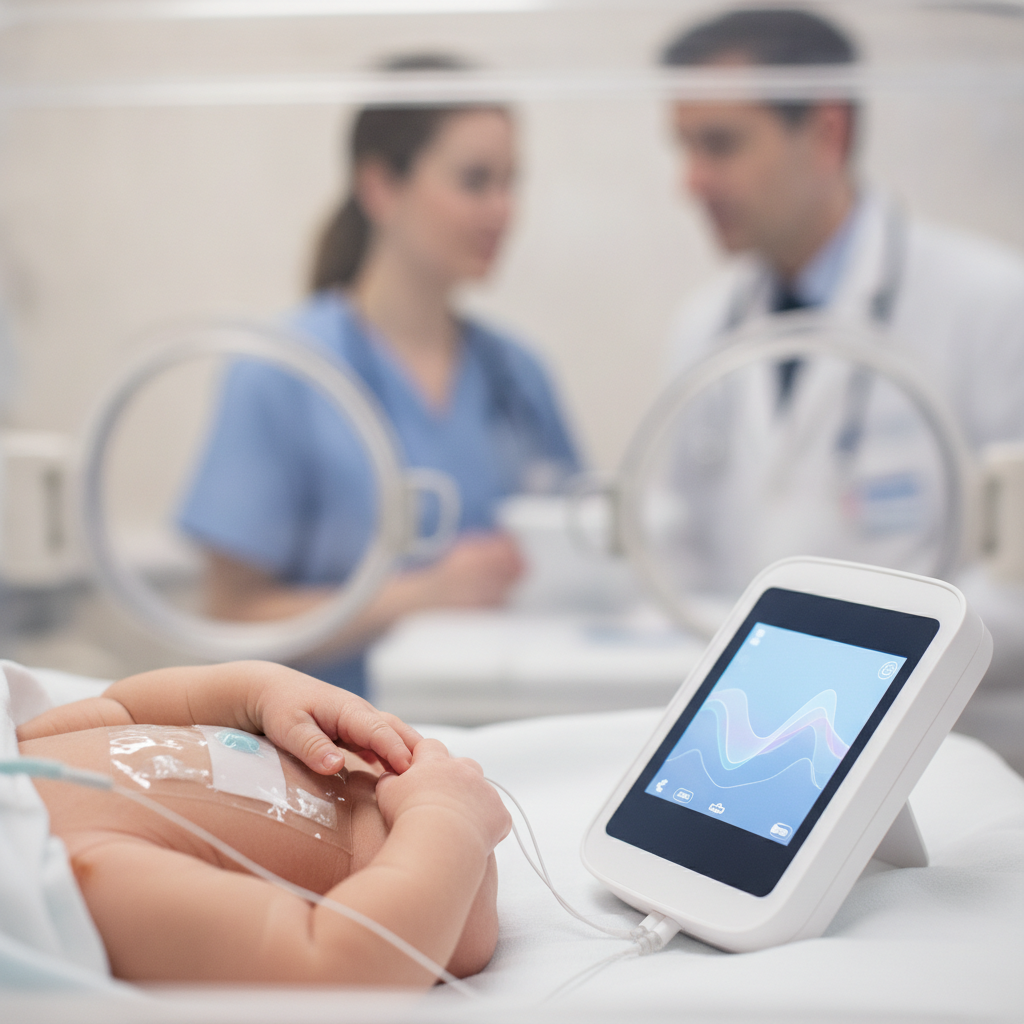
Noninvasive tools could change how dangerous bowel disease is detected in preterm babies, but early testing is not yet routine
Noninvasive tools could change how dangerous bowel disease is detected in preterm babies, but early testing is not yet routine
In the neonatal intensive care unit, time matters enormously. Hours can separate what looks like a vague feeding or abdominal problem from a devastating intestinal emergency. That is why necrotizing enterocolitis (NEC) remains one of the most feared conditions in premature infants.
It is serious, can worsen quickly, and in many cases is still identified too late, when significant bowel injury has already occurred. That is why the search for noninvasive and earlier ways to detect it has become such an important clinical and scientific priority.
The safest reading of the supplied evidence is that there is a real and urgent need for noninvasive tools and biomarkers that can help detect necrotizing enterocolitis earlier in preterm infants, because diagnosis remains difficult and the disease is often recognized only after the bowel has already been significantly damaged. The key point, however, is that the supplied material supports the clinical need and the biomarker direction more strongly than it validates one specific new tool as ready for routine use.
Why NEC demands such urgency
Necrotizing enterocolitis is one of the most serious gastrointestinal emergencies in neonatology, especially among very premature babies. The danger is not limited to the acute phase. In addition to the risk of bowel perforation, surgery, infection, and death, NEC can also leave long-term consequences, including effects on neurodevelopment.
That is one reason early diagnosis matters so much. This is not only about preventing immediate intestinal deterioration. It is also about reducing the chance of long-term harm that may affect a child well beyond the NICU.
When a disease combines rapid progression, nonspecific early signs, and such serious outcomes, delayed recognition becomes part of the problem itself.
The central challenge: early symptoms can look like other things
One of the most important points from the supplied review literature is that NEC still lacks a reliable early diagnostic method. It is also often difficult to distinguish from other conditions in its initial stages.
That is a major clinical challenge. Feeding intolerance, abdominal distension, bowel changes, and other early warning signs can appear in fragile preterm infants for many reasons. It is not always easy to tell when those signs reflect the beginning of NEC and when they are part of some other neonatal complication.
That helps explain why researchers continue to push for more objective biomarkers and detection tools. Even very experienced clinical teams are often working in a zone of uncertainty during the earliest phase of disease.
Why noninvasive testing matters so much in preterm infants
In fragile preterm babies, every blood draw, every extra intervention, and every added manipulation comes at a physiological cost. That is why noninvasive samples and tools are especially attractive in this population.
The supplied reviews highlight exactly that. They emphasize that noninvasive approaches are particularly desirable in premature infants because they may allow repeated monitoring with less stress and less disruption.
The logic is compelling. If NEC needs to be recognized earlier, then ideally it should be detected in a way that is safe, repeatable, and practical at the bedside.
That is where biomarkers and other noninvasive approaches become so interesting. The promise is not just earlier detection, but earlier detection in a form that fits the realities of neonatal care.
The science is promising, but translation remains difficult
This is where the caution becomes essential.
Although the evidence supports strong interest in noninvasive biomarkers and tools, it also makes clear that turning promising discoveries into routine clinical use has been difficult.
That is a common problem in translational medicine. A biomarker can look biologically elegant, correlate with disease in early work, and still run into major problems when it has to perform in the real world: variability between patients, reproducibility, cost, laboratory standardization, turnaround time, and actual usefulness in fast-moving clinical decisions.
With NEC, this challenge is even sharper because the window for meaningful action can be narrow. A test that arrives too late, needs complex infrastructure, or does not clearly distinguish early disease may be scientifically interesting without being truly useful at the bedside.
What the review evidence actually supports
Taken together, the supplied references support four core ideas.
First, there is a clear unmet need for earlier and more reliable NEC diagnosis.
Second, noninvasive biomarkers and detection strategies are a promising and especially desirable direction in fragile premature infants.
Third, NEC carries major morbidity, including long-term neurodevelopmental risk, which strengthens the argument for earlier detection.
And fourth, despite progress, routine clinical validation is still incomplete.
That is the most balanced way to understand the story. It is not that neonatology suddenly has a fully established early test. It is that the field is trying to solve a serious diagnostic gap with tools that make sense for this especially vulnerable population.
Why the headline needs restraint
The headline says a new noninvasive tool “may allow” early detection. That wording matters. It signals possibility, not proof.
That is important because the supplied PubMed evidence is not mainly a direct validation set for one specific tool, but rather a body of review literature supporting the clinical need, the current diagnostic gap, and the broader promise of noninvasive biomarker approaches.
So the best journalistic framing is not that the problem has been solved. It is that the need is well established, the scientific rationale is strong, and the push toward noninvasive early detection makes sense — but the practical bedside solution is still being worked out.
What this could change in the future
If noninvasive tools can eventually identify NEC before the most serious signs appear, the impact could be substantial. It could mean:
- earlier intervention;
- more targeted monitoring;
- clearer distinction between NEC and other neonatal problems;
- less treatment delay;
- and potentially less accumulated bowel injury.
That “potentially” needs to stay in place. But it is also exactly why this area matters. In fast-moving and destructive disease, gaining diagnostic time can mean much more than refining a technical detail. It can change the course of harm.
What clinicians and families should take from this
For clinicians, the most useful message may be this: the need for earlier NEC diagnosis is well established, and research into noninvasive biomarkers and tools deserves serious attention.
For families, especially in the setting of extreme prematurity, the most honest reading is that medicine still does not have a simple, highly accurate, universally adopted early test for NEC. But there is a real effort to get there, precisely because delayed recognition remains such an important part of the problem.
The balanced takeaway
The most responsible interpretation of the supplied evidence is that necrotizing enterocolitis in premature infants still lacks early, reliable, noninvasive diagnostic methods, and that biomarkers and other less invasive tools are an important priority for clinical research and development.
The supplied reviews support that NEC is difficult to distinguish from other conditions in its earliest stages, that noninvasive methods are especially desirable in fragile preterm infants, and that the disease’s serious consequences — including long-term neurodevelopmental risk — make earlier detection especially valuable.
But the limitations need to remain explicit: the evidence supports the unmet need and the biomarker direction more than it validates one specific new tool, and translating promising discoveries into routine use has remained difficult. It would also be misleading to suggest that an accurate early NEC test is already established in everyday neonatal care.
Even so, the direction of the science is clear. In NEC, earlier recognition could mean less intestinal damage, fewer complications, and perhaps better long-term lives for some of the smallest patients in medicine. That is why the search for noninvasive early detection matters so much — even before it is ready to become routine.