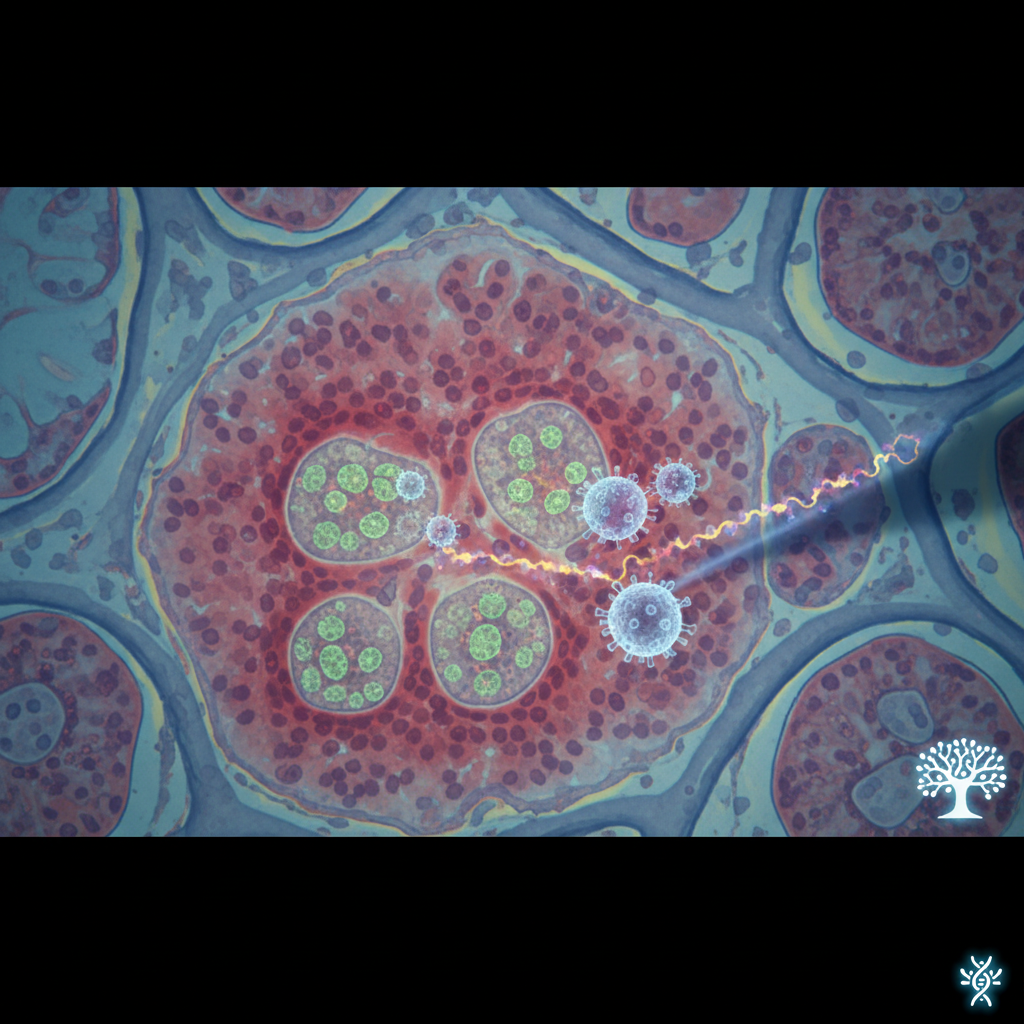
Scientists are exploring whether COVID-19 leaves molecular traces relevant to lung cancer biology — but a cancer-risk link remains unproven
Scientists are exploring whether COVID-19 leaves molecular traces relevant to lung cancer biology — but a cancer-risk link remains unproven
In the early years of the pandemic, the main concern was surviving the acute phase of COVID-19. Over time, the conversation shifted. Attention turned to respiratory after-effects, prolonged fatigue, lingering inflammation, and the growing recognition that for some people, the illness does not neatly end when the test turns negative.
That is the backdrop for the new headline about a possible molecular link between SARS-CoV-2 and lung cancer risk. The idea attracts attention for an obvious reason: severe COVID-19 and lung cancer both involve inflammation, tissue injury, immune disruption, and repair processes. When those biological themes start appearing in the same discussion, it is reasonable for researchers to ask whether there might be meaningful overlap.
But a scientifically interesting question is not the same thing as a demonstrated answer. Based on the evidence supplied here, the conclusion has to remain cautious: it is biologically plausible that lung injury, persistent inflammation, and abnormal repair after COVID-19 could touch pathways that also matter in cancer biology, but that does not establish that COVID-19 increases lung cancer risk in humans.
Why the hypothesis seems biologically plausible
The idea does not come out of nowhere. In cancer biology and pulmonary medicine, researchers have long understood that certain processes can create a tissue environment more relevant to chronic disease and, in some settings, carcinogenesis. These include:
- persistent inflammation;
- repeated tissue injury;
- disorganized cellular repair;
- biological ageing of the lung;
- immune dysfunction;
- and prolonged cellular stress.
None of those factors automatically means cancer. But they do belong to the kind of biological landscape scientists study when trying to understand how damaged tissue can, over time, move towards chronic disease and in some contexts towards malignancy.
COVID-19, especially in more severe cases, can leave exactly that kind of footprint: alveolar injury, prolonged inflammation, tissue remodelling, and in some patients longer-lasting pulmonary changes. That makes it reasonable to ask whether some of those pathways overlap with mechanisms already known to matter in lung cancer biology.
What the supplied studies actually support
The difficulty is that the PubMed evidence provided is poorly matched to the headline’s main claim. None of the supplied studies directly investigates whether SARS-CoV-2 infection creates a demonstrated molecular bridge to increased future lung cancer risk.
What the papers do support is a broader biological context.
One of the studies discusses lung ageing and vulnerability to severe respiratory disease. That matters because ageing lungs respond less effectively to injury, repair less cleanly, and may carry biological changes that are also relevant to cancer research. Another paper looks at venous thromboembolism risk factors, which are important in COVID-19 and also relevant in oncology, but only indirectly in relation to the central claim here. A third addresses pulmonary rehabilitation, which is useful for thinking about longer-term respiratory consequences but is not really about carcinogenesis.
Taken together, these studies reinforce a general point: lungs shaped by ageing, stress responses, inflammation, and immune dysfunction sit within a complex biological terrain that is relevant both to severe respiratory illness and to chronic disease pathways. But that remains a long way from proving a causal connection between COVID-19 and lung cancer.
Inflammation and cancer: a real connection, but not an automatic one
Part of what makes this story compelling is that chronic inflammation really is an important topic in cancer biology. Across multiple organs, persistent inflammation can contribute to DNA damage, changes in the tissue microenvironment, abnormal signalling, and repair processes that become more problematic when they remain dysregulated.
In the lung, that matters even more because lung tissue is highly exposed and structurally delicate. When a major injury occurs, recovery has to be tightly controlled. If repair is prolonged, disordered, or incomplete, the biological state of the tissue can shift.
That is the logic behind the hypothesis: if COVID-19 sometimes leaves behind residual inflammation, imperfect healing, or longer-term immune disturbance, then there may be molecular overlap with pathways that lung cancer researchers already study.
But this is the crucial distinction: molecular overlap is not the same as demonstrated cancer-risk increase. Many diseases share inflammatory mediators, stress pathways, or repair mechanisms without one directly causing the other.
Why tissue repair is central to the question
One of the more reasonable routes into this discussion is through tissue repair. After a severe lung infection, the body has to clear damaged cells, calm inflammation, and rebuild tissue. In theory, if that process becomes prolonged or abnormal, it could leave the lung in a different biological state than before infection.
That is not an absurd idea. Medicine already recognizes that major tissue injury can have longer-term consequences. The challenge is identifying which consequences, in which patients, over what time frame, and with what actual magnitude of risk.
COVID-19 makes that especially difficult because the disease is not uniform. Some people have mild infections and complete recovery. Others develop significant pneumonia. Some go on to longer-lasting pulmonary problems. Risk also varies according to age, smoking history, environmental exposures, genetics, and pre-existing lung disease.
So even if it is reasonable to ask whether some persistent molecular changes matter, that cannot automatically be translated into population-level cancer risk.
The real problem with the headline
The headline refers to a “molecular link” between SARS-CoV-2 and lung cancer risk. That wording can sound as if there is already a well-supported connection. Based on the supplied evidence, there is not.
What exists here is something much more common in biomedical research: a plausible mechanistic hypothesis. That means there are biological reasons to explore the question. It does not mean the question has been answered.
That distinction matters because readers could easily walk away with a much stronger impression — for example, that COVID-19 is known to cause lung cancer, or that anyone who had the infection is now at higher long-term risk. The supplied studies do not support those conclusions.
To make a claim like that responsibly, researchers would need far more direct evidence, such as:
- mechanistic studies specifically linking SARS-CoV-2 to lung tumour pathways;
- long-term human cohort studies;
- careful control for smoking and other major confounders;
- separation of mild from severe infection;
- and clear evidence that any observed increase in risk is not better explained by other factors.
None of that is convincingly present in the evidence provided.
What the story gets right
Even with those limitations, the story touches on something real and important: the long-term consequences of lung injury and persistent inflammation deserve serious study. The pandemic forced medicine to take seriously the possibility that infections can leave prolonged biological effects, especially when they involve sensitive organs and intense immune responses.
It is also reasonable for researchers to investigate whether some of the longer-term molecular consequences of COVID-19 intersect with areas such as fibrosis, accelerated ageing, vascular dysfunction, lung remodelling, and tumour biology. That is a normal part of understanding the downstream effects of a relatively new disease.
The story also highlights a broader scientific truth: diseases do not exist in tidy boxes. Infection, inflammation, ageing, and cancer often share biological components. Exploring those shared pathways can generate useful questions, even before there is direct clinical proof.
What readers should not be led to believe
What this story should not imply is that COVID-19 is already known to raise lung cancer risk. Nor should it suggest that any lingering inflammation after infection represents a direct path to tumour formation.
That would be too large a leap. Lung cancer remains strongly associated with well-established risk factors such as:
- smoking;
- occupational and environmental exposures;
- air pollution;
- genetic susceptibility;
- age;
- and chronic lung disease.
If COVID-19 eventually proves to have any additional role in some circumstances, that will need to be shown directly — and it would likely be a much more complex and context-dependent role than a headline can capture.
The most balanced reading
The supplied evidence supports only a weak but reasonable conclusion: it is biologically plausible that inflammation, lung injury, tissue ageing, immune dysfunction, and abnormal repair after COVID-19 may intersect with pathways that also matter in lung cancer biology. That makes scientific investigation of possible molecular links worthwhile.
But the responsible interpretation stops there. The supplied studies do not demonstrate a specific molecular link between SARS-CoV-2 infection and later lung cancer risk, and they certainly do not prove that COVID-19 increases that risk in humans.
So the safest conclusion is this: the story should be read as a speculative mechanistic question, not as evidence that COVID-19 is a newly established cause of lung cancer. There is a plausible scientific hypothesis on the table — but with the evidence provided here, we are still much closer to the question than to the answer.