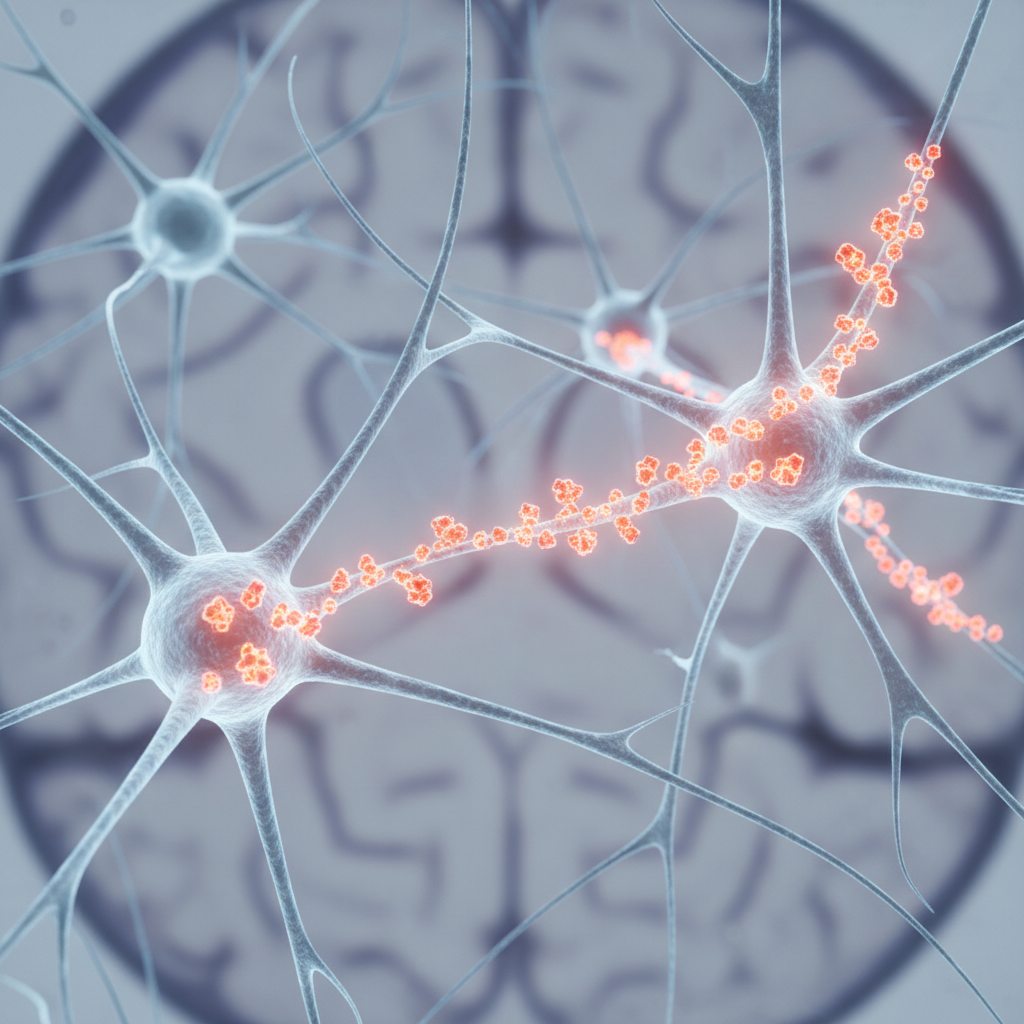
Tau seeds may spread through connected neurons in Alzheimer’s disease — helping explain how the illness advances through the brain
Tau seeds may spread through connected neurons in Alzheimer’s disease — helping explain how the illness advances through the brain
One of the hardest questions in Alzheimer’s disease is not simply which proteins are involved, but how the damage spreads. The brain does not appear to become diseased all at once. Instead, pathology tends to emerge in particular circuits and then extend into other regions, tracking with the gradual worsening of memory, orientation, language, and other cognitive functions.
That is where the new research on tau becomes so compelling. The headline suggests that pathological tau “seeds” can spread through connected neurons in people with Alzheimer’s disease. That wording matters because it touches on one of the most important mechanistic ideas in modern neurodegeneration research: that abnormal forms of tau may behave in a prion-like way, encouraging other tau proteins to adopt the same toxic shape and helping pathology move through connected brain networks.
Based on the literature supplied here, that overall direction is plausible and reasonably well supported. What the studies support most clearly is the broader idea that pathological tau can self-propagate and spread through the brain, contributing to disease progression. What they do not establish with the same certainty is the exact human neuroanatomical mapping implied by the specific news report.
What it means to say tau “spreads”
Tau is a normal protein in the nervous system. It helps stabilize microtubules, which are part of the structural framework that neurons use to maintain organization and transport materials internally. Trouble begins when tau becomes altered, misfolds, and starts forming toxic aggregates.
In Alzheimer’s disease and other tauopathies, those aggregates may not be just static deposits. The increasingly influential hypothesis is that they can act as pathological seeds. Rather than staying where they first formed, these seeds may trigger other tau molecules to misfold in the same way, amplifying the damage and allowing pathology to extend over time.
That idea is important because it offers an explanation for something clinicians and researchers have long observed: Alzheimer’s pathology seems to progress through connected systems rather than appearing randomly throughout the brain.
Why this hypothesis has gained so much traction
The supplied literature supports this broad view. A review on Alzheimer’s pathogenesis describes toxic tau aggregates as capable of spreading through the brain by self-propagating mechanisms, supporting the plausibility of neuron-to-neuron transmission. A more recent tau-focused review reinforces that propagation of tau aggregates is linked with disease progression and severity across tauopathies, including Alzheimer’s disease.
That does not mean every part of the mechanism has been fully solved. But it does mean the field has moved beyond viewing tau tangles as merely an end-stage by-product of neurodegeneration. Increasingly, tau is being treated as a possible active driver of progression, not just a marker left behind by damage that has already happened.
That shift matters. Once a protein is seen not only as a signature of disease but as a participant in how disease advances, it becomes much more important for understanding the illness — and for thinking about future interventions.
A brain-network explanation, not just a regional one
The most interesting part of this story is that it frames Alzheimer’s disease in terms of brain networks. The brain is not a collection of isolated regions. It is a deeply interconnected system. If toxic tau species really move along those connections, or induce pathological change across them, that could help explain why the disease follows recognisable patterns over time.
Early on, more vulnerable regions involved in memory and internal processing may be affected first. Later, other networks become involved, and symptoms broaden. This helps connect a biological observation — tau accumulation — with a clinical one: the staged, progressive worsening of cognitive decline.
In other words, the tau-propagation model helps answer a central question in Alzheimer’s disease: why the illness appears to travel through the brain rather than remain localized.
What the headline gets right
The headline gets something important right by presenting tau spread through connected neurons as a credible mechanism of disease progression. The supplied evidence points in that direction. The idea of prion-like propagation of toxic tau species is now well embedded in scientific discussions of Alzheimer’s disease and related disorders.
It is also a useful framing because it moves away from a static view of pathology and towards a dynamic one. The question is no longer only where tau is found, but how it gets there, how it expands, and how that relates to the clinical course of the disease.
That matters not just for basic science, but potentially for future diagnosis and treatment strategy. If spread through neural networks is part of what drives progression, researchers may eventually try to detect those processes earlier or interfere with them before pathology becomes more widespread.
Why caution still matters
At the same time, the evidence base supplied here has clear limits. The articles are largely reviews, not the specific new human study referenced in the news report. That means they support the overall concept of tau propagation well, but they do not independently confirm every detail of the newly reported finding.
One of the included articles, for example, focuses on gut-induced alpha-synuclein and tau propagation in transgenic mouse models. That is relevant to the broader theme of pathological protein spread, but only indirectly relevant to the specific claim about tau spread in people with Alzheimer’s disease.
There is another important caution too. Even if tau propagation is a strong and increasingly persuasive model, it should not be treated as a complete explanation of Alzheimer’s disease. The illness involves a more complicated biology that includes beta-amyloid, tau, inflammation, vascular factors, metabolic vulnerability, aging processes, and likely other contributors still being worked out.
Reducing Alzheimer’s disease to tau spread alone would be too simple.
Tau may not be the whole story — but it may be a central one
That balance matters. For years, Alzheimer’s research was often dominated by arguments about which protein comes first, or which molecular process is the “real” cause. The field now looks more layered than that. Rather than searching for one exclusive culprit, researchers are trying to understand how different pathological processes interact.
Within that broader picture, tau appears to have a particularly strong connection to how pathology becomes clinically meaningful. In other words, Alzheimer’s disease may not be caused only by tau propagation, but tau spread may be especially important in explaining how the disease’s biology turns into progressive symptoms.
That helps explain why tau remains such a major focus. If toxic tau species move along neural circuits and track with worsening disease, they offer a mechanistic model that connects neuropathology, network-level brain change, and clinical decline.
What this means for treatment hopes
It is tempting to read this kind of research and assume disease-modifying therapies must be close behind. That would be too much of a leap.
The supplied evidence supports tau propagation primarily as a mechanistic explanation of progression, not as proof that there is already a therapy capable of blocking the process and changing the course of Alzheimer’s disease in patients. Finding an important mechanism is not the same as quickly turning it into a successful treatment.
There is a long path between a compelling biological model and a therapy that works safely and meaningfully in real patients. That path includes validation, biomarker development, timing of intervention, trial design, and proof of genuine clinical benefit.
Still, the scientific value is considerable. In neurodegenerative disease, understanding how pathology progresses is one of the most important steps in making future treatment strategies biologically credible.
How this changes the way Alzheimer’s is understood
Perhaps the most important contribution of this story is that it reinforces a view of Alzheimer’s disease not as a passive build-up of abnormal proteins, but as an active, expanding network disease. That changes the scientific questions researchers ask.
Instead of only asking which proteins are present, they ask:
- how those proteins misfold;
- how they become toxic;
- how they interact with vulnerable neurons;
- and how that toxicity advances through connected neural pathways.
That shift matters because it makes Alzheimer’s disease more understandable as a progressive biological process, rather than simply a collection of late-stage pathological findings.
The most balanced reading
The supplied evidence supports a moderately strong conclusion: the spread of pathological tau species along connected neural pathways is a credible model for explaining part of Alzheimer’s disease progression. Recent reviews support the idea that toxic tau aggregates can self-propagate in a prion-like way and that this process is linked to progression and severity across tauopathies.
At the same time, the evidence package is stronger for the general concept than for the exact details of the new human study mentioned in the headline. Some of the literature is indirect, some of it is review-based, and none of it independently proves the precise human pathway mapping described in the news story.
The most responsible conclusion, then, is this: the idea that tau spreads through connected neurons in people with Alzheimer’s disease is scientifically plausible and well aligned with a leading current explanation for how the disease progresses. But it should not be treated as the sole driver of Alzheimer’s disease, nor as evidence that a disease-modifying therapy is already within reach.