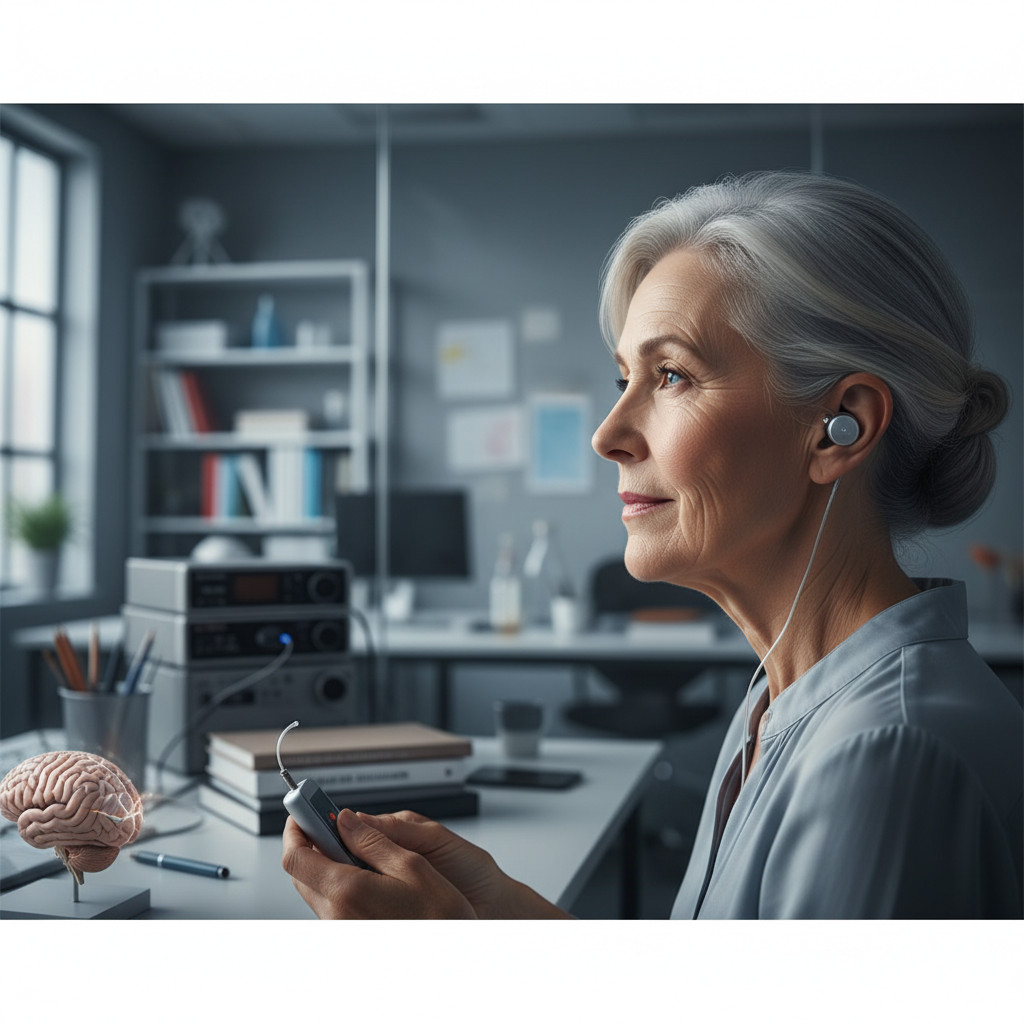
Vagus nerve stimulation is emerging as an early, noninvasive bet against age-related memory decline
Vagus nerve stimulation is emerging as an early, noninvasive bet against age-related memory decline
Few aspects of aging worry people as personally as memory. Misplacing names, taking longer to recall familiar information or noticing more frequent mental slips can raise an unsettling question: is this normal aging, or the beginning of something more serious?
That anxiety helps explain why any intervention tied to memory preservation quickly attracts attention. One of the more intriguing contenders now is vagus nerve stimulation, especially in its noninvasive form, delivered through the skin around the ear. At first glance, the concept sounds surprising: stimulate a peripheral nerve in order to influence cognition. But neuroscience has been building a plausible case for why that connection may matter.
The important thing is to keep the story in proportion. The evidence supplied supports transcutaneous vagus nerve stimulation as a promising research tool for improving certain aspects of memory and cognition in older adults. It does not show that the technique is an established treatment for Alzheimer’s disease, or that it can meaningfully reverse dementia-related memory loss.
Why the vagus nerve has become so interesting
The vagus nerve is one of the body’s major communication pathways between the brain and internal organs. It is involved in autonomic regulation, inflammation, heart rate and broader physiological states linked to arousal and attention. Because of that, it has long been of interest in areas such as epilepsy and depression.
What is newer is the growing effort to use vagus nerve stimulation to influence cognitive function. The underlying idea is that by modulating neural systems involved in attention, memory encoding and alertness, stimulation may help improve performance on certain mental tasks, especially in aging brains that are becoming less efficient but are not yet severely impaired.
There is an obvious appeal here. A noninvasive intervention that can be delivered without surgery and with relatively few reported side effects is much easier to imagine as part of everyday care than many more aggressive neurological treatments.
What the current studies actually suggest
The research provided points to an early but coherent signal. A sham-controlled crossover pilot study found that transcutaneous vagus nerve stimulation improved associative memory performance in healthy older adults after a single session, with few side effects.
That matters for two reasons. First, it suggests the technique may be capable of producing measurable effects even after brief exposure. Second, it supports the broader possibility that some components of age-related cognitive decline may be modifiable through neuromodulation.
Another, more recent study reported that transcutaneous auricular vagus nerve stimulation improved working memory mainly in older adults who had lower baseline performance. That may be one of the most important clues in the whole story. It suggests that the effects are unlikely to be uniform. Response may depend on a person’s baseline cognitive state or underlying brain function.
In other words, this does not currently look like a technology that would simply “boost” every aging brain in the same way. If it proves useful, the benefit may be selective, modest and more personalized than headlines suggest.
The case for personalized neuromodulation
That point changes the editorial framing in a meaningful way. Rather than seeing vagus nerve stimulation as a one-size-fits-all fix for memory lapses, the more realistic scenario is that it could become useful for specific cognitive profiles.
That fits with a wider shift in brain health research. Neurology is moving away from the idea that one intervention will work equally well for everyone. Instead, the field is increasingly focused on identifying who responds, under what conditions, and by which mechanisms.
For vagus nerve stimulation, variables such as baseline cognitive performance, brain connectivity and physiological state may all influence outcomes. If the field advances, the most plausible clinical future may be a tailored one: using neuromodulation selectively in older adults who seem most likely to benefit, rather than offering it as a blanket solution.
Where Alzheimer’s disease enters the conversation — and where it should not
This is where caution matters most.
The headline links the intervention to Alzheimer’s disease, but the supplied studies do not directly demonstrate clinical benefit in patients with Alzheimer’s. That is the central limitation.
The literature supports plausibility in aging and mild cognitive impairment research, but it does not show that noninvasive vagus nerve stimulation slows Alzheimer’s progression, restores lost function or changes the course of disease. One of the key references is a study protocol in mild cognitive impairment, which indicates the field is moving towards more formal safety and feasibility testing in at-risk populations. But a protocol is not a positive treatment result.
That distinction is essential. Alzheimer’s disease is not simply normal memory aging turned up a notch. It is a complex neurodegenerative condition involving abnormal protein accumulation, synaptic dysfunction, inflammation and progressive damage across brain networks. A modest improvement on a memory task in healthy older adults does not amount to evidence that the disease itself is being countered.
A more realistic interpretation: modulation, not reversal
The fairest way to read this research is to think in terms of modulation rather than cure. Noninvasive vagus nerve stimulation may eventually prove useful as a way of strengthening aspects of working memory, associative memory or attention in some older adults.
That would still matter. In aging, even modest cognitive improvements can be meaningful if the intervention is safe, repeatable and accessible. For people with subtle decline, or with mild cognitive vulnerability, a noninvasive technique that supports performance or complements cognitive training could be genuinely valuable.
But there is a large gap between that cautious possibility and the stronger claim that vagus nerve stimulation can counter Alzheimer’s-related memory loss. At this stage, that would go well beyond the evidence.
The evidence is still small and early
Another important limit is the stage of the literature itself. Most of what is available here is early-phase evidence: small studies, healthy older adults, modest effects and at least one article that is a protocol rather than a completed therapeutic trial.
That sharply limits how much can be concluded. A statistically measurable change on a laboratory task after one session may not translate into noticeable day-to-day improvement. It is also still unclear how durable any gains might be, how often stimulation would be needed, or which patients would respond best.
And if benefits depend on baseline cognition or brain connectivity, that makes the intervention more scientifically interesting but less straightforward clinically. A therapy that works only under certain conditions may eventually require careful patient selection, individualized settings or biomarker-guided use.
Why the story still matters
Even with those caveats, this is not a trivial research line. There is real value in exploring noninvasive ways to support cognition at a time when aging populations are making memory loss and dementia more urgent public health concerns.
It is also notable because it broadens the conversation beyond drugs alone. For years, much of the public discussion around cognitive decline has centred on medication. Neuromodulation opens a different path: influencing brain function through targeted stimulation, potentially alongside exercise, sleep, vascular risk reduction and cognitive training.
That broader, combined model may ultimately be more realistic than expecting any single intervention to solve memory decline on its own.
What still needs to be answered
For vagus nerve stimulation to move from intriguing experiment to credible clinical tool, several questions still need clearer answers. Who benefits most? What dose and frequency of stimulation work best? How long do any effects last? Do they improve everyday functioning, or only performance on specific tests? And most importantly, is there any real benefit in people with mild cognitive impairment or established dementia?
Until those answers are available, any claim of clinical transformation would be premature.
The most balanced takeaway
Noninvasive vagus nerve stimulation is one of the more interesting early developments in cognitive neuromodulation. The supplied evidence suggests it may modestly improve some aspects of memory and cognition in older adults, with few side effects reported so far, and that its effects may be strongest in people starting from lower baseline performance.
But the most accurate picture is still that of an early promise, not an established therapy. The studies do not directly demonstrate clinical benefit in Alzheimer’s disease, the observed effects are modest, and the field still depends on larger, longer and more clinically relevant trials.
So the best reading of the story is not that science has found a new answer to Alzheimer’s-related memory loss. It is that researchers are beginning to test a biologically plausible, noninvasive and potentially personalized way of supporting cognition in aging — one that is worth watching, but not yet ready to carry the weight of the headline on its own.