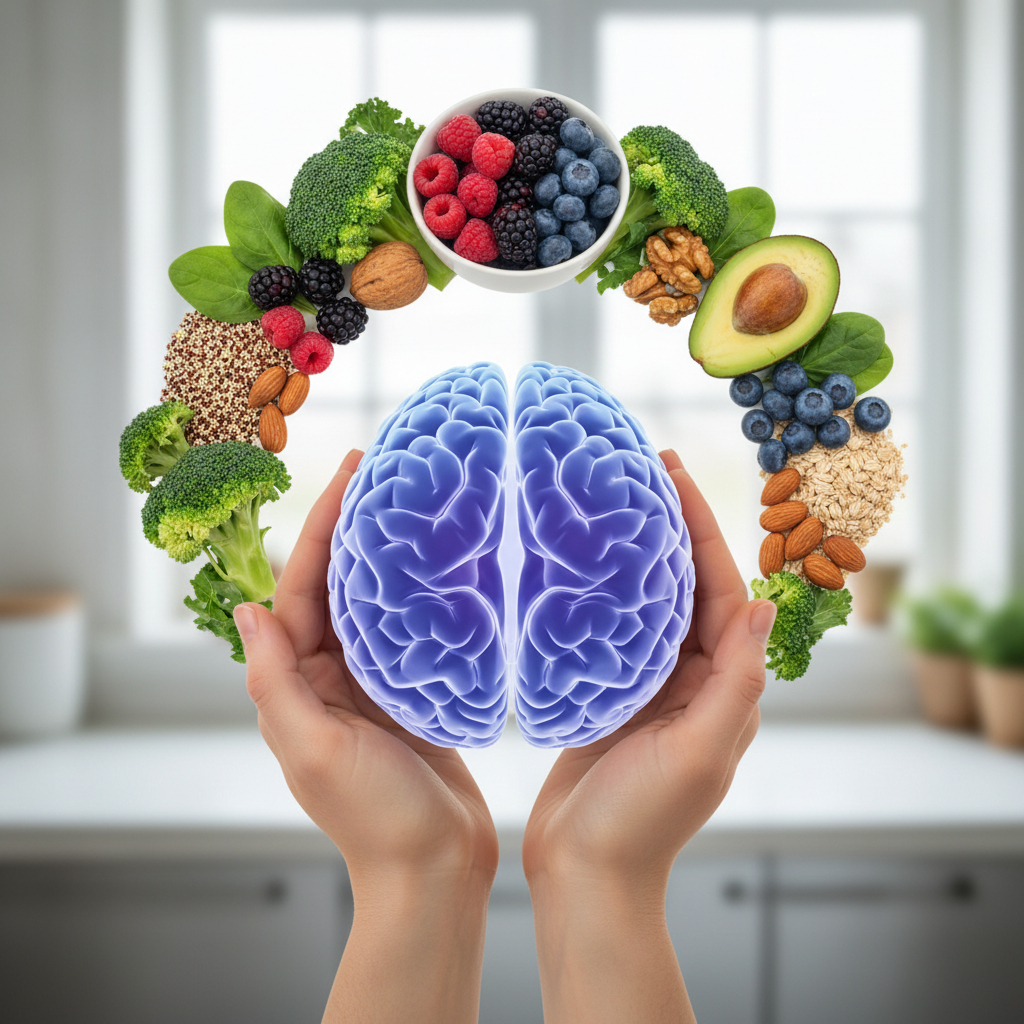
A healthier plant-based diet is linked with lower dementia risk — but it is not a stand-alone shield against Alzheimer’s
A healthier plant-based diet is linked with lower dementia risk — but it is not a stand-alone shield against Alzheimer’s
Few areas of health attract as much interest as the possibility of protecting the brain with choices made years — or even decades — before symptoms begin. Diet is especially compelling because it is both modifiable and cumulative. Unlike genetics, it is something people can change, meal by meal, over a lifetime. That is why headlines linking a dietary pattern to lower Alzheimer’s risk or reduced dementia burden tend to travel quickly.
The new claim that a healthier plant-based diet is associated with lower risk of Alzheimer’s disease and other dementias fits neatly into that hope. But, as is often the case in nutrition science, the most useful conclusion is a little less dramatic and a lot more precise than the headline alone suggests.
The supplied evidence supports an important idea: healthier dietary patterns with a strong emphasis on high-quality plant foods are associated with better long-term cognitive and brain-health outcomes. At the same time, the literature does not support the stronger claim that a plant-based diet, by itself, is a uniquely proven or stand-alone anti-dementia strategy.
What this story is really about
When people hear the phrase plant-based diet and dementia risk, it is easy to reduce the question to one simple message: eat more plants, protect your brain. But the research points to something more specific. What seems to matter most is not just whether a diet is plant-forward, but what kind of plant-based eating pattern it is.
A healthy plant-forward diet generally means more:
- vegetables;
- fruit;
- legumes;
- whole grains;
- nuts and seeds;
- and minimally processed plant foods.
It also usually means less:
- refined carbohydrates;
- sugary foods and drinks;
- highly processed packaged foods;
- and lower-quality dietary patterns overall.
That distinction matters because not all plant-based diets are equally healthy. A person can eat fewer animal products and still rely heavily on refined grains, sweet snacks, fried foods, and ultra-processed products. Technically, that may still be a diet built largely from plant sources. But it is not the kind of dietary pattern most strongly associated with better brain-health outcomes.
What the studies actually found
One of the most relevant studies in the supplied set used UK Biobank data and found that greater adherence to a healthy plant-based diet index — along with several other healthy dietary patterns — was associated with larger brain volumes in regions relevant to dementia risk.
That is an intriguing finding because brain volume in certain areas can offer clues about brain aging and vulnerability to neurodegenerative disease. In other words, the study suggests that healthier dietary patterns may be reflected not only in general health measures, but also in structural characteristics of the brain itself.
But the nuance here is important. In that same study, the association between the healthy plant-based diet index and incident dementia was not statistically significant. So while the results support a relationship between diet quality and brain-related measures, they do not establish that a healthier plant-based pattern clearly reduced future dementia diagnoses on its own.
Another large prospective cohort analysis found that stronger adherence to several healthy dietary patterns — including the healthful plant-based diet index — was associated with lower risk of subjective cognitive decline. That matters because subjective cognitive decline can represent an early signal of concern in some people, even though it is not the same thing as a clinical diagnosis of dementia.
A third study found that healthier dietary patterns, including the healthy plant-based diet index, were associated with lower odds of psychometric mild cognitive impairment. At the same time, Mediterranean-pattern adherence showed the clearest association with Alzheimer’s disease mortality.
Taken together, that pattern of findings suggests something important: healthy plant-forward eating appears to be one credible part of brain-health protection, but it does not clearly stand above all other established healthy eating patterns.
The bigger lesson: the healthy pattern matters more than the label
This may be the most useful message in the entire story. The evidence does not point to a magic anti-Alzheimer’s diet. Instead, it suggests that the brain seems to benefit from consistently healthy overall eating patterns, and that a high-quality plant-forward diet can be one version of that.
But it does not appear to be uniquely or consistently stronger than other well-studied dietary models, especially:
- the Mediterranean diet;
- DASH-style eating;
- and other patterns built around whole foods, unsaturated fats, fibre, and better overall diet quality.
So the strongest safe conclusion is not “eat plant-based to prevent dementia”. It is something more grounded: a healthier plant-forward diet is one reasonable component of a broader dietary pattern associated with better cognitive health over time.
Why diet might affect the brain in the first place
Even though the evidence is observational, the broader relationship makes biological sense. The brain does not age in isolation. It is deeply affected by vascular health, metabolic health, and long-term inflammation.
Healthier dietary patterns may influence several factors tied to dementia risk, including:
- blood pressure;
- cholesterol and vascular function;
- insulin resistance and diabetes;
- chronic inflammation;
- obesity;
- and the health of blood vessels that support the brain.
That helps explain why better diets repeatedly show up in research on cognitive outcomes. It may not be that a single food directly protects neurons in the way a drug might. More often, diet may help preserve the metabolic and vascular environment the brain depends on over many years.
Why association is not proof
This is where caution matters most.
The supplied evidence is observational, which means it can show associations but cannot prove that a healthier plant-based diet directly lowers dementia risk. People who eat healthier diets also tend to differ from others in many other ways. They may exercise more, smoke less, sleep better, have higher education, better access to healthcare, or follow other health-promoting habits that also influence brain aging.
Researchers try to account for those differences statistically, but they can never remove all of them completely. That is why it would be an overstatement to say that a healthy plant-based diet has been proven to directly prevent Alzheimer’s disease.
What can be said more safely is that it appears repeatedly within a cluster of healthier lifestyle patterns linked with better cognitive outcomes.
Why diet quality is the real issue
Another reason this story needs nuance is that “plant-based” has become a very broad label. In public discussion, it can sometimes imply healthfulness automatically. But the research does not support that shortcut.
A healthy plant-based diet is not the same as a plant-based diet high in:
- refined starches;
- sugary foods;
- ultra-processed snacks;
- and low-fibre convenience products.
The studies supplied here support the value of healthy plant-forward eating, not just plant-based eating in the abstract.
That is an important distinction for public health messaging. If the label is emphasized more than the quality, the message becomes misleading.
What this means for real-world prevention
When it comes to dementia, one of the biggest mistakes is expecting too much from any single factor. Alzheimer’s disease and other dementias are not caused by one thing alone. They emerge from the interaction of aging, genetics, vascular disease, inflammation, lifestyle, sleep, physical activity, hearing loss, social connection, and many other influences accumulated over time.
In that setting, diet makes the most sense as one part of a broader prevention picture, not as a stand-alone solution.
That changes the practical question. Instead of asking, “What diet prevents Alzheimer’s?” the more useful question is: What long-term pattern of living is associated with better brain health?
The strongest answers still include:
- a high-quality diet;
- regular physical activity;
- blood pressure, cholesterol, and diabetes management;
- good sleep;
- cognitive stimulation;
- social engagement;
- and avoiding smoking and heavy alcohol use.
What this headline adds — and what it does not
The most valuable contribution of this story is that it reinforces the idea that a diet rich in high-quality plant foods fits plausibly within a brain-healthy lifestyle. That matters. In public health, realistic and sustainable habits often matter more than dramatic promises.
But the headline should not be read as proof that a healthy plant-based diet alone prevents Alzheimer’s disease. Nor should it be treated as evidence that plant-based eating clearly outperforms other well-established healthy dietary patterns.
The stronger interpretation is more measured: healthier plant-forward eating seems to be a sensible part of long-term dementia risk reduction, especially when it reflects overall diet quality rather than a simple dietary label.
The most balanced reading
The supplied evidence supports a moderately strong conclusion: healthier dietary patterns with a strong plant-food emphasis are associated with better cognitive and brain-health markers, including more favourable brain volumes, lower risk of subjective cognitive decline, and lower odds of mild cognitive impairment in some studies.
But the limitations are equally important. The evidence is observational, the strongest dementia-incidence finding for the healthy plant-based diet index in the UK Biobank study was not statistically significant, and other dietary patterns — especially Mediterranean-style and DASH-like patterns — appear at least as strong, and sometimes stronger, for some cognitive outcomes.
The most responsible conclusion, then, is this: a healthy plant-based diet may be one reasonable component of dementia risk reduction, but it should not be presented as a uniquely proven or stand-alone strategy for preventing Alzheimer’s disease. What the evidence supports most clearly is the value of a broader healthy dietary pattern with high-quality plant foods at its centre.