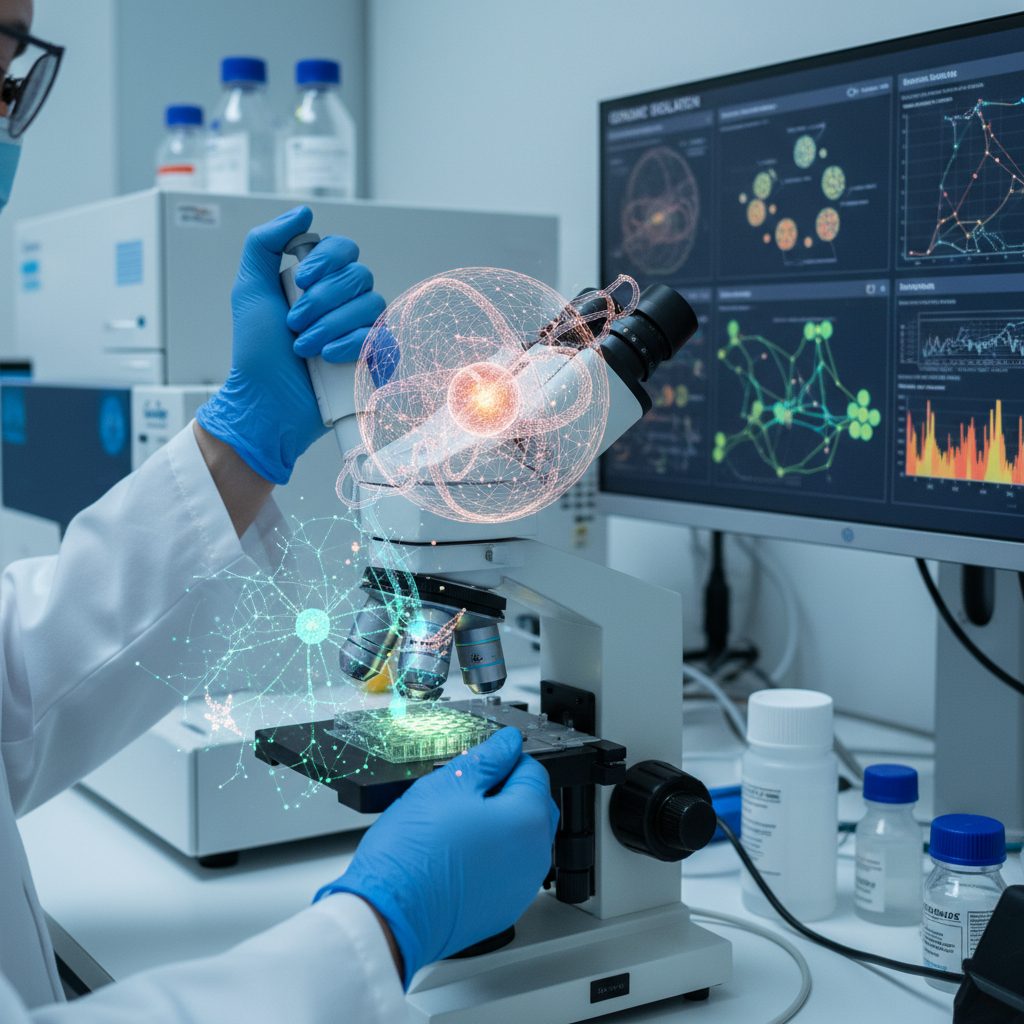
A new method promises a clearer view of how the genome works in cancer — but for now, the strongest advance is in target discovery
A new method promises a clearer view of how the genome works in cancer — but for now, the strongest advance is in target discovery
For many years, talking about cancer genetics mostly meant hunting for important mutations. The main question was straightforward: which gene is altered? That question still matters, but it is no longer enough. Cancer is increasingly understood as a problem of genomic organization, regulation, cellular diversity, and evolution within the tumour itself. It is no longer only about what changes exist in DNA, but about how those changes are arranged, expressed, and used by different cell populations to survive, resist treatment, and expand.
That is why a new method promising a clearer view of how the genome functions in cancer attracts so much interest. In theory, the value is obvious: if researchers can read the tumour genome with greater functional precision, they may be better able to identify meaningful vulnerabilities, stronger biomarkers, and more useful therapeutic targets.
The overall direction of that story is plausible and fits the current state of cancer research. But the most careful reading still requires caution. The supplied evidence supports the broader idea that advanced genomic and single-cell methods are making cancer biology much easier to study in fine detail. What it does not support as directly is the claim that this specific new method has already been validated as a clearer way to understand genome function in cancer.
What has changed in cancer research
One of the biggest changes in oncology has been the realization that a tumour is not a single uniform mass. Even when it appears to be one lesion, it may contain multiple cellular populations with different mutations, different survival strategies, different aggressiveness, and different responses to treatment.
That has changed the questions researchers ask. Instead of only asking what mutation is present, scientists increasingly want to know:
- how the tumour genome is organized;
- which regions are active or silent;
- how different subclones coexist;
- how gene expression varies from cell to cell;
- and how the tumour evolves over time.
That is why more sophisticated genomic methods matter so much. They do not simply catalogue mutations. They help reconstruct the internal logic of the tumour.
What the supplied evidence actually supports
The literature provided does not directly describe the specific method featured in the news story, but it does support the broader scientific context.
A review on next-generation sequencing shows how these technologies transformed the study of genome structure, regulation, mutation, and expression across biomedical research, including cancer. That is important because it places the headline within a real trend: modern cancer research increasingly depends on tools that can read the genome at far greater scale and detail than older methods allowed.
Another study offers a more direct example of why higher-resolution tools matter. Single-cell combinatorial indexing methods can substantially improve usable reads per cell and help resolve subclonal genomic alterations in cancer models. That supports the idea that better technical resolution is not just a methodological luxury. It is a practical way of seeing aspects of tumour biology that disappear when everything is averaged together.
Put simply, when researchers can study tumours at the level of individual cells or near-individual-cell resolution, they stop seeing only “the tumour” and begin to see the different tumours that coexist inside one tumour.
Why that matters so much
This increase in resolution matters because some of the most difficult problems in cancer come from heterogeneity. One treatment may work well against one cell population while leaving another behind. A biomarker may look promising in bulk tissue but fail when applied to biologically complex real-world tumours. A mutation may be present, but not actually be the dominant functional driver in that particular tumour context.
That is why methods that offer a sharper view of how the genome functions, rather than simply what it contains, are so valuable. They can help distinguish:
- central alterations from incidental ones;
- genuinely functional signals from genomic noise;
- dominant clones from emerging subclones;
- and hidden mechanisms of resistance.
That is exactly the kind of improvement that could, over time, lead to better biomarker discovery and better therapeutic target identification.
Where the evidence is weaker
The difficulty is that the evidence supplied is only loosely matched to the specific headline. None of the provided PubMed papers directly describes the exact new functional-genomics method for cancer that the news report is highlighting.
One paper is a broad sequencing review. Another focuses on multigene panel testing in hereditary cancer, which is clinically important but not really the same thing as revealing how tumour genomes function at high resolution. So while the evidence supports the general importance of new genomic tools, it does not independently validate the specific method being announced.
That distinction matters. Science news often turns a technical advance into an implied clinical promise. Real science usually moves more slowly than that.
What a new method can realistically deliver
Even when a platform is technically impressive, its first impact is usually seen in research, not immediately in patient care. In most cases, the sequence looks something like this:
- a method improves the ability to observe the tumour;
- researchers discover new biological patterns;
- some of those patterns become candidate biomarkers or targets;
- those candidates are validated in follow-up studies;
- and only then, in some cases, do they start to influence clinical practice.
That means a new method can be scientifically important without producing short-term benefit for patients right away. Its initial value is in making the disease more legible.
In this case, the safest claim is that better tools may help researchers understand tumour genome structure, regulation, heterogeneity, and function more precisely. Saying that they will quickly improve treatment would go beyond what the supplied evidence can support.
A reminder that methods can matter clinically — eventually
The supplied evidence also offers a useful reminder that methodological advances in genomics can eventually affect clinical care. Multigene panel sequencing has already shown practical value in hereditary cancer testing. That is not the same as mapping functional genome regulation inside tumours, but it does show that better genomic tools can move from research into real-world cancer characterization and management.
That example helps balance the story. It is not exaggerated to say that new methods may one day influence care. The exaggeration would be to imply that every technical advance is already on the edge of changing treatment.
What the headline gets right
The headline gets one big thing right by framing this as a story about research methods and discovery. Cancer research depends heavily on tools that allow scientists to see more, and to see with greater resolution. Without that, many of the tumour’s most important processes remain hidden.
It is also right to suggest that understanding genome function — not just the list of mutations — is central to the next phase of oncology. The modern question is no longer only “which gene is altered?” but “how does that alteration behave inside a complex regulatory and cellular system?”
What it should not promise yet
What the headline should not encourage is the idea that a new method, by itself, will quickly lead to better treatment. Methods create visibility. Treatment advances require a much longer process involving validation, reproducibility, robust biomarker development, clinical trials, and proof of meaningful patient benefit.
It would also be too strong to imply that the method has already shown clinical superiority or that it has definitively changed how cancer is understood in patients. The supplied evidence does not support that leap.
The most balanced reading
The evidence available supports a modest but solid conclusion: new genomic and single-cell methods are giving researchers a much more detailed view of cancer biology, including tumour heterogeneity, subclones, genome organization, and regulation. Over time, that may improve the discovery of biomarkers and therapeutic targets.
At the same time, the supplied literature does not directly validate the specific method named in the headline. The evidence supports the general concept that refined technologies are transforming cancer research more clearly than it supports the stronger claim that one new method has already shown, in a validated way, how the genome functions in cancer.
So the most responsible conclusion is this: this is best read as a story about cancer research methods and target discovery, not as evidence of an immediate clinical breakthrough. For now, the clearest value lies in making cancer more understandable at high resolution — and while that is not the same as better treatment today, it is often exactly the kind of step that comes before real advances in oncology.