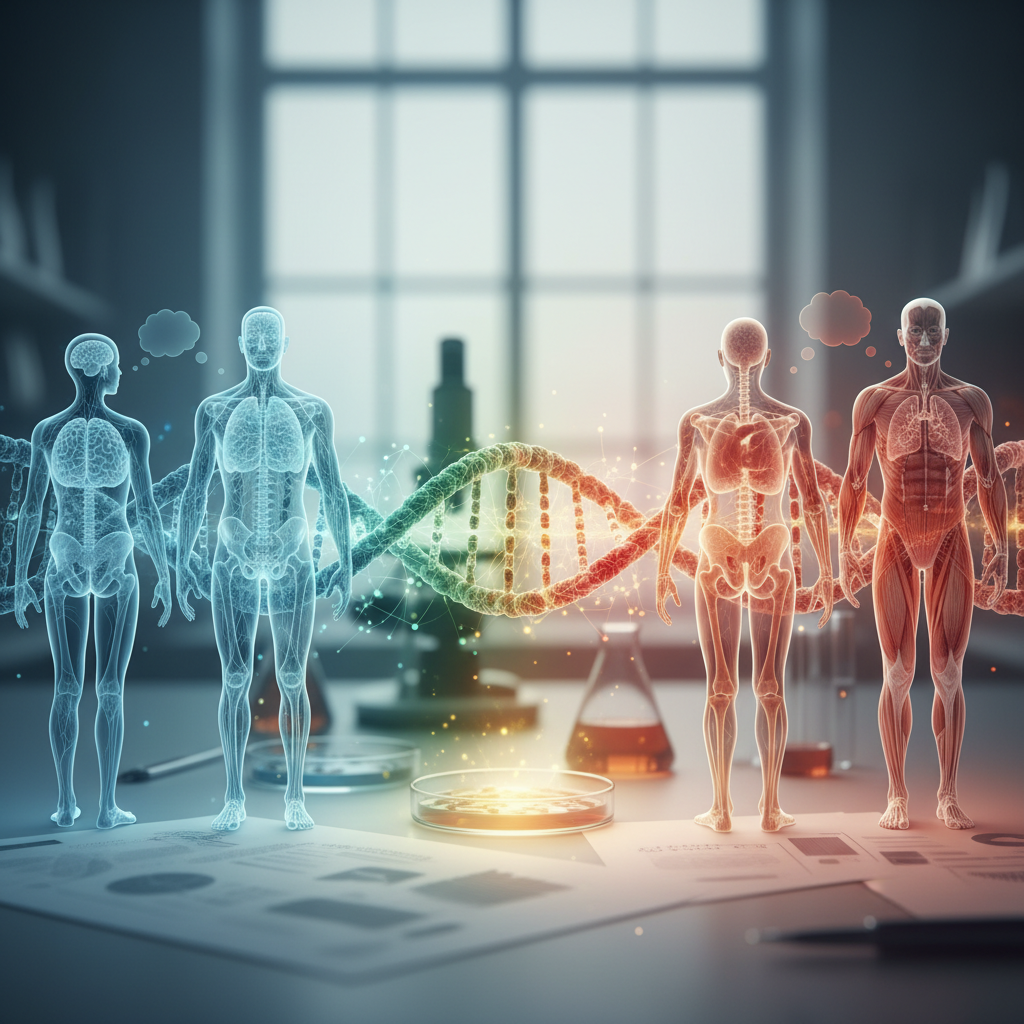
Mental and physical illnesses often go together — and genetics may explain part of that overlap, but not the whole story
Mental and physical illnesses often go together — and genetics may explain part of that overlap, but not the whole story
In everyday clinical practice, body and mind rarely get sick in completely separate compartments. The distinction is useful for organizing specialties, clinics, and health systems, but it does not always reflect what patients actually experience. People with chronic physical illness often develop depression, anxiety, emotional distress, or major functional problems. At the same time, people living with mental illness often face more physical disease, lower quality of life, and greater medical complexity.
So the idea that mental and physical illnesses often go hand in hand is not new. What the latest headline tries to add is another layer: perhaps genetics helps explain why this overlap is so common.
That is a plausible idea. It also needs caution.
The supplied evidence supports the broader concept that mental and physical disorders often co-occur and that shared biology, including some degree of shared genetic vulnerability, may contribute to that pattern. But it does not support as strongly the larger claim that one new study has broadly explained why mental and physical illnesses in general tend to cluster together.
The question behind the headline
This is an important question. Why do so many people not just develop one condition, but a combination of problems that crosses the usual boundary between mental and physical health?
The most intuitive answer is clinical burden itself. A serious physical illness can limit daily life, increase pain, reduce independence, disrupt schooling or work, and strain relationships — all of which can raise the risk of mental-health problems. The reverse is also true. A mental disorder can affect sleep, diet, activity, treatment adherence, substance use, and access to care, which can then increase physical illness risk.
But that is not the only possible explanation. Researchers are also interested in whether some of the overlap reflects common biological pathways, including inflammation, neuroendocrine disruption, developmental vulnerability, metabolic stress, and, in some cases, genetic pleiotropy — meaning that genetic liability for one condition may also shape risk across multiple other disorders.
What the supplied evidence supports most clearly
One of the most relevant papers in the set is a large pediatric cohort study showing strong overlap between physical conditions and mental disorders. It also found that greater physical illness severity was linked to more psychiatric morbidity and worse functional impairment.
That is an important finding because it reinforces that comorbidity is not a side issue. The heavier the physical disease burden, the greater the psychiatric burden often appears to be as well. That helps challenge the old assumption that emotional symptoms in people with medical illness are always secondary, minor, or merely reactive.
At the same time, that study does not itself provide a genetic explanation. It documents a powerful pattern of comorbidity. That matters clinically, but it is not the same thing as explaining why the pattern exists.
Where genetics enters the picture
The genetic side of the story appears more indirectly in the supplied evidence. One of the central ideas here is genetic pleiotropy, in which susceptibility genes or polygenic risk profiles for one condition are associated with patterns of risk across others.
This way of thinking has become increasingly influential in modern medicine. Rather than imagining that each disease has an entirely separate biological architecture, researchers have been finding that seemingly different conditions may share parts of their underlying risk structure.
In the supplied material, a study of polygenic liability for Alzheimer’s disease found associations across a range of chronic diseases. That does not prove a broad explanation for mental-physical comorbidity, but it does support the more general idea that genetics can connect health problems that appear, at first glance, to belong to very different medical categories.
That matters because it suggests biology does not obey the administrative boundaries between psychiatry, neurology, cardiology, pediatrics, and internal medicine. Some risk patterns may cross those boundaries more freely than clinicians traditionally assumed.
What this does not prove
This is the most important caution.
None of the supplied studies directly demonstrates a broad new genetic explanation for why mental and physical illnesses generally go hand in hand.
The Alzheimer polygenic-risk paper, for example, is not about mental-physical comorbidity in general. It focuses on Alzheimer’s genetic risk and chronic disease patterns. That is relevant to the idea of shared biology, but it does not validate the headline in its strongest form.
Likewise, the pediatric cohort study shows the coexistence of physical and mental illness, but it does not itself provide the promised genetic bridge.
So the safest interpretation is that the supplied literature strongly supports the clinical reality of comorbidity and offers some support for the plausibility of shared biological architecture, including genetics. What it does not do is prove that a new study has broadly solved the question of why mental and physical illnesses so often overlap.
Why genetics is likely only part of the answer
Even if shared genetics plays a role — and there is good reason to think it may — genetics is unlikely to explain everything.
In real life, mental and physical illnesses cluster through a mix of influences, including:
- social factors, such as poverty, trauma, violence, and instability;
- health behaviours, including sleep, diet, smoking, alcohol, physical activity, and treatment adherence;
- chronic inflammation and biological stress;
- treatment effects, including medication side effects;
- health-care access barriers;
- and the simple functional burden of living with long-term illness.
That means it would be too simplistic to turn this into a purely genetic story. Genetics may help explain why certain vulnerabilities cluster, but the lived reality of comorbidity is also shaped by environment, inequality, treatment, and access to care.
Why this matters clinically
Even with those limitations, the story carries an important clinical message. It reinforces something medicine often learns too slowly: mental health and physical health cannot be treated as if they were separate worlds.
If mental and physical illnesses frequently overlap for both clinical and possibly biological reasons, that has immediate implications. It means people with chronic physical illness should be screened more carefully for mental distress. It also means people with mental illness should not be managed as though their physical risks are secondary.
In practice, that points to a more integrated model of care. Cardiologists, internists, pediatricians, neurologists, and psychiatrists are not working in unrelated universes. They are often dealing with different expressions of the same underlying human vulnerability.
What the headline gets right
The headline gets something important right by suggesting that the overlap between mental and physical illness may not be purely circumstantial. It may also reflect shared biology. That is a plausible and meaningful direction in current research.
It also moves away from the older assumption that mental and physical illness co-occur only because one creates emotional strain in response to the other. In many cases, the connection may be deeper, more systemic, and more rooted in how disease risk is organized in the body.
Where the headline goes too far
Where the headline stretches beyond the supplied evidence is in suggesting that one new genetic study now “explains” why these illnesses go together. The literature provided here supports the general concept much more clearly than that stronger formulation.
It shows that:
- comorbidity is real and clinically important;
- greater physical burden is linked to greater psychiatric burden;
- shared genetics is plausible;
- and polygenic risk may connect apparently different health outcomes.
But that is still different from demonstrating a unified, validated genetic explanation for the overlap between mental and physical illness in general.
The most balanced reading
The most responsible interpretation is this: mental and physical illnesses often overlap for multiple reasons, and genetics may be an important but partial part of the explanation. The supplied literature strongly supports the clinical reality of comorbidity and offers some support for the idea of shared biological architecture, including genetic pleiotropy.
At the same time, the evidence is only partly matched to the force of the headline. None of the provided studies directly demonstrates a broad new genetic explanation for why mental and physical illnesses in general go hand in hand. Social, behavioural, inflammatory, treatment-related, and health-system factors remain central to the story as well.
So the safest conclusion is this: genetics likely helps explain part of the connection between mental and physical illness, but it does not replace the broader understanding that comorbidity also emerges from the interaction of biology, lived experience, and inequality. The real advance in this discussion is not in reducing the overlap to genes alone, but in recognizing that body and mind are linked through many pathways at once.