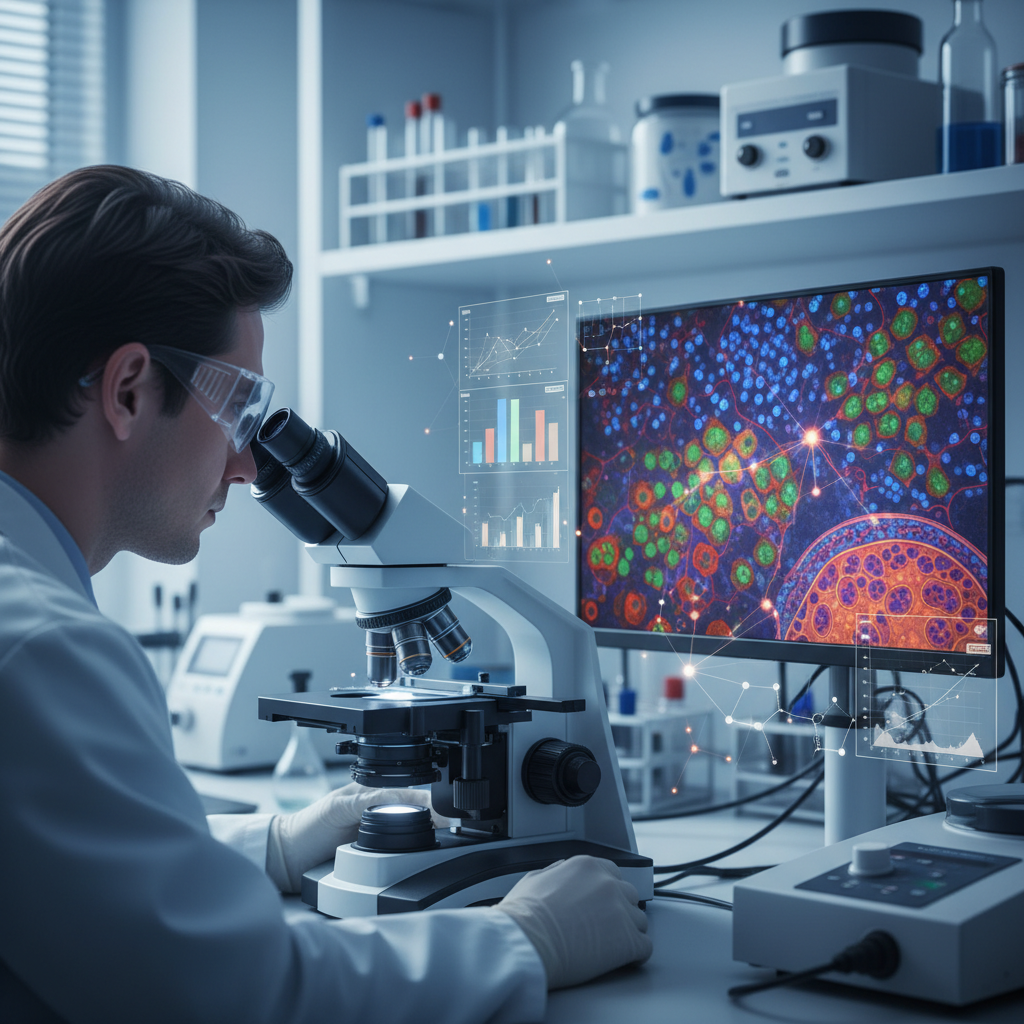
Single-cell tools are changing how scientists see immune memory, even if they do not yet explain it fully
Single-cell tools are changing how scientists see immune memory, even if they do not yet explain it fully
Immune memory is one of the body’s most impressive biological tricks. It is what allows the immune system to respond faster and more effectively the next time it encounters a virus, bacterium or other threat it has seen before. Without it, vaccines would not work the way they do, and repeat infections would often be far more dangerous.
But knowing that immune memory exists is not the same as understanding exactly how it is organized and maintained inside real tissues. For years, immunology has often had to work with averages — measuring broad groups of cells as though they were relatively uniform populations. The problem is that the real immune system does not behave like that. It is made up of diverse cells in different activation states, spread across changing tissue environments and responding to highly local signals.
That is why single-cell technology has become such a big deal. Instead of analysing large cell populations in bulk, researchers can now look at individual cells, identify their functional states and trace how they shift over time. In the case of immune memory, that creates a much sharper view of a process that has long been understood conceptually but has remained difficult to observe in detail.
Even so, the evidence supplied needs to be read carefully. It strongly supports the idea that single-cell methods are revealing how memory immune cells are organized, activated and mobilized in complex tissues. What it does not directly establish is the core mechanistic basis of how immune memory cells “remember threats” in the broadest immunological sense.
What single-cell technology has really changed
For a long time, researchers could say that memory T cells or activated immune cells were present, but not always distinguish how many subtypes existed, which states they were in, or how they related to one another within a tissue.
Single-cell analysis changes that by allowing each cell to be examined individually through gene expression patterns and other markers. In practice, that means what once looked like one population may turn out to be several: resting cells, transitional cells, activated cells and cells responding differently depending on the microenvironment around them.
That matters especially for immune memory because memory is not just about having cells stored away for later use. It is also about where those cells reside, how long they persist, how ready they are to reactivate and what signals push them from one state into another.
What the supplied studies actually show
The references provided support the broader value of single-cell profiling for identifying memory immune-cell states and behaviour in complex tissue environments, especially in cancer and immunotherapy settings.
One single-cell atlas of hepatocellular carcinoma identified enrichment of central memory T cells in early tertiary lymphoid structures. That is important because it shows that memory-related cell populations can be mapped with high resolution in real human tissue, rather than inferred only from broad blood-based markers.
Another single-cell study in lung cancer showed activation of memory CD8 T cells into effector phenotypes after therapy. This is a useful illustration of what single-cell methods can do beyond simple cell counting: they can capture transitions. Researchers can begin to see how a memory population changes state and becomes functionally active under immune pressure.
A third study found that combination checkpoint therapy was associated with trafficking of CD4 naive and central-memory T cells from tumour-draining lymph nodes into tumours. That adds another layer to the story. Memory-related immune compartments are not static. They can be mobilized, redirected and reshaped during a broader immune response.
Taken together, these findings support a strong methodological point: single-cell technologies are becoming powerful tools for dissecting immune memory biology in real tissues.
What that means — and what it does not
This is where caution matters.
The headline suggests a broad explanation of how immune memory cells “remember threats.” But the supplied studies do not really deliver that kind of foundational answer. What they provide is something narrower, though still valuable: a closer view of where memory-like cells are found, how they are activated and how they move through complex tissue environments.
That is not the same as establishing the core mechanism of immune memory formation and maintenance. One question is who is present, where they are and what state they are in. A different question is how immune memory is built, preserved over long periods and reawakened with precision when a known threat returns.
Answering that deeper question would require integrating other layers of biology, including epigenetic programming, clonal persistence, metabolic state, survival niches and signalling between immune cells. None of that is directly settled by the studies listed here.
A more accurate framing: organization, activation and movement
The safest and most accurate way to tell this story is that single-cell technologies are increasingly revealing how memory immune cells are organized, activated and differentiated in real tissues.
That is still a meaningful scientific development. Modern immunology needs more than proof that memory cells exist. It needs to understand where they reside, what keeps them poised, how they interact with surrounding cells and how they transition into active immune responses.
Those questions matter across infection, vaccination, cancer and immunotherapy. In all of those settings, immune protection depends less on a broad cell label than on a fine balance between subpopulations, activation states and tissue context.
The awkward limitation: most of the evidence comes from cancer
There is another important caveat. The supplied papers are mostly cancer immunology studies rather than direct studies of how immune memory cells remember pathogens in a general sense.
That matters because tumours create unusual immune environments. They involve chronic inflammation, immune suppression, tissue remodelling, exhaustion and therapeutic pressure. Memory cells behaving in that setting may not behave the same way as memory cells generated after ordinary infection or vaccination.
So while cancer provides a rich setting for studying immune-cell plasticity, activation and trafficking, it does not automatically represent immune memory as a whole. A finding in tumour immunotherapy can be highly informative without establishing a universal rule for how the immune system remembers threats.
The real advance is methodological
Even with those limitations, there is a genuine advance here: single-cell analysis is giving immunology a much sharper map.
That may sound technical, but it matters. In biology, new tools often do more than improve resolution. They change the kinds of questions scientists are able to ask. When researchers can follow memory states, differentiation pathways and tissue-specific movement in real time, they gain access to parts of immune biology that were previously blurred together.
In the long run, that could have practical implications. It may help explain why some immunotherapies work better than others, why certain vaccine responses last longer, or why some immune populations become exhausted while others remain effective. But that future depends on connecting increasingly detailed maps with stronger mechanistic explanations.
What still remains unanswered
The biggest question is still open: what ultimately allows immune memory to last and to reactivate rapidly when needed? Single-cell technologies move researchers closer to that answer, but they do not solve it on their own.
They show states, trajectories and locations. They show that memory cells are not a single uniform group. They show that tissue context matters. But turning those insights into a full explanation of how the immune system “remembers” still requires other forms of evidence, from functional immunology to epigenetics and long-term studies of infection and vaccination.
The most balanced takeaway
The supplied studies support the idea that single-cell technologies are transforming how scientists study immune memory. They make it possible to map memory-related cell populations, activation states, transitions and tissue organization with a level of detail that was difficult to achieve before.
But it would overstate the evidence to claim that these studies have definitively explained how immune memory cells remember threats. The current literature is stronger as a demonstration of what single-cell tools can reveal in tumour immunology than as proof of a universal mechanism of immune memory.
So the best reading of this story is not that one of immunology’s deepest questions has been solved. It is that researchers are finally seeing immune memory with far more clarity. And in science, seeing more clearly is often the necessary step before truly understanding.