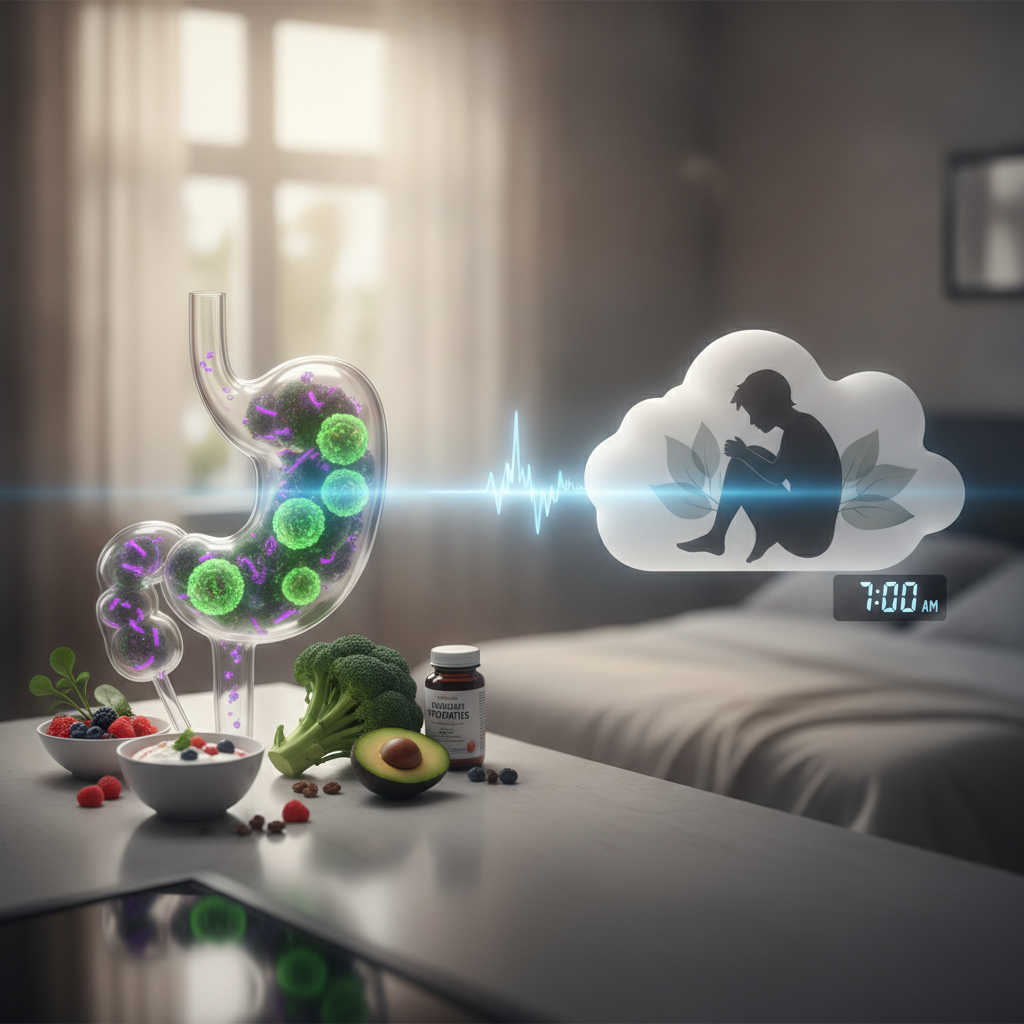
Sleep and gut bacteria may go hand in hand, but science has not shown the microbiome is the main starting point for good sleep
Sleep and gut bacteria may go hand in hand, but science has not shown the microbiome is the main starting point for good sleep
Few health ideas have become as popular in recent years as the claim that the gut influences almost everything: immunity, mood, metabolism, inflammation, and now sleep. It is an appealing picture. If the gut microbiome helps regulate so many systems, then perhaps sleeping well starts with healthy bacteria.
The trouble is that the science, at least in the evidence supplied here, does not yet support telling the story that simply.
The safest reading of the material is that sleep, the gut microbiome, and circadian biology appear to be interconnected, and lifestyle factors such as diet and meal timing may influence both, but there is no direct proof here that healthy gut bacteria are the main starting point for a good night’s sleep.
In other words, the relationship is plausible and important. What remains missing is clear evidence of a simple, dominant one-way path from the gut to sleep.
The gut and the body clock really do interact
The strongest part of the story is that the body works as an integrated system. The gut does not operate separately from the brain, metabolism, or circadian rhythm. What people eat, when they eat, how they sleep, and how their internal timing systems function all appear to influence one another.
The supplied evidence supports exactly that broader idea: gut microbiome biology, circadian timing, and sleep-related behaviours are interconnected.
That matters on its own. It suggests that changes in eating schedules, daily regularity, food quality, and sleep patterns may ripple across several systems rather than acting in isolation.
Meal timing may be part of the picture
One of the supplied reviews, focused on intermittent fasting, suggests that meal timing may influence health in part through effects on circadian biology, the gut microbiome, and behaviours related to sleep.
That matters because it shifts the conversation away from only what people eat and towards when they eat as well. The body does not necessarily respond to food the same way at all hours of the day, and those timing effects may influence metabolism, hormone patterns, and possibly sleep-wake behaviour.
But this also needs restraint. The evidence helps support a network of relationships between food timing, microbiome biology, and circadian rhythms. It does not directly show that improving gut bacteria by itself leads to better sleep.
The relationship is likely two-way, not one-way
This may be the most important point in avoiding overstatement.
The headline implies a main causal arrow: healthy gut bacteria lead to better sleep. The supplied evidence supports a more cautious interpretation: sleep and the gut microbiome likely influence one another, within a broader system shaped by diet, inflammation, metabolism, and circadian organization.
That means poor sleep may affect eating behaviour, inflammation, circadian disruption, and gut-related physiology. At the same time, dietary and metabolic changes may affect both the microbiome and sleep quality.
This kind of two-way model is biologically more plausible than a simple one-direction claim.
Chronic illness often shows these factors clustering together
Another point supported by the supplied reviews is that sleep disturbance, diet problems, inflammation, and dysbiosis often cluster together in chronic health conditions.
That helps explain why the topic has become so compelling. In many clinical settings, patients do not arrive with one neatly isolated problem. Instead, they present with a mix of:
- poor sleep;
- worse diet patterns;
- metabolic changes;
- inflammation;
- and disturbed gut biology.
But clustering is not the same as proving a starting cause. In many cases, these features coexist and reinforce one another. That does not automatically mean the microbiome is the main driver.
What the supplied studies do not directly show
This is the main limitation behind the headline.
The supplied PubMed evidence does not directly test whether healthy gut bacteria lead to better sleep in a general population setting. It also does not provide robust intervention evidence showing that changing the microbiome reliably improves sleep.
On top of that, two of the three supplied papers are only indirectly relevant to the core sleep-microbiome question. They focus on areas such as intermittent fasting, polycystic ovary syndrome, or inflammatory bowel disease, rather than directly studying whether changes in gut bacteria improve sleep in otherwise typical populations.
So the evidence set is stronger for supporting a broad conceptual link between the gut, circadian timing, and sleep-related habits than for validating the headline’s most direct claim.
Good sleep depends on much more than the microbiome
Even if the microbiome plays a meaningful role, sleep quality is still shaped by many other influences. These include:
- stress;
- mental health;
- circadian rhythm;
- medications;
- medical conditions;
- pain;
- caffeine, alcohol, and nicotine;
- light and screen exposure at night;
- and environmental factors such as noise and temperature.
That is crucial because it prevents reductionism. A healthier gut may be one part of a more stable lifestyle and physiology, but it is unlikely to explain on its own who sleeps well and who does not.
What is still reasonable to do in practice
Even without direct proof of a gut-to-sleep causal pathway, the broader story still offers useful guidance. If the microbiome, sleep, diet, and circadian rhythms are connected, then basic health habits may help more than one system at the same time.
In practice, that gives support to measures such as:
- keeping meal timing more regular;
- favouring a fibre-rich diet with fewer ultra-processed foods;
- avoiding large meals very late at night;
- maintaining a more consistent sleep schedule;
- and reducing habits that disrupt circadian rhythm.
None of that proves that “better gut bacteria equals perfect sleep”. But it does fit the stronger model in which the gut and sleep are part of the same physiological ecosystem.
What the hypothesis is really worth
The real value of this story is not that science has identified the gut as the single master key to sleeping well. It is that sleep increasingly looks less like an isolated brain event and more like part of a wider network involving metabolism, food timing, inflammation, and circadian biology.
That is already an important shift in perspective, even if the exact direction of cause and effect is still being worked out.
In medicine, this is often how progress begins. Researchers first recognize that several systems are connected. Only later do they sort out which connections are strongest, which matter most clinically, and which are most modifiable.
The balanced takeaway
The most responsible interpretation of the supplied evidence is that sleep and the gut microbiome likely influence one another within a broader system that also includes diet, meal timing, and circadian biology.
The supplied reviews support that these elements are biologically connected and that sleep disturbance, dysbiosis, inflammation, and metabolic disruption often cluster together in chronic health settings. The intermittent fasting material especially reinforces the importance of meal timing as one possible link between the microbiome, body-clock biology, and sleep-related behaviour.
But the limits need to remain clear: the supplied evidence does not directly test whether healthy gut bacteria cause better sleep in the general population, the evidence is mainly review-based and conceptual, and there is no strong intervention evidence here showing that changing gut bacteria reliably improves sleep. It would also be misleading to imply a simple one-way causal path from gut bacteria to sleep.
For that reason, the safest framing is not that a good night begins in the microbiome. It is that gut health, sleep, and lifestyle appear to be part of the same biological conversation — a conversation that is promising, important, and still unfinished.