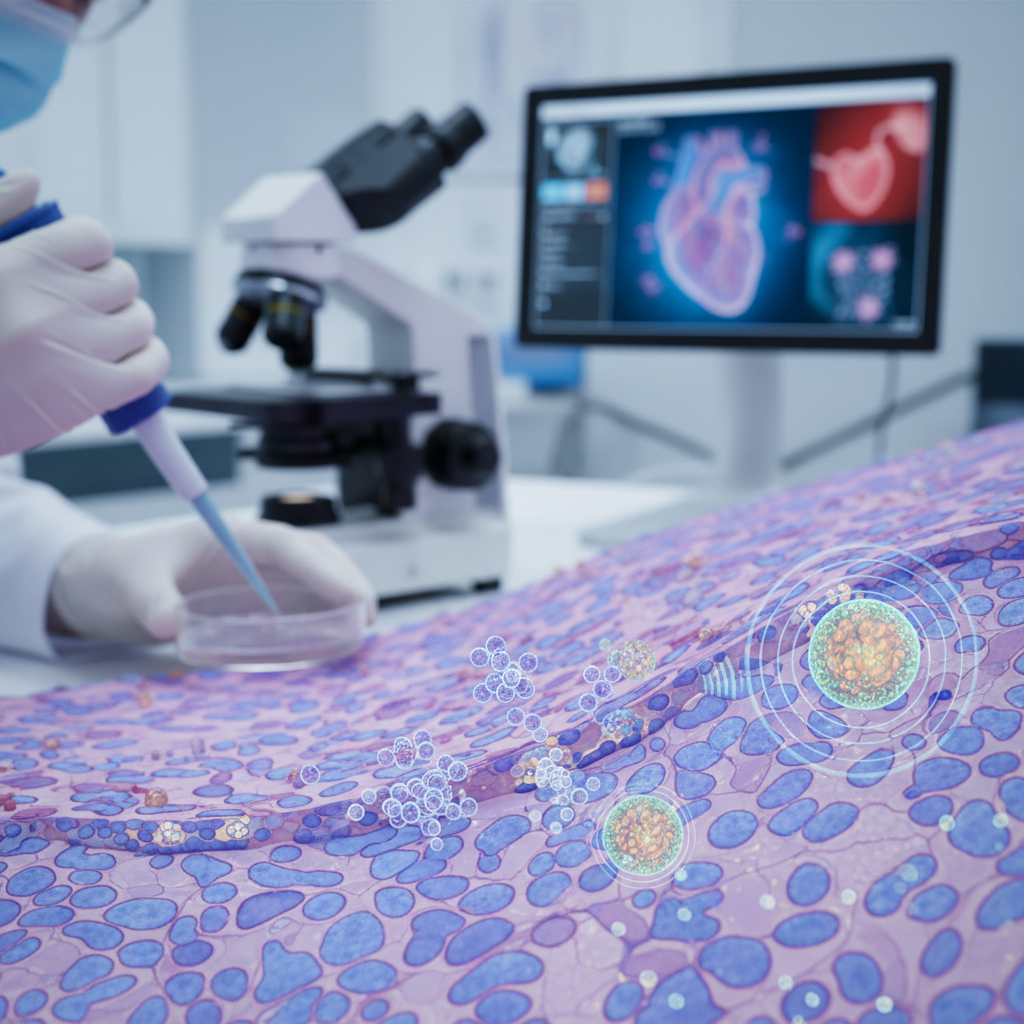
‘Smart bubbles’ are emerging as a promising way to target cancer and heart-related disease more precisely
‘Smart bubbles’ are emerging as a promising way to target cancer and heart-related disease more precisely
Few ideas sound as unlikely — and as elegant — as this one: using microscopic bubbles to help doctors see disease more clearly and, at the same time, target treatment more precisely. It is the kind of concept that brings together diagnosis, imaging and therapy in a single platform, which is exactly why it draws so much interest.
The strongest safe reading of the supplied evidence is that engineered microbubbles and nanobubbles are emerging as promising tools for imaging, targeted delivery and theranostics, particularly in cancer and, to some extent, cardiovascular-related disease. But the key point is the same one that often shadows early-stage biomedical innovation: this is still much more of a research platform than a clinically established treatment.
What these “smart bubbles” actually are
Microbubbles and nanobubbles are tiny engineered structures designed to move through the body and interact with imaging systems or therapies.
In practical terms, they may be used to:
- improve contrast in ultrasound imaging;
- bind to biological targets linked to disease;
- carry or help release drugs;
- and in some approaches, combine diagnosis and treatment in the same platform.
That last point is what makes them especially attractive. Instead of simply showing where disease is, these systems may one day help direct treatment more accurately to where it is needed.
The strongest case is currently in cancer
Among the supplied references, the clearest support comes from oncology.
Research in molecular ultrasound shows that targeted microbubbles can detect disease-associated markers, monitor aspects of tumour biology and potentially support ultrasound-enhanced drug delivery. That matters because one of the biggest challenges in cancer treatment is not only finding effective drugs, but getting them to the right place in the right way.
If microbubbles can highlight tumours on imaging while also helping therapy reach them more effectively, they become more than imaging agents. They begin to resemble theranostic tools — platforms that combine therapy and diagnosis.
Nanobubbles push the concept even further
The broader literature on nanobubbles supports a similar direction. These smaller bubble-based systems may help improve the delivery of anticancer therapies and possibly reduce treatment resistance in preclinical models.
That is important because tumours are notoriously difficult targets. They may have poor blood supply, variable internal structure and multiple resistance mechanisms. Even good drugs may struggle to penetrate tissue effectively or maintain useful concentrations where they are needed.
Nanobubbles enter this story as part of a larger effort to make therapy more localized, more penetrative and potentially more effective. The evidence here is still preclinical, but the biological rationale is strong enough to keep the field moving.
Ultrasound does more than just see
One of the most interesting aspects of this research is that ultrasound may play a more active role than simple imaging.
In some strategies, ultrasound can help trigger local drug release or increase tissue permeability around a target. That expands the role of bubble-based systems. They are no longer just passive markers floating through the bloodstream. They become part of a more dynamic treatment logic: locate, signal and help deliver intervention more precisely.
That possibility is especially appealing in cancer, where increasing local effectiveness while reducing wider-body toxicity is one of the main goals of precision treatment.
What about heart disease and cardiovascular problems?
The headline also points to heart disease, and this is where the evidence becomes more indirect.
The supplied studies support the cancer applications more clearly than the cardiovascular ones. Still, the literature on photoacoustic theranostics supports the broader concept that bubble-amplified or nanoparticle-assisted platforms may combine imaging and intervention in cardiovascular-related conditions such as blood clots and other vascular targets.
That suggests the same underlying logic could extend beyond cancer. In principle, these technologies may one day help:
- visualize vascular targets more clearly;
- identify clots or local abnormalities;
- and support more targeted intervention.
But this part of the story should be handled carefully. In the supplied set, cardiovascular use is more a plausible research direction than a clearly established translational pathway.
Why this platform is so appealing
The strength of this technology is not just one application. It is that it combines several ambitions of modern medicine at once:
- more precise diagnosis;
- real-time imaging;
- targeted delivery;
- response monitoring;
- and a closer fusion of seeing and treating.
That is exactly the kind of platform researchers hope for in precision medicine. Instead of exposing the whole body to treatment in broadly similar ways, it may become possible to focus more tightly on where disease actually is.
In cancer, that could mean concentrating treatment more effectively inside the tumour. In vascular disease, it could mean finding and targeting lesions or clots with greater specificity.
What the headline gets right
The headline gets an important part of the story right: microbubbles and nanobubbles are emerging as intelligent tools for image-guided treatment and targeted delivery.
The supplied evidence does support:
- promising microbubble use in molecular ultrasound;
- nanobubble potential for improving anticancer drug delivery;
- and the broader concept of theranostic platforms combining diagnosis with intervention.
It also captures the main attraction of the technology: better treatment through better guidance.
What the headline overstates
The point needing the most caution is the impression that there is already one specific “smart bubble” platform proven to treat both cancer and heart disease.
The supplied PubMed evidence does not directly validate a single new system with established clinical benefit across both areas. Much of the literature is:
- preclinical;
- methodological;
- or review-based.
And within this set, the cancer-related applications are clearer than the cardiovascular ones.
So the safest framing is not that smart bubbles are already proven therapies. It is that they represent a promising research platform for more precise imaging-guided treatment.
What still has to be proven
Like many advanced biomedical technologies, bubble-based systems still face major hurdles before routine clinical use, including:
- safety with repeated use;
- delivery efficiency in humans;
- stability in circulation;
- scalable manufacturing;
- technical standardization;
- and clear evidence of real-world clinical benefit.
It is not enough to show that a bubble reaches a target or improves image contrast. Researchers still need to show that this translates into better outcomes for patients — better tumour control, fewer complications, lower toxicity or improved survival.
What this means for patients right now
At the moment, the most honest value of this story is as a signal of where medicine is heading.
For patients, it does not yet mean that a new smart-bubble treatment is ready for routine care. What it does mean is that researchers are trying to build tools that make treatment more guided, more localized and more intelligent.
In cancer especially, that is one of the most important real frontiers in modern medicine.
The balanced takeaway
The most responsible interpretation of the supplied evidence is that microbubbles and nanobubbles are emerging as promising platforms for imaging, targeted drug delivery and theranostics, with especially clear research momentum in cancer and plausible potential in some cardiovascular-related conditions.
Molecular ultrasound work supports the idea that targeted microbubbles can detect disease markers, monitor tumour biology and support ultrasound-enhanced drug delivery. The broader nanobubble literature supports possible roles in improving anticancer therapy delivery in preclinical settings. Photoacoustic theranostics expands the concept further by suggesting that bubble-based or nanoparticle-assisted systems may help combine diagnosis and intervention in both cancer and vascular disease.
But the limit matters just as much as the promise. The supplied evidence supports a research platform much more clearly than it supports a proven therapy already ready for routine patient care.
So the safest conclusion is this: smart bubbles are not yet an established treatment, but they are one of the more creative and potentially useful attempts to bring imaging and therapy closer together. In a medical system increasingly trying to treat the right target, in the right place, at the right time, that direction matters a great deal.