Why IBS diets help some people — and barely move the needle for others
Why IBS diets help some people — and barely move the needle for others
For people living with irritable bowel syndrome, food can start to feel like a minefield. A meal that seems completely ordinary can end in bloating, abdominal pain, gas, urgency, diarrhea or constipation. It is no surprise, then, that diet has become one of the first places many patients look for relief.
Among the most widely discussed strategies is the low-FODMAP diet, which reduces certain fermentable carbohydrates that can draw water into the intestine and increase gas production. For many people, it helps. But not for everyone. And that uneven response is the most important part of the story: in IBS, diet matters, but symptom relief depends on much more than food content alone.
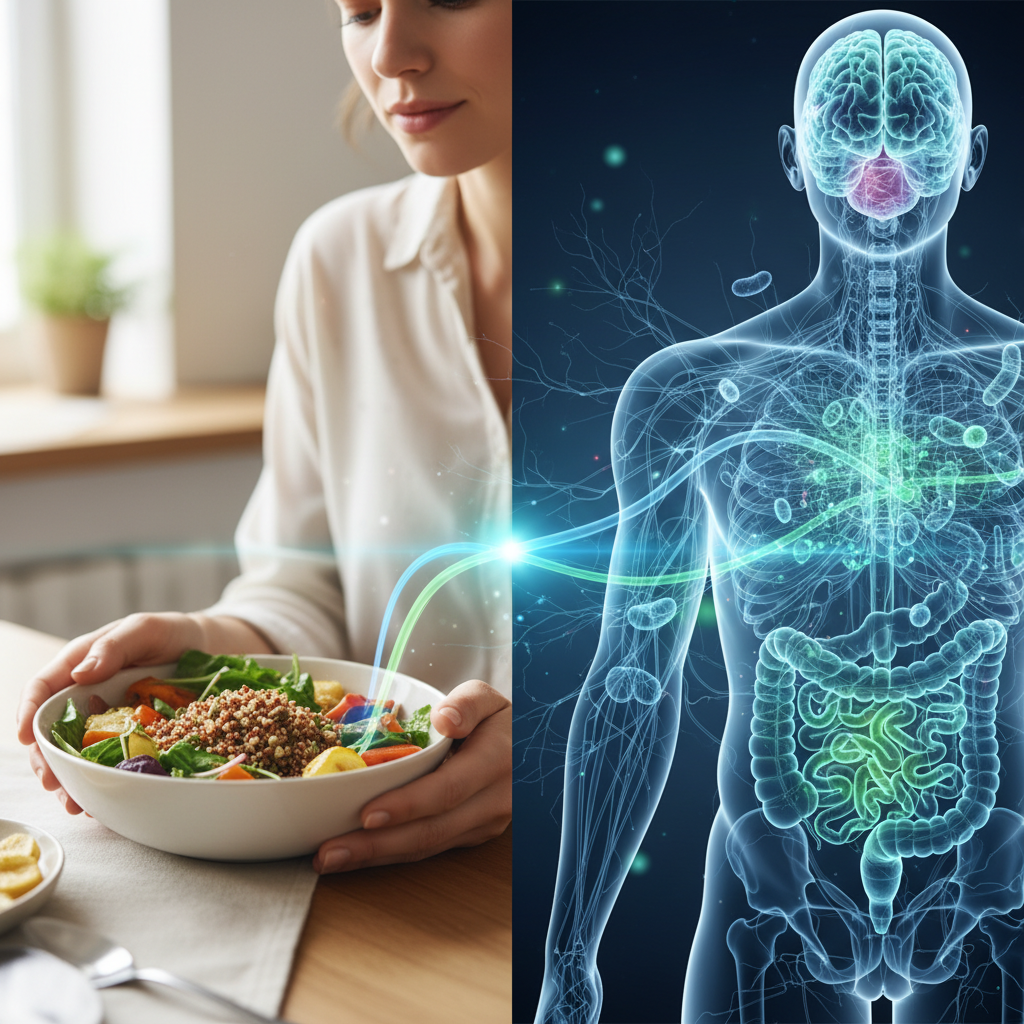
The best reading of the available evidence is that dietary changes can be effective, but response is shaped by a broader system involving visceral sensitivity, stress, gut-brain signalling and the gut microbiome. That helps explain why two people can eat the same meal and have completely different outcomes.
Diet works for many people, but it is far from universal
The literature provided supports the idea that dietary interventions such as the low-FODMAP diet help a substantial proportion of people with IBS. Reviews summarizing randomized trial data suggest clinical response rates in roughly 50% to 80% of patients.
That matters for two reasons. First, it confirms that dietary treatment is not a fad without evidence. Second, it makes clear that even one of the best-known IBS diets does not work equally well for everyone.
If a strategy helps many patients but leaves others largely unchanged, the key question shifts. It is no longer just “Which diet works?” but “Who is most likely to benefit, and why?”
That change in perspective matters. Rather than treating diet as a universal fix, researchers are increasingly viewing IBS as a condition in which the same food-related trigger can produce very different effects depending on the person’s physiology.
Food matters — but it does not act alone
It is important not to overcorrect here. This is not a story about food being irrelevant. Food clearly matters.
FODMAPs, for example, can increase water content in the small bowel and be fermented by gut bacteria in the colon, producing gas. In a susceptible person, that may increase intestinal distension and trigger pain, bloating or altered bowel habits.
But food is only one part of the equation. The same increase in water and gas may be barely noticeable to one person and intensely uncomfortable to another with visceral hypersensitivity.
That distinction is crucial. The issue is not only what enters the gut, but how the gut and brain interpret the resulting stimulus. In IBS, symptoms often reflect the body’s response to food as much as the food itself.
Visceral sensitivity changes the whole picture
One of the most useful ideas for understanding variable diet response in IBS is visceral sensitivity. Many people with IBS appear to have a digestive system that reacts more strongly to stimuli that would be relatively minor in someone else.
A modest degree of intestinal stretching, gas or motility change may be perceived as pain, pressure or urgent discomfort. That helps explain why the same diet can be transformative for one patient and only partly helpful for another.
Reducing fermentable foods may reduce the trigger, but if the underlying sensory system remains highly reactive, the benefit may still be limited. That is one reason IBS does not fit neatly into the simple idea of “this food causes symptoms.”
The gut-brain axis helps explain why it is not just about the gut
IBS research has long pointed to the role of the gut-brain axis. That means digestive symptoms cannot be understood fully without considering the central nervous system.
Stress, anxiety, hypervigilance and the way the brain processes internal bodily signals can affect motility, visceral perception, intestinal permeability, secretion and even the microbiome. The brain is not standing outside the process; it is part of it.
That gives real support to the “not just about the food” framing. The same meal can lead to very different symptom experiences depending on stress load, emotional context and the level of gut-brain system activation.
For many patients, that rings true immediately. Stressful periods, poor sleep or emotional strain often make IBS worse even when the diet has not changed much. The literature supports that this is not just anecdotal. It reflects core biology.
The microbiome may shape who responds best
Another important piece of the puzzle is the gut microbiome. The bacterial community in the gut influences fermentation, metabolite production, local inflammation and communication with the enteric nervous system.
The evidence provided supports the idea that baseline microbial composition may influence response to dietary interventions. That makes sense. If different microbial communities process the same nutrients in different ways, then the same diet may produce different effects in different people.
This is one reason the future of IBS management is likely to be more personalized. Instead of assuming the same dietary plan should work for everyone, researchers are increasingly interested in whether microbiome profiles, symptom patterns and other baseline features might help predict who is most likely to benefit.
IBS is not one single condition
Another reason diet response varies is that IBS itself is heterogeneous. It is not one neatly uniform disorder.
There are constipation-predominant, diarrhea-predominant, mixed and post-infectious forms. Symptom severity, pain sensitivity, bloating, urgency and stress burden can also vary widely from person to person.
That matters because the dominant mechanisms are unlikely to be identical across all subtypes. In some patients, fermentation and distension may play the largest role. In others, altered motility, sensory amplification or stress-related physiology may be more central.
So when a diet does not work, that does not necessarily mean the diagnosis is wrong or the patient failed to follow instructions properly. It may simply mean that food-related triggers are not the main driver in that particular case.
The low-FODMAP diet remains useful — but it has limits
The low-FODMAP diet remains one of the best-studied dietary approaches in IBS, and it would be a mistake to dismiss it. For many patients, it meaningfully improves quality of life.
But the literature also points to limits. Besides not helping everyone, the low-FODMAP diet can alter the microbiome, and the long-term implications of those changes are still uncertain.
That supports a more careful clinical approach. Restrictive diets are best used thoughtfully, ideally with professional guidance, rather than as indefinite, broad-spectrum food elimination plans. The goal should not be lifelong restriction for its own sake, but finding a sustainable pattern that controls symptoms without unnecessary burden.
What this changes for treatment
One of the most useful consequences of this research is that it moves patients away from a frustrating trial-and-error model with little explanation.
If diet response depends on an interaction between food, visceral sensitivity, stress, brain-gut signalling and microbiome composition, then treatment also makes more sense as a broader strategy. For some patients, diet will be the main lever. For others, stress management, gut-directed psychotherapy, sleep improvement, exercise or microbiome-focused approaches may matter just as much.
That does not weaken the role of diet. It makes dietary treatment more intelligent and more realistic.
The most balanced takeaway
The available evidence supports the idea that diets such as the low-FODMAP approach help many people with IBS, but not all. The strongest explanation for that variability is that symptoms do not depend only on what is eaten, but on a larger system involving visceral hypersensitivity, the gut-brain axis, stress and the gut microbiome.
The key point is not that food triggers are unimportant. It is that food is one part of a much broader biology. That helps explain why the same diet can change one person’s life and leave another disappointed.
In the end, the most useful message is less simplistic and more practical: diet can help in IBS, but effective care often means looking beyond food alone and treating the gut, the brain and the internal environment as parts of the same problem.