Why Liver Cancer Linked to Obesity May Be Harder to Treat
Why Liver Cancer Linked to Obesity May Be Harder to Treat
For years, the conversation around obesity and liver cancer focused mostly on risk. The message was fairly straightforward: excess body fat raises the likelihood of fatty liver disease, and fatty liver disease can raise the likelihood of hepatocellular carcinoma, the most common form of primary liver cancer.
But newer research is pushing that story further.
The question is no longer only why liver cancer develops more often in the setting of obesity and metabolic disease. It is also why, once it appears, it may behave in a more aggressive and treatment-resistant way.
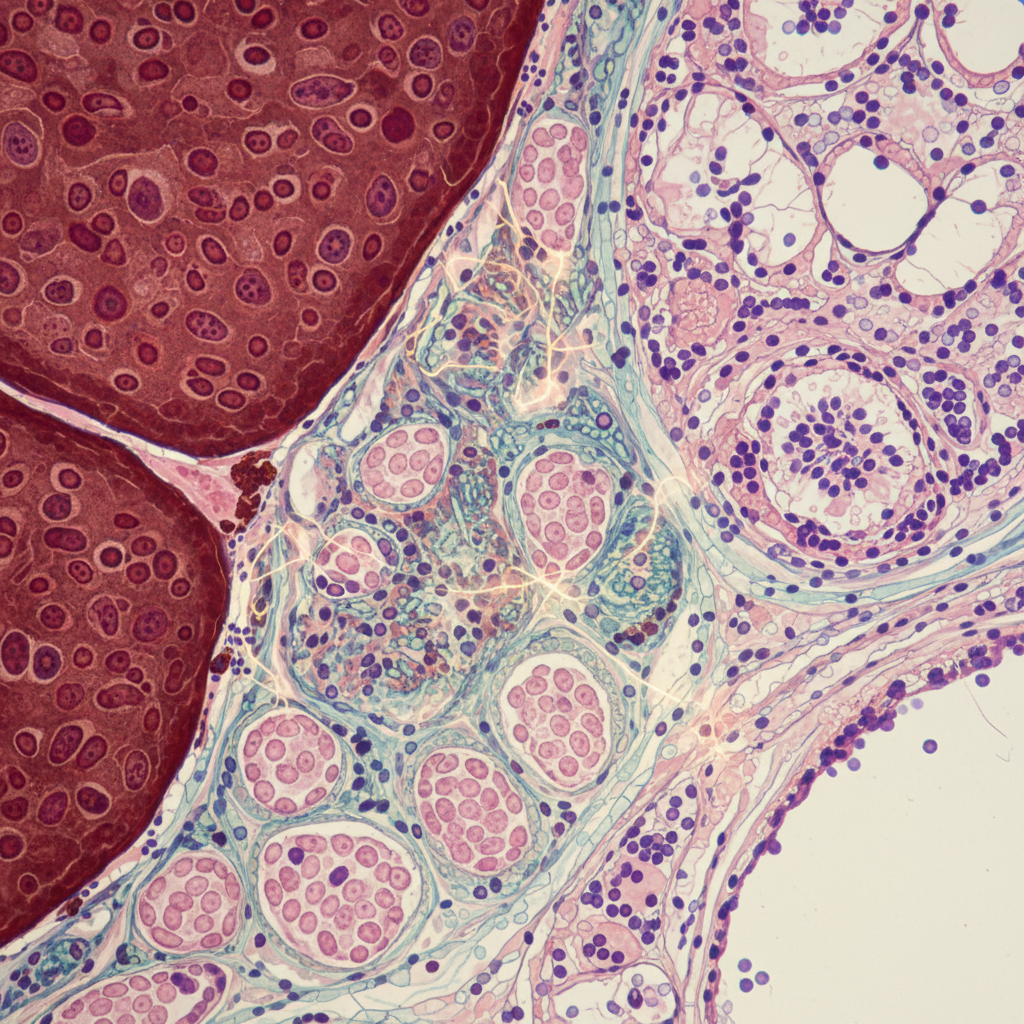
The evidence supplied here suggests the answer may lie in the tumour microenvironment — the network of cells, chemical signals, inflammation, fibrosis, and immune activity that surrounds the cancer. In obesity-related liver disease, that environment appears to be heavily altered. Instead of merely increasing cancer risk, metabolic disease may help create a liver landscape that makes tumours more invasive, more immunosuppressive, and less responsive to therapy.
That changes the story in an important way. Obesity-related liver cancer may not simply be the same tumour appearing in a higher-risk patient. It may, in many cases, be a biologically different disease state shaped by metabolism, inflammation, and tissue remodelling.
Fatty liver disease is not just fat sitting in the liver
One of the most misleading assumptions in this area is that fatty liver disease is simply a matter of extra fat accumulating in the organ.
In reality, conditions such as NAFLD, NASH, and MASLD involve a much broader shift in liver biology. The liver is exposed to chronic inflammation, cellular stress, altered metabolism, fibrosis, and abnormal immune signalling. Long before cancer develops, the tissue is already being reshaped.
That matters because tumours do not emerge in a vacuum. They grow inside a living environment. And if that environment has already been altered by metabolic disease, it may be primed to support more dangerous cancer behaviour.
The literature provided supports exactly that interpretation. Obesity-related hepatocellular carcinoma appears to arise not simply from a higher chance of malignant change, but from a liver already transformed into a more permissive setting for tumour growth and survival.
Hepatic stellate cells may be one of the key links
One of the supplied reviews highlights hepatic stellate cells as central mediators connecting fatty liver disease to hepatocellular carcinoma.
These cells are already well known for their role in fibrosis and tissue remodelling. But in this context, they appear to do much more. According to the review, they may help drive tumour proliferation, invasion, metastasis, angiogenesis, immunosuppression, and chemoresistance.
That is a significant point. It suggests the diseased liver is not merely damaged tissue in which cancer happens to arise. It may also be actively helping the tumour acquire more aggressive traits.
In effect, the metabolic and fibrotic changes in the liver may prepare the ground for cancer in two ways at once: by increasing the risk of tumour formation and by shaping a local environment that helps the tumour thrive once it is there.
Obesity is also a signalling state, not just a body-size issue
Another important part of the story lies in adipose tissue itself.
Obesity is not simply excess weight. Fat tissue is biologically active. It releases adipokines and inflammatory mediators that can affect organs throughout the body, including the liver.
One of the supplied reviews shows that adipose tissue and obesity-related adipokines can shape the tumour microenvironment, promote chronic inflammation, and contribute to liver cancer progression and therapy resistance.
This is important because it moves the story beyond the liver alone. It suggests the tumour may be influenced not only by what is happening locally, but by broader metabolic signals coming from adipose tissue and systemic inflammation.
That makes obesity-related liver cancer look less like a localized event and more like the result of a whole-body disease state interacting with a vulnerable organ.
The tumour microenvironment is where the disease becomes more dangerous
Modern cancer biology has made one thing increasingly clear: the tumour is only part of the story.
Around every cancer is a microenvironment made up of fibroblasts, immune cells, blood vessels, extracellular matrix, and signalling molecules. In some settings, that environment can restrain the tumour. In others, it can help protect and accelerate it.
In obesity-related liver cancer, the evidence suggests the microenvironment may be especially important. Chronic inflammation, adipokine signalling, fibrosis, and altered immune activity appear to create a setting in which the tumour becomes more adaptable and harder to kill.
One of the mechanistic studies supplied illustrates this point particularly well. It found that cancer-associated fibroblast-derived SULF2 in hepatocellular carcinoma was associated with shorter survival, macrophage recruitment, immune exhaustion, invasion, and sorafenib resistance.
That study is not limited specifically to obesity-defined liver cancer cases, but it fits the broader tumour-microenvironment story very well. It shows how cells surrounding the tumour can shape whether it behaves more aggressively and whether it resists treatment.
Why treatment resistance matters so much here
When researchers describe a tumour as treatment-resistant, they are describing something clinically consequential. It means the cancer finds ways to withstand therapy, adapt to pressure, or benefit from a surrounding environment that blunts the effect of treatment.
In this case, the evidence suggests that inflammation, stellate-cell activation, adipokine signalling, and fibroblast-driven remodelling may all contribute to that resistance.
Not necessarily through a single pathway, but through a network of them: supporting tumour invasion, changing immune-cell behaviour, promoting angiogenesis, exhausting immune responses, and reshaping the extracellular environment around the cancer.
That helps explain why some hepatocellular carcinomas may respond differently even when they look similar under the microscope. The metabolic context may be changing the biology of the disease in ways that conventional classification does not fully capture.
This is about more than weight
Perhaps the most important editorial point is that obesity-related liver cancer should not be reduced to the idea that “more fat means more risk.”
The supplied evidence points to something more sophisticated. Obesity, fatty liver disease, fibrosis, and chronic inflammation may together create a metabolically and immunologically altered disease state. When hepatocellular carcinoma arises inside that state, it may be primed to behave differently — more invasively, more aggressively, and more resistant to treatment.
That is a meaningful shift in how the disease is framed.
It connects the rising burden of metabolic illness with the biology of cancer progression. And it suggests that obesity-related liver cancer may need to be understood not only as a prevention problem, but also as a tumour-behaviour problem.
What this could mean for future treatment
Right now, the strongest value of these findings is mechanistic rather than immediately clinical. But mechanism matters.
If the tumour microenvironment is helping drive aggression and resistance, then it may also become a therapeutic target. Hepatic stellate cells, adipokine pathways, fibroblast-associated signalling, and inflammatory remodelling could all become part of future treatment strategies.
That does not mean a new therapy is already available. The supplied evidence does not support that claim. But it does point towards a more strategic way of thinking about treatment: not just attacking the cancer cell itself, but dismantling the ecosystem that helps it survive.
For Canadian patients, that long-term direction matters. Liver disease linked to obesity and metabolic dysfunction is becoming more common, and understanding how it changes cancer biology could influence both prevention and treatment research.
Why caution is still necessary
This is still a moderate-evidence story, not a finished clinical one.
Much of the evidence is review-based or mechanistic rather than coming from large prospective studies in clearly defined obesity-related liver cancer cohorts. Only one of the supplied studies directly links a specific resistance mechanism to patient outcomes, and it is not limited to obesity-related cases.
The exact pathways are also likely to differ between patients with NAFLD, NASH, MASLD, diabetes, and other metabolic conditions. So while the broader framework is biologically convincing, it does not yet translate into immediate treatment guidance for individual patients.
The clearest takeaway
The emerging message from this research is that obesity-related liver cancer may be more than liver cancer in a person with excess weight. It may be a biologically altered form of the disease, shaped by chronic inflammation, adipokine signalling, stellate-cell activation, fibrosis, and fibroblast-driven remodelling of the tumour microenvironment.
That helps explain why some of these tumours may behave more aggressively and prove harder to treat.
There is no ready-made clinical solution in these findings yet. But there is a more precise map of the problem. And in cancer research, understanding how a tumour becomes dangerous is often the first step towards learning how to stop it.